


General Motors Death Watch 1: GM Must Die

When The Donald calls aspiring apprentices into the boardroom to determine which one to fire, I’m always hoping for a miracle. I want him to can ALL of them. My feelings about GM are identical. When GM Vice Chairman Bob Lutz hinted that he’d axe Buick or Pontiac if the divisions didn’t “gain traction,” he ignited a debate over which of the General’s lackluster brands deserved death. The answer is, of course, all of them.
General Motors was born as a conglomeration of independent car companies. In the beginning, all of GM’s acquisitions maintained their own distinct mechanical, design and marketing identity. Despite the imposition of centralized control in many strategic areas (e.g. choice of suppliers), each sub-brand remained true to its niche. Exactly when, how and why the structure fell apart, or became one big amorphous mass of poorly made product, is not as important as the fact that it has.
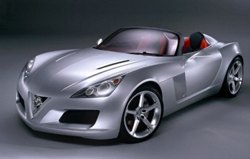
GM’s eleven brands—Buick, Cadillac, Chevrolet, Holden, Hummer, GMC, Opel, Pontiac, SAAB, Saturn and Vauxhall—are virtually interchangeable. You could rebadge a Vauxhall Lightning and call it a Saturn Sky; or a Holden Monaro and call it a Pontiac GTO; or a GMC truck and call it a SAAB 9-7X. Those are just the real-world examples. How about the new Cadillac STS as a Buick, or the Hummer H3 as a GMC? And that’s without mentioning the elephant on the assembly line: platform sharing.
GM’s brands bring new meaning to the words “product overlap.” Pontiac GTO or Chevrolet Corvette? Chevrolet Cobalt or Saturn Ion? Saab 9-5 or Cadillac CTS? The divisions might have better luck competing with non-GM brands if they weren’t so busy competing against each other. As a result, whenever one of the eleven non-identical twins tries to make a case for itself, it unintentionally demeans a fraternal partner. GMC’s claim to be “professional grade” makes Chevrolet seem amateur. Hummer’s “like nothing else” makes Buick seem common. And so on.

The marketing departments may beg to differ, but their campaigns don’t. Pontiac still touts itself as GM’s performance division—at the same time that Cadillac emphasizes its products’ supersonic speed. SAAB’s ‘State of Independence’ exhorts buyers to go their own way—while Saturn continues to chase iconoclastic buyers. And here’s a compare-and-contrast from Hell: Chevrolet’s marketing strategy for its full-size pickups vs. GMC’s.
The situation reminds me of Coca-Cola’s plight in the 70s. When the competition started offering strange and marvelous soft drink variations, Coke responded by introducing a wave of new flavors: Coke, Diet Coke, Cherry Coke, Diet Cherry Coke, Caffeine Free Diet Coke, etc. The bottom line? Add all the sales of all the new Coca-Cola sub-brands together and … the company LOST total market share. Am I the only one who sees a parallel with GM, which is responding to their diminishing slice of the US car market by introducing a flood of new products?
Vice Chairman Lutz could axe a couple of brands, figure out what the remaining ones are supposed to be, erect some Chinese walls and—like Hell he could. Thanks to decades of bureaucratic bungling, craven UAW appeasement and intra-departmental intrigue, GM has neither the will nor the skill to kill the omnivorous cancer devouring it. There’s only one thing for it: sell off all of the brands.
GMAC Finance is the only solidly profitable part of the entire multi-billion dollar corporation; everything else is either limping along, a dead loss or a loss leader. Dump the car and truck making side of the equation and GM becomes instantly profitable. What’s more, under independent ownership, each division would be leaner, meaner and quicker on its feet. Think about the breakup of AT&T, and the highly competitive, hugely profitable baby Bells it spawned…

Even if a liberated division’s new ownership WASN’T entirely independent, even if some other multi-national car-making goliath bought up, say, Hummer, and ran it into the ground, well, so what? As a GM stockholder, I’d say “better them than us”.
The idea of being wrenched from the corporate tit is not bound to please GM’s employees and suppliers. Most sensible financial analysts would view GM’s dissolution as an improbable corporate Krakatoa: a violent, tectonic shift signaling the end of big business as we know it.
Of course, these are the same sensible people who don’t buy GM products anymore. They buy Mercs, Toyotas, BMWs and other vehicles made by companies who don’t try to juggle eleven balls at the same time. If these experts want to feel GM’s seismic rumblings, all they have to do is look at their own driveway. Even the Donald would savor the irony.

More by Robert Farago











Comments
Join the conversation
And with decisions like not continuing the G8 under another brand, they are doomed to failure, again. Wouldn't it just be cheaper to liquidate GM and pay the employees a pension?