

By Paul Niedermeyer
July 2, 2007 -
No wonder the Germans are so gung-ho on sending their diesels across the pond. Europe’s two-decade long diesel-keg party has been crashed by a new generation of super-efficient, clean and cheaper gasoline engines. A royal diesel-overproduction hang-over is inevitable. The Germans’ morning-after solution: send the stinky leftovers to enthusiastic Yanks waiting with open arms, who’ve conveniently forgotten their killer hangover from the last US diesel orgy.
In 1892, an experimental ammonia engine literally blew up in engineer Rudolph Diesel's face. Laid-up in a hospital bed, he pored over Nicolaus Otto’s pioneering work on the internal combustion engine. Diesel identified its weakness.
Diesel tumbled to the fact that the Otto engine’s efficiency was intrinsically compromised by the fact that it mixed fuel with air prior to compression. Too much compression resulted in uncontrolled pre-detonation. Diesel’s solution: inject fuel separately from the air to allow super-high compression and eliminating the need for a throttle (reducing pumping losses). Diesel's engine was roughly 30% more efficient than Otto's.
In 1989, VW/Audi ushered in the modern direct-injection (TDI) diesel. The group's oil burning powerplant set a high-water mark in the diesel’s long development. With Europe’s high fuel costs, the more expensive (yet efficient) diesel engine could now pay for itself quite easily. The calculation triggered Europe's diesel-boom, resulting in a 50 percent market share vs. gasoline-engined propulsion.
But Europeans have been paying a price (other than at the pumps): particulate emissions (Particulate Matter, or “PM”) and NOx pollution. Many European cities have serious particulate and diesel odor problems. Several European cities impose restrictions on diesels during PM alerts.
The new generation of “clean(er)” diesels that meet the US Tier2 bin5 standards cut PM emissions substantially, but not completely. Already, there are warnings that PM from “clean” diesels still poses a significant health risk.
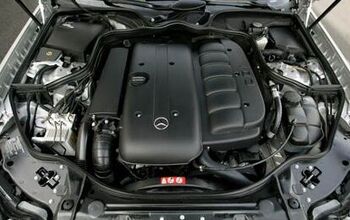
The diesels coming our way carry several other penalties, especially versus the gas hybrid. The complicated and expensive NOx catalysts and urea injection schemes (“BlueTec”) cut efficiency by five percent. Meanwhile, the next Prius is projected to be 15 to 20 percent more efficient. And Toyota is bringing down hybrid production costs.
The diesel vs. hybrid mileage/cost gap widens… further. And the “clean” diesel’s just-barely compliant emissions still can’t touch the gas-hybrid’s practically breathable exhaust.
Then there's the elephant in the room: global warming. Clearly, the political winds are blowing against CO2. Diesel fuel has higher carbon content, resulting in 17 percent more CO2 per gallon of fuel burned than gasoline. With the diesel’s efficiency superiority down to 25 percent, a “clean” diesel emits only 13 percent less CO2 than yesterday’s gas engine. And that small gap is… wait… gone.
While the diesel’s efficiency peaked in 1989, and lost 5 percent to PM cleansing, gas engine development is on a roll. Engineers are systematically tackling all the inherent deficiencies that Diesel identified in his hospital bed. (No wonder Rudolf was considered paranoid; maybe he suspected that eventually the Otto engine would catch up.)
A farrago of new gas-engine technologies has converged, which Europeans have been quick to embrace. VW’s 1.4-liter 170hp TSI gas engine is a perfect example of the trend. The TSI starts off with the help of a supercharger (no turbo-lag), and then switches to turbocharging (no parasitic losses). With diesel-like torque and direct injection, it’s the best of both worlds.
A CO2 output comparison with two other similar-output VW engines is telling. Their 170 horse 1.4-liter TSI produces 174g/kms of CO2. Their 150hp 2.5-liter five cylinder engine (US Rabbit only) emits 240g/km. And their 170hp 2.0-liter TDI diesel (not US compliant) produces 160g/km.
American Rabbit drivers are paying a whopping 38 percent efficiency penalty compared to the Euro-Golf TSI, as well as giving up gobs of torque and twenty horsepower. If VW’s 170hp TDI were “cleansed” to T2b5 standards, its CO2 output would be no better then the gasoline TSI.
And that’s just the jumping-off point. Start-stop technology, full valve control, and stratified direct-injection offer anywhere from 10 to 25 percent further improvement potential. Combine these goodies with mild-hybrid assist/regeneration, and the diesel party’s kaput. No wonder the Germans are all hard at work on mild-hybrid technology. It’s their best shot to keep up with Toyota’s CO2 meister, the Prius (102g/km).
A study by the consulting firm AT Kearny confirms the diesel's demise. It predicts that only 25 percent of Europeans will find diesels an attractive economic proposition by 2020.
Have Rudolf Diesel’s paranoid nightmares come true? Not totally. Diesels are a welcome mix to the party for larger vehicles that spend a lot of time on the open road. Count on GM’s new 4.5-liter “baby” Duramax diesel to be more popular with the light-truck crowd than the gas hybrid option. But when it comes to smaller vehicles, the numbers just don’t add up.
Although Rudolf Diesel’s engine WAS intrinsically more efficient, it turns out that Otto’s engine is a lot more clever at learning new tricks.
Subscribe to New Content Alerts
Back to Top
End of Comments
July 2nd, 2007 at 12:10 pm
Thanks for being so open minded about the Prius. But then again, facts are facts.
Consumer Reports imported a diesel SMART car from Quebec (i.e. it wasn’t US compliant - not even for non-California states) and gave it their test-over, and it obtained 42 mpg. They got 44 mpg with their tested 2005 Prius, and the Prius is obviously a lot more car than is a 2 seat SMART.
One thing that perplexes me no end is the fact that diesel fuel and gasoline both come from crude oil - so why was it that, when gasoline was $2.19.9 locally awhile back, diesel fuel cost $2.79.9 - but when gasoline went to $3.66.9 diesel was only $2.96.9?
Anyone out there in the oil industry want to address that one?
One other minor advantage to diesel is that at least when you put bio-diesel into the fuel tank, you don’t lose MPG as happens with virtually every car I’ve ever driven since 1979 and tested E10 in. I generally lose 7% to 20% MPG.
July 2nd, 2007 at 12:15 pm
Glenn 126:
The most credible answer regarding diesel vs. gasoline cost is refinery capacity and demand. Diesel fuel demand has grown quite strongly over the past 5-7 years, creating tight supply, and high prices. The current run-up in gas prices is (supposedly) due to gasoline refinery problems.
In any case, the US petroleum industry is not ready for more diesel consumption, and a substantial increase in diesels on the road would just push up diesel prices higher.
July 2nd, 2007 at 12:23 pm
Interesting article. Autobloggreen came to the same conclusion (through a series of articles here & there) that gasoline tech will improve a lot but diesel tech has pretty much matured. Let’s see if Honda can improve diesel tech further.
July 2nd, 2007 at 12:32 pm
monteclat: “Let’s see if Honda can improve diesel tech further”.
Honda makes an excellent diesel for Europe, but it’s not more efficient than all the others. Sorry, but waiting for a “Honda miracle” is misplaced hope.
July 2nd, 2007 at 12:38 pm
So how does biodiesel compare to regular diesel in terms of particulate matter, NOx, and CO2? Better, worse, about the same?
July 2nd, 2007 at 12:43 pm
Jonathon: Interesting that you should ask. A recent (and scary) first study from Europe analysing biodiesel exhaust shows a very disturbing high number of carcinogenic substances. This was a blow to the biodiesel contingent.
Apparently, the super-high temperatures of combustion do some nasty things to bio-diesel. Kind of like baking/frying creates bad substances in cooking oil, but worse. It needs further study.
http://www.greencarcongress.com/2007/04/german_research.html
July 2nd, 2007 at 12:44 pm
It’s possible that the TDI Rabbit could be cleaned up by a system that would collect the particulates, compress them into centimeter-sized spheres, and store them in a container for later disposal. However, who could guard against the “smart” asses who would leave the container off, thus resulting in Diesel Rabbits leaving a trail of these pellets…
July 2nd, 2007 at 12:55 pm
Jonathon: My link was for an article about the effects of burning straight vegetable oil in diesel engines, not biodiesel.
There is not enough research to provide a clear picture of biodiesel exhaust vs. straight diesel. Some early work suggests advantages (for biodiesel), but there is not yet a deep understanding of the chemical changes that happen to some of the organic compounds. It may be problematic, like the straight vegetable oil. In anycase, we can’t grow enough to solve the problem.
July 2nd, 2007 at 1:03 pm
Jonathon,
The NOx content of BioDiesel is directly tied to the feedstock that the BioDiesel was made from. Some vegetable sources make for very high NOx, and other bring it down to near zero.
Unlike gasoline, Diesel fuel of any sort emits NO CO2.
Particulate from BioDiesel is the same as petro-Diesel, and is mitigated completely by rainfall as it is heavy and will not stay suspended in the air with sufficient moisture.
Short of a 100% hydrogen- or solar-powered vehicle NO engine blows sunshine and kittens out the tailpipe. On the scale of relative evils, an engine running on BioDiesel is far better than any petroleum-powered machine.
At least with Diesel, you have alternatives, ALL of which can be home-brewed if you choose. You cannot say the same with gasoline.
–chuck
July 2nd, 2007 at 1:13 pm
chuckgoolsbee: “unlike gasoline, Diesel fuel of any sort emits NO CO2″.
Chuck, sorry, but ALL diesel fuel emits CO2, as does burning any carbon based product. In fact, diesel emits 17% more CO2 per gallon than gasoline. That’s one of the key points of my article, and a negative for diesel in the push to reduce CO2 emissions.
July 2nd, 2007 at 1:13 pm
Logically a hybrid diesel electric vehicle would be an optimum choice. The diesel ability to produce power at low RPMs for long periods of time would be ideal in a start/stop hybrid or a full hybrid. Combine all the other energy saving technology in the Prius (low resistance tires, slippery design, etc with a diesel engine and we’d probably see a 10% improvement in economy.
July 2nd, 2007 at 1:16 pm
Chuck- I am with you here/ Bio fuels can make the diesel a good alternative since growing the fuel consumes CO2. Combined with the other emisisons systems a 100% bio, or a bio blend makes diesel an excellent green engine.
On the flip side, according to studies by UC Berkeley, there is not enough arable land in N. America to grow enough plant matter to replace fossil fuels, still, we can do what we can and use blends.
July 2nd, 2007 at 1:18 pm
A drop-in gasoline substitute is available, and can be grown. It’s called Butanol. I understand BP in the UK are looking into mass production now. The conversion efficiency is something on the order of 70% (vs approximately 30% conversion efficiency for ethanol from corn) and the BTU’s are 5% less than gasoline (vs. 30% less for ethanol). Butanol (or bio-butanol if it is grown and made into Butanol) can also be pushed through our current petroleum pipelines, again, unlike ethanol.
Butanol is a 4-carbon chain alcohol (and deadly to imbibe). See http://www.butanol.com
Butanol is one reason why, in my humble opinion, the government should NOT emulate the soviets and try to force solutions (such as corn-grown ethanol) onto a “free” marketplace.
July 2nd, 2007 at 1:19 pm
saabophile: “logically, a hybrid diesel electric vehicle would be an optimum choice”. If fuel cost $10/gallon, you would be right.
Between the much higher cost of a clean diesel ($2k to $3k), and the cost of hybridization ($2k to $3k), you would end up with a car costing so much more it would take maybe 20 years or more to amortize the costs (at today’s fuel costs).
Mild diesel hybrids are coming in Europe (Peugeot 308, MB S-class), but they won’t be economically viable in the US, and might not be in Europe.
July 2nd, 2007 at 1:36 pm
Note how diesel and gasoline engines are converging. A staged turbo, direct-injection gasoline will prove to be more efficient in the end. Perhaps a higher carbon gasoline summer-blend will be produced to aid efficiency.
On a personal note: I *HATE* turbo-lag…Worse than torque-steer.
July 2nd, 2007 at 1:38 pm
Oh…And…Great write-up Paul!
July 2nd, 2007 at 2:00 pm
chuckgoolsbee did a better job nailing the ‘biodiesel’ alternative than 90+% of the rantings I’ve seen elsewhere.
I’m a big fan of biodiesel… but it needs to be refined to the point where the quality is consistent.
Most biodiesel applications offer lower fuel economy than straight diesel. However, if you use top grade bio-diesel in combination of bio-diesel, there can be a substantial decline in the overall pollution that takes place.
Yes, this is only a partial solution. But it also happens to be a heavily underutilized one that can improve the environment and our oil dependency.
I think the diesel/hybrid combination may turn out to be the new standard. A VW Lupo of the late 90’s can attain a real world mileage of 70 to 75 mpg and the inclusion of a battery for city traffic would cut overall emissions immensely. For a small city commuter, that may be the most efficent opportunity in the marketplace.
July 2nd, 2007 at 2:06 pm
Jonathon,
In 2001 the EPA did a study of Biodiesel made from soybeans. At 100B, biodiesel produces 67-68% less unburned hydrocarbons, 45-50% less Carbon Monoxide and Particulate matter (I’m giving these numbers in ranges, because I’m just looking at a graph rather than searching through the 126 page document), and 10% more nox.
July 2nd, 2007 at 2:09 pm
“The NOx content of BioDiesel is directly tied to the feedstock that the BioDiesel was made from. Some vegetable sources make for very high NOx, and other bring it down to near zero.”
Do you have a source for this? I don’t think it’s true. You guys here are probably sick of me getting into the details, but I’m a chemist, and as a result, I’m always thinking of the chemistry going on in a process.
In any IC engine, you have the stuff you want to burn, which are hydrocarbons (Gasoline, Diesel Oil, Biodiesel, Veggie Oil, etc) extra stuff that’s with the stuff you want to burn (Sulfur, and other impurities), stuff the government mandates to “clean” up the emissions (Ethanol, MTBE, etc), and the atmosphere (Nitrogen, Oxygen, and small amounts of whatever else came in through the intake).
The simple combustion reaction is
Hydrocarbon + Oxygen –> Water + CO2
So In the best case scenario, burning gasoline, diesel, biodiesel, or whatever you only make Water and CO2. Nothing bad about either of those (except MAYBE CO2 - but I’m going to reignite that debate). You also get a little CO if there’s not enough oxygen to go around. But CO –> CO2 is easy for the catylitic converter to take care of.
Now where does the bad stuff come from.
1) There’s lots of sulfur dissolved in crude oil when it comes out of the ground. This is normally a good thing as it makes the oil more lubricative but it’s a bad thing when you burn it because it ends up making SO2 out of the tail pipe which mixes with atmospheric water to turn into sulfuric acid (better known as acid rain). So by removing sulfur from our fuel (ever heard of light sweet crude? sweet means low sulfur) we get less acid rain, which is generally agreed upon as a good thing.
2) The second bad thing is particulates. Particulates are generally called “soot”. While they are carcinogenic, they’re not THAT bad. They’re big (i.e. you can see them as opposed to the nasty stuff you can’t see). Your body does a good job filtering big things before they can cause a problem. So in general particulates aren’t that bad because your body can filter them. And if we wanted to they’re big enough that we can filter them on their way of of the tailpipe too. Particulates are an easily solvable problem if someone would put their mind to solving it.
3) The last bad thing I can think of right now is NOx. So where does the NOx come from? There is no nitrogen (or very very little) in the fuel we burn. But the atmosphere is 80% nitrogen, so that’s where it comes from.
Nitrogen + Oxygen –> NOx
But it takes lots of energy (heat) to make NOx out of nitrogen and oxygen. So if you lower combustion temperatures you get less NOx and if you raise combustion temperatures you get more NOx.
So really NOx production doesn’t depend on the fuel (directly), but on how the fuel is burnt.
Lean mixture: More Oxygen than Fuel –> Burns hotter –> More NOx less CO
Rich mixture: Less Oxygen than Fuel –> Burns colder –> More CO less NOx
(Side note - in a gasoline engine, the oxygen sensor keeps oscillating the mixture between Rich and Lean so that the engine alternates between NOx and CO production. The cataylic converter takes the O off of the NOx and puts in on the CO which results in Nitrogen and CO2 as products which are much less harmful than the incoming NOx and CO)
Anyway. here’s the conundrum: Unlike a gasoline engine, a diesel engine always runs lean. As a result of the lean mixture and the high compression (which is why the diesel is more efficient than the gasoline engine) the cylinder temperatures are very high. That means that it makes NOx, and lots of it.
So if you want to reduce NOx you need to reduce the combustion temperatures. The only (easy) way to do that is to reduce compression and now were back to gasoline type efficiencies. I bet it could be done with water injection, but I don’t think people want to fill up a gas tank and a water tank.
Likewise, with all the direct injection gasoline engines coming out, they’re going to be raising compression ratios to get more efficiency, and those engines are going to be making more NOx.
NOx is something we really can’t get rid of easily because there’s so much Nitrogen in the atmosphere, we’ll never keep it out of the cylinder. We can convert it to CO2 and N2, but that requires CO to steal the O off of the NOx, and unless the engine runs rich, you don’t get that (That’s what the Regen in the new Powerstroke diesel does. Every so often, the computer just dumps lots of fuel in and cuts off the intake, that makes a bunch of CO which then cleans the NOx out of the catalytic converter - and of course reduces your MPG)
Ok, that was a long post and I started to ramble. But I hope that you can now see that it’s not a simple problem. There are many competing variable that we have to work with and some of them are in direct opposition to others.
July 2nd, 2007 at 2:33 pm
In North America diesels are for trucks, where they do a good job, now with a catalytic converter and EGR.
In Europe diesels became popular in cars since the price of diesel fuel was substantially less than gasoline.
The diesels in European cars that come to North America are very quiet, smooth, more economical than the equivalent gasoline engine in the same model car. Plus the diesels have incredible low end torque which is an interesting feature.
There has always been a love / hate relationship with diesel powered cars in North America. It will continue for a few more years.
July 2nd, 2007 at 2:41 pm
A few additions to an excellent article –
- The Diesel torque-shove that people love is, to some degree, achieved through overboost. Unfortunately, a Diesel on overboost belches smoke (less politely, one could say it farts). The overboost belch is not an element of most emission ratings but is a real, and probably unhealthy, annoyance. (Especially when you are on a bike or motorcycle, behind one of those acceleration junkies).
- Diesel is nasty — smelly and sticky on a gas station forecourt. It sticks to your shoe soles and is slippery and doesn’t wash off in the rain. Your hands stink upon filling up.
- For the enthusiast, Diesels are quite often downright unpleasant to drive. The acceleration of a shopping cart up to 1500rpm, then a great surge of torque up to 3000rpm, but nothing after 4000: I don’t like ‘em.
- People like to con themselves into thinking that Diesels are economical, but higher purchase prices and higher repair costs mean that you have to drive most Diesels more than 15k miles a year for them to make any sense at all.
July 2nd, 2007 at 2:43 pm
“Lean mixture: More Oxygen than Fuel –> Burns hotter –> More NOx less CO”
This is why Audi/VW FSI engines do not go lean burn in the States…Can’t pass 2007 emissions law.
July 2nd, 2007 at 2:52 pm
I dunno. Last summer I drove the Citroen C6 diesel and the Audi A8 diesel, impressive rides, both. The carbon content issues aside, it does seem that a litre of diesel in either of those 2 cars goes farther than a litre of petrol would in the Otto cycle equivalents. Physics is physics. I’m just guessing, but one easily imagines various boffins in Japan, Germany and yes, even the US, hard at work on the next generation of diesel-hybrid systems…
July 2nd, 2007 at 3:06 pm
Paul, you are right about CO2… I was thinking/reading “carbon monoxide” while typing/not recognizing “carbon dioxide.”
–chuck
July 2nd, 2007 at 3:14 pm
A few other things to consider:
-The well to tank efficiency of diesel is higher than gasoline i.e. it takes less energy to get it to you
-Better metering of fuel can do a lot to reduce particulate emissions. Boost has nothing to do with it; it’s the injectors putting too much fuel into the cylinder when you mash the gas pedal.
-The theoretical thermodynamic efficiency of a Diesel cycle is higher than an Otto cycle. Stratified charge gasoline engines operate on a Diesel cycle instead of the Otto cycle.
-I believe all diesel in the US is now low sulfur
July 2nd, 2007 at 3:23 pm
Martin said:
“People like to con themselves into thinking that Diesels are economical, but higher purchase prices and higher repair costs mean that you have to drive most Diesels more than 15k miles a year for them to make any sense at all.”
I paid $17k for a VW Jetta TDI in 2002. I have driven it 110,000 miles with less than $1000 spent for servicing it so far (Service, not maintenance. I’m obsessive about oil & filter changing and basic maintenance, which i do myself.) One third to one half of the fuel I have used in the car I have made myself, at almost zero cost. If I were to average out the monies I’ve paid for fuel since 2002 I’d say it was well under $2 per gallon. The car averages 48-52 MPG, and most of my driving is on highways.
So, some top of my head math: Roughly 2200 gallons to travel that 110,000. So around $3960 paid into fuel.
Had I been driving an 18 MPG SUV all these years for all those miles at $2.45 a gallon I would have paid almost $15,000 in gasoline.
I’ve almost saved the entire purchase price of the car in fuel savings alone. Some con eh! =)
–chuck
July 2nd, 2007 at 3:37 pm
chuck: your examples is taking an apples to oranges comparison to an irrelevant extreme. Europeans do their math carefully, and the extra cost of the diesel doesn’t pan out for less than the annual mileage Martin gave. Even less so with our lower fuel costs.
July 2nd, 2007 at 3:46 pm
chuckgoolsbee:
I’ve almost saved the entire purchase price of the car in fuel savings alone. Some con eh! =)
Until the gov’t comes after you for all the fuel taxes you’ve cheated them ;)
July 2nd, 2007 at 3:51 pm
Thank You, Gracias, Danke, Merci for this wonderful bit of clearly stated knowledge. Its like a breath of non-polluted mountain air.
Thank you also Miked for your review of chemistry for us non-chemists. I knew there was reason I should have studied harder when taking chemistry, I have been at a loss more than a few time when trying to understand the world around me.
July 2nd, 2007 at 4:07 pm
I’ve got an MB GL320 diesel on-order. It costs $2500 less than the gas GL450. (To be fair, it’s got a V6 vs. the gasser V8, which accounts for the up front savings.) So I’m saving $2500 up front and saving a pile of money on fuel via better fuel mileage and, for now, cheaper prices at the pump. I can’t envision a scenario whereby I’ll spend more money over the life of the GL320 compared to the GL450 which takes Premium gas. No matter how many or how few miles I drive.
I’ve read and re-read the analysis of NOx, CO, CO2 etc in the comments and came away very confused. I think every side of this arguement has facts and statistics to back up their assertions. In my simple mind, it’s very simple. I’m spending less up front, I’m getting more miles per gallon of “petrolium product”, I’m using a fuel that takes less energy to refine and I’m emitting less CO2 per mile. The NOx and PM are open questions but they’ve been knocked down considerably, even without the ad-blue in my 2007 GL320. So, on the whole, it seems like a good thing. And if gasser engines are so much better by 2020, then that’s fine, I’ll be ready to replace the GL320 by then anyway.
July 2nd, 2007 at 4:18 pm
“In my simple mind, it’s very simple. I’m spending less up front, I’m getting more miles per gallon of “petrolium product”, I’m using a fuel that takes less energy to refine and I’m emitting less CO2 per mile.”
Yes, and I think that’s the correct view to have. Over all diesel is the better choice when you’re talking about miles driven per amount of energy required to get it to you from the well. It generally also wins on miles driven per dollar, and miles driven per amount of CO2. It may lose on miles driven per amount of NOx. But in the end you need to optimize on what you care about.
July 2nd, 2007 at 4:39 pm
SUV’s - SUT’s - Pick Ups should all have a diesel option at a reasonable price to raise the fuel economy of these vehicles.
Just like commercial trucks have all gone from gas to diesel, the same conversion should be going on with all these “trucks” that are used as cars.
Beyond cross overs every manufacturer should be offering a diesel option or only diesel in the bigger SUV’s and pick ups.
July 2nd, 2007 at 4:44 pm
Paul,
Another thing many diesel-haters out there forget when they compared the technology of Benz-engines (Otto cycle) vs Diesel is that the Otto-cycled ones have had 40 year longer technological development curve.
May I remind you that the diesel engines in the MB in the 70 were not fundamentally different that they were in the first MB engines in the 30. If you do the same comparison for gasoline an engine from the 1930 and one from the 1970 are 2 different beast entirely.
Diesels have come a long, long way since the GM fiasco in the 80 and when they catch-on the many subtleties that gas engine have enjoyed so far, gas engine are not going to look that great.
The example of the super charged and turboed gas engine above is pure BS!!!! You can do the same with a diesel engine for that matter and have no turbo lag as well, you can even do that with a Variable Vane turbo or a twin turbo setup. You argument does not hold.
Another argument that does not hold is the one that mentionned that Diesel produces more cO2 per gallon than Gasoline… well duh!!!! is also 25% more nergy dense, the comparison only holds if you compare kg of CO2/kW or Btu in the liquid and at the wheel.
Thermodinamically Diesel engines are only up to 10% more efficient than gasoline engines.
Diesel fuel holds 25-30% more usable energy per gallon…
Even is gasoline engines become complex enough to reduce the efficiency gap they will never, ever manage to fill the gap of content of energy per gallon!!! and that is the bottom line.
July 2nd, 2007 at 4:49 pm
Now the nature of the diesel engine will forbid it to ever ever be cleaner than the gasoline engine.
So the question is not if Diesel or Gasoline are better or worse than the other. The question is what as a society will be the choice given the advantages and disadvantages of either.
Diesel more efficient, but heavier and dirtier.
Gasoline lighter built, cleaner but less efficient.
July 2nd, 2007 at 5:48 pm
I have heard that part of the reason for diesel’s popularity in Europe is because it is taxed less than gasoline - the government does not want to piss off the truckers. Anyone know how true this is? I have seen it come up every now and again when diesels are discussed.
July 2nd, 2007 at 5:53 pm
rashakor: You mised the point about the supercharger/turbocharger combination. It allows one to use a much smaller gas engine (VW’s 1.4 TSI, for example) to replace a larger gas engine. The smaller one will run substantially more efficiently, and thus it approaches diesel efficiency.
July 2nd, 2007 at 5:54 pm
The primary reason for diesel’s popularity in Europe is the European truckers’ lobby. Because of this lobby, diesel cannot be taxed through the roof, like gasoline is in Europe, making diesel relatively cheap. European carmakers have responded by producing diesel cars; but in the absence of government intervention like in the US, diesel cars do not make much sense.
Biodiesel doesn’t make any economic or environmental sense at all - biodiesel is a farmer subsidy program.
July 2nd, 2007 at 6:32 pm
For those who are more concerned about US dependence on foreign oil than they are about CO2 emissions . . . coal can be converted into a liquid fuel that can be used in a diesel engine, though not in a petrol engine. Granted, I believe the tech to do so still requires much development as it’s not a very efficient conversion. And of course it does NOT address the CO2 problem. But it does help make the US self-sufficient for motor fuel . . . I heard a quote that called the US the ‘Saudi Arabia of coal’.
July 2nd, 2007 at 7:42 pm
Paul,
Thanks for a great article. Up to your usual high quality standards.
Although I agree with you about diesel versus ultra-efficient gasoline engines (like VW’s TSI), I start to diverge on the hybrid issue. They make more sense than even diesel in some cases for someone leasing the car for 3 years, but they most definitely have not proven anything in the long term. Diesel engines have a reputation for longevity in the U.S. In part, this is because they are more durable than petrol engines. And in part it’s because eccentric fools buy diesel cars and those people are more likely to be fastidious maintainers.
In spite of all of this, I think many of us are very concerned about (1) the long term durability of hybrid cars and (2) the ecological impact of the battery creation and eventual disposal. These questions are not answered, nor can they easily be answered right now.
What we do know is that with proper maintenance and investment - two things to which “buy-use- trash” Americans are becoming increasingly hostile - diesel engines can have a healthy 250,000 mile lifespan.
Gas engines, of course, can also last a long time - my daily driver right now is a petrol V8 with 202,000 miles on it. But the more technology we add (like super-turbo chargers), the more there is to break. The more expensive it is to fix, the more cars just get trashed instead, the more spare parts that get trucked across the country and flown by jet over the oceans.
I don’t mean to sound like an insufferable hippie at all. Rather, I’m trying to highlight that it’s a very, very small look at the puzzle to compare engines on the basis of “mpg” or particulate emissions per mile driven.
July 2nd, 2007 at 7:49 pm
Even coal gasification - which was used by the Germans during the second world war - is just another of a range of economically infeasible options, given the low price of oil at this time. US dependence on foreign oil is largely a figment of paranoia and xenophobia; oil comes from a wide geographic range of sources and no conflict, unless of unimaginable scale, will alter the global market for oil dramatically.
A reasonable cautious strategy is to not drill in the Alaskan refuge and leave the oil there for the improbable case of a global catastrophe.
That is not to say there is not a case for increasing taxes on gas. The US may be caught off guard and be stuck with inappropriate technology if the inevitable - rising and gas oil prices - will start to become more prominent. But this Ph.D. economist cannot see anything but emotional motivations for the use of subsidies, biodiesel, ethanol, or coal gasification.
July 2nd, 2007 at 8:10 pm
Glenn: Easy. Different demand levels and fractional distillation.
Demand is pretty self-explanatory. (The demand levels also explain why diesel goes up in the winter when gasoline goes down - not because more oil is “turned into diesel instead of gasoline”, but because more of the base oil is being burned in the northeast as home heating oil.)
As for the distillation… in a barrel of crude, there are what carbon-chains there are.
Some of them are gasoline-length, some are diesel-length (others are shorter (petroleum gas), in between (kerosene), or longer (lubricating oil, bunker fuel)).
The only way to change the proportions is relatively expensive chain-cracking or joining, which raises prices if you have to resort to it.
The cheapest state, all else being equal, is where demand is proportional to the proportions of each in the output from the oil.
July 2nd, 2007 at 9:02 pm
dkulmacz,
The South Africans have been producing oil from coal for 50+ years. Note that doing so costs ~$35-40/bbl, so for much of that time it was a political “you can’t sanction us” statement. Now, of course, SASOL is making money hand over fist.
Robbie,
As a Ph. D. economist I’d like to hear your take on the last sentence…
July 2nd, 2007 at 9:50 pm
Paul, I must have missed something because your 12th paragraph, about CO2 comparison, confuses me. You say that the TSI engine produces 174 g/km, and that the TDI engine produces 160 g/km. With those numbers, the diesel is already producing less CO2 than the TSI, but you say that cleaning the diesel up would result in no better emissions than the TSI. If the TDI starts out cleaner, cleaning it further can only widen the gap in favor of the diesel.
Did you jumble the CO2 outputs? It seems likely the 240 g/km was supposed to be attached to the diesel, and the two smaller numbers belong to the gasoline engines.
July 2nd, 2007 at 10:46 pm
Good article, Paul. I’m intrigued by the VW 1.4 liter TSI engine you mentioned. Maybe one of the European reviewers can let us all know if it’s as cool as it sounds.
July 2nd, 2007 at 10:47 pm
If you stop fuel production at the diesel stage at the refinery, you save 12% of your imported raw material - which is a huge number.
I’ve seen diesel engines run on pulverised coal and on COW (coal/oil/water) as fuel in mining operations.
The point being that diesels will run on almost any combustible fuel and in the long run that may prove to be a huge advantage.
At least the diesels don’t need tune ups very often and won’t need $5000 batteries or $? electric motor replacements.
Hybrids are as much a dead end as steam engines have proved to be.
And who would have thought that in 1930?
July 2nd, 2007 at 11:01 pm
Engineer:
As you note, coal gasification in South Africa was extremely heavily state subsidized, in order for South Africa to be able to achieve energy independence during Apartheid. If coal gasification or liquefaction could be done profitably, then there would be plants sprouting up all over West Virginia as we speak, and the US would be the Saudi Arabia of the world. It simply isn’t going to happen, according to any analysis I have read.
July 2nd, 2007 at 11:05 pm
crazybob: CO2 output occurs regardless of how the exhaust is cleansed of particulates. It’s the intrinsic primary result of all combustion. What I was saying about the TDI engine is that when diesels have their particulates “cleaned”, that process (blue-tec, etc) decreases the efficiency of the engine, thereby increasing its CO2 output.
philbailey: “hybrids are as much of a dead end as steam engines proved to be”.
I’m going to speculate that if you were around in 1930, you would have said the same thing about diesel locomotives (”dead ends”), especially since they’re all practically hybrids (diesel/electric).
July 2nd, 2007 at 11:15 pm
Paul
Wait and see and I told you so, are not very satisfying sentiments. But if you want to put $100 on it and get back to me in five years, I might have to crow, but I’ll try not to.
July 3rd, 2007 at 12:04 am
Rashakor: Another argument that does not hold is the one that mentionned that Diesel produces more cO2 per gallon than Gasoline… well duh!!!! is also 25% more nergy dense, the comparison only holds if you compare kg of CO2/kW or Btu in the liquid and at the wheel.
Thermodinamically Diesel engines are only up to 10% more efficient than gasoline engines. Diesel fuel holds 25-30% more usable energy per gallon…Even is gasoline engines become complex enough to reduce the efficiency gap they will never, ever manage to fill the gap of content of energy per gallon!!! and that is the bottom line.
The relative energy density is only important in determining how much space must be sacrificed to gas tank, and maybe price. by far the most important thing is relative CO2 emissions. If diesels lose that edge, they lose their biggest raison d’etre.
July 3rd, 2007 at 12:38 am
Speaking of Apples-to-oranges, I think it’s a little unfair to compare diesels which are available today (or within the next couple of months), with some hypothetical gas engine of tomorrow. The TSI is an interesting engine, but if you’re going to critique diesels for drivability, why not mention the fact that the TSI’s main fault has been it’s non-linear power delivery?
One thing is certain, diesels and gas engines are becoming more and more similar: turbocharging, direct injection, etc. But they aren’t at efficiency parity yet.
I think it’s more than a little disingenuous to phrase the argument in a way that makes it sound like the european mfg. are dumping their useless, unwanted diesels on an ignorant public, when today, and for at least the next couple years, diesels will have an efficiency advantage.
Some things may change this: HCI, Li-ion batteries, plug-in hybrids. But all of those things are the proverbial “3-5 years away”, which is just engineer speak for “god only knows”. Diesels are (more or less) here today.
July 3rd, 2007 at 1:24 am
andyduncan: The TSI is in production, and tests praise its almost perfectly linear power delivery (thanks to its duplex forced-induction).
The diesel boom has already peaked in Europe. The manufacturers are bringing new “downsized” gas engines to the market, and there is a lot of interest in them. That’s not to say that the decline of the diesel will be particularly rapid.
July 3rd, 2007 at 1:41 am
The TSI: everybody praises it except for Jeremy Clarkson, who hates it. It is probably pretty OK, and VW probably spent a pretty penny in convincing people to discount its flaws. In any case, the concept sounds forward-looking.
Hybrids: virtually every German manufacturer is working on them and there will be a load of presentations at the upcoming (September) Frankfurt auto show. It seems even Porsche will push a hybrid Cayenne! Watch this Website.
July 3rd, 2007 at 1:45 am
“TSI starts off with the help of a supercharger (no turbo-lag), and then switches to turbocharging (no parasitic losses).”
How does it engage/disengage the supercharger? I’d like to see the plumbing on this. Is the turbo having to suck air through the dead weight supercharger when it’s not being used?
July 3rd, 2007 at 2:55 am
http://www.worldcarfans.com/news.cfm/newsID/2070529.001/page/1/lang/eng/country/gcf/volkswagen/new-vw-122-ps-tsi-engine-in-detail
http://www.worldcarfans.com/videos.cfm/videoid/4070601.002/country/gcf/video-vw-golf-tsi-tsi-engine-animation
And check out Ford’s TwinForce Technology.
July 3rd, 2007 at 9:04 am
I don’t have to look hard to find negative press on biofuels, including biodiesel. Even from ‘waste’ products, it’s still a case of eating your own waste stream, i.e. totally dependent on the very inefficient and resource-intensive system already in place.
Top UK scientist calls biofuels (especially biodiesel) scam:
http://www.timesonline.co.uk/tol/news/uk/article1909827.ece
Study warns against biodiesel fuels
U.S. scientists say biodiesel fuel won’t drive down global warming and it might increase rather than reduce greenhouse emissions.
http://www.sciencedaily.com/upi/index.php?feed=Science&article=UPI-1-20070423-14335400-bc-us-biodiesel.xml
Environmental warning on biofuels:
http://news.bbc.co.uk/2/hi/science/nature/6650743.stm
July 3rd, 2007 at 10:22 am
The TSI engine from VW looks very cool, and it certainly gets excellent numbers as far as carbon-dioxide volume/distance. The TSI does not, however, get anywhere near the mileage that the diesels (in the form of the TDI engines) get. For example, in the Golf the 1.4 TSI engine is rated between 38.7 mpg (imperial) and 39.8 mpg, depending upon transmission selection. The 2.0 TDI, on the other hand, is rated between 44.7 mpg (imperial) and 51.4 mpg (numbers taken from http://www.vw.co.uk). At the high end, the TDI is ~29% more fuel efficient…
The TSI is new technology, so it may improve with time, but it’s also very complicated (two forced induction systems) and might not lend itself well to the typical American driver maintanence pattern. Based upon the fuel efficiency numbers, I still think that diesel engines are a compelling alternative that I’d like to see offered in the US for passenger cars.
-S5
July 3rd, 2007 at 10:30 am
Paul - excellent article; you sent me to Dictionary.com for the definition of “farrago”.
One note which seems to be escaping all in a search for higher efficiency is a general reduction in mass which any engine, diesel or gas, must push around. Ultimately, overall energy efficiency is tied inextricably to the issue of mass as well as the efficiency of the powerplant. If we apply taxes in a manner which corresponds to the total efficiency of the vehicle, the result could well be a swing to more efficient vehicles regardless of powerplant. It has become obvious to local power companies that it is cheaper to “incent” folks to buy more efficient appliances than it is to build new powerplants; perhaps the same principle can be used with cars. This is not to argue that folks should not have the option for a 2.5 ton SUV, but that the real cost should include the cost of procuring oil from unfriendly sources.
This is one reason I found it hard to buy into the original Prius vs its lightweight Echo non-hybrid counterpart. Surely the overall efficiency of the Echo was better when one considers all of the environmental considerations.
July 3rd, 2007 at 10:57 am
Fallout11,
The doomsayers about biofuels all hang their complaint on the idea that biofuels will REPLACE petroleum… which is patently absurd. There is no possible way that will ever work, and nobody knows that more than a BioDiesel user or producer.
BioFuels are not a replacement for petroleum, they are however a fine way of extending the supply of petroleum for 20-50% longer.
In my case, I collect waste oil from restaurant deep fryers that was going into a landfill and using it (mixed with petro-Diesel from my local Tesoro-Alaska retailer) to run my car. That is extending a waste product into something very useful. If you want to condemn me for that, so be it. But from my perspective it seems I’m merely leaving more petroleum for everyone else, and perfuming the air with eau de pomme frites… which I think is a good thing. ;)
Paul,
I didn’t compare apples and oranges. I compared real world, actual experience living with, and driving a Diesel car, along with home-brewing fuel… as an alternative to driving around in an average gasoline-powered SUV getting about 18MPG. It is a valid comparison as I have seen it happening all around me on my daily commute since I bought this car. A coworker of mine who lives the same distance from the office as I, but in the opposite direction used to drive a Jeep Grand Cherokee and he & I compared fuel costs regularly (he now drives a motorcycle!)
It was no more an apples/oranges comparison than your writeup comparing TDI vs. TSI.
–chuck
July 3rd, 2007 at 11:27 am
I don’t have much to add to this excellent article and comment debate other than to say it’s funny how writers for a site founded by Robert Farago seem to use the word “farrago” more frequently per words printed than anywhere else. In fact, I can’t think of a time when I have seen that word used even once outside ths site. Must be a clever nod to the founder. :)
July 3rd, 2007 at 12:51 pm
We’re forgetting the Atkinson Cycle engine, as opposed to the Otto Cycle or Diesel Cycle.
Most Toyota and all Ford full hybrids currently use the Atkinson cycle engine.
The efficiency of my Prius at over 40 mph attests to a) the aerodynamics of the car and b) the Atkinson cycle engine. (Over 40, the Prius electric motors alone generally do not operate to power the car unless it is on a downhill grade).
In April, my sis-in-law visited us from Scotland, and we three drove to/through the Upper Peninsula of Michigan and then on home, and obtained over 56.5 mpg in my 2005 Prius over literally 500-600 miles. That’s with 3 adults, several hundred pounds of luggage and food, two guitars and tons of cameras and equipment. Truly a mid-sized car inside, where it counts. We were all comfortable.
Some of the reasons we got such good mileage were also a) the A/C was not on (temps ranged from 40’s to low 70’s) b) the snow tires were off c) speed limits were 55 mph on 90% of the roads d) I know how to properly drive.
The Atkinson cycle has a big disadvantage in that it produces little torque (accelerative power) compared to an Otto and especially compared to a Diesel cycle engine; however, this makes it “ideal” for full hybrid use since electric motors are the yin to the Atkinson yang - and produce maximum torque at zero RPM.
The Prius Atkinson cycle engine has a 13 to 1 expansion ratio on the power stroke and a 10 to 1 compression ratio on the compression stroke, which is facilitated by intake valve timing which partially refills the intake manifold, providing self-supercharging for the next charge.
BTW in regards to hybrid car batteries, I’ve seen comments all over the net for several years - and I can say that I’m confident in Toyota and Honda to do batteries right, and that I understand the Prius taxicabs in use (most of which are in Canada - tough conditions!) last 250,000 miles before being replaced - as in they don’t replace the batteries, they replace the cabs! Toyota says “batteries last the life of the car” and it appears they mean what they say. The batteries also have a bounty on them and all salvage yards know it - so the valuable materials will be recycled. Interestingly, virtually all salvage yards are profitable - unlike the Big 3!
July 3rd, 2007 at 2:14 pm
I am astonished by the lengths that Americans (particularly) go to not to drive smaller more fuel efficient vehicles, or just go slower on the interstates.
I have reduced my average speed to the speed limit. My gas milage inproved by about 30%. I am passed like i’m standing still by humongous suv’s and pickups going at least 80 or 90 mph. These people do not care much about gas prices i guess. Hell, i used to be one of them. NO longer. There are those who want me to go faster. To hell with them. They are not paying my fuel bill.
It seems to me that if people were really serious about saving fuel in ANY form, they would be doing something about it NOW, instead of waiting for the next miracle gas saving technology or device.
I just do not see it on the interstates around here. I dont think the general population gives a damn, except to bitch and moan at the gas pump.
July 3rd, 2007 at 3:15 pm
First off, all of you who think super + turbo technology is new, go read up on the Nissan March Superturbo. I’m sure VW has refined it (besides, the March Superturbo was performance oriented), but it’s not new.
Secondly, I think it’s far too early to count out diesel. There are improvements to the classic Otto engine, but some of these improvements apply to diesel as well and it’s not like diesel technology will stand still. It’s a very daring statement to claim a technology is mature or at a dead end, and nothing I see shows that for diesel. Continued investment in diesel tech will reap rewards of cleaner and more powerful diesel engines.
I think a better argument would be that hybrid tech will kill non-hybrid tech and we’ll see a mix of gas and diesel hybrids.
July 3rd, 2007 at 3:43 pm
Adamatari:
I’m not calling the diesel dead by a long shot. I’m just pointing out that some interesting alternatives are developing, and that diesel market share will settle back closer to what it was historically.
July 3rd, 2007 at 4:15 pm
Right on jerseydevil. After I got stopped by the local county mounties for going 5 over the speed limit about 6 or 7 years ago (you know, the old “random involuntary tax revenue generation” trick) I said - hmmmm, I can’t afford to give these pinheads any of my hard earned money (since I live in an area paid 1/2 what people make downstate, and the cost of living is already higher than the rest of Michigan - including gas).
So I said - FINE - I can drive the speed limit. So I and about 0.0001112345% of the rest of the population do so.
You’ve never seen so many p*ssed off people in your life. Actually, you’re right - my opinion exactly. They can tailgate and endanger my life but they can’t intimidate my cruise control - set at the speed limit (in the right lane).
Of course the imbiciles can’t be bothered to actually pass. They sit 3-4 feet off my rear bumper (apparently just to prove what total pr*cks they are?)
Actually Michigan drivers suck so badly that they were tailgating me all the time when I went 5 over so what’s the difference?
July 3rd, 2007 at 4:17 pm
Hello, Uncle Sam! You are pleased with the power and torque from your present car’s gas engine, right? Well, when you are sleeping tonight, we’re going to replace it with a new high-tech European diesel engine! We’re also going to leave the radio on high volume so you won’t notice the changed noise. So when you drive off, you’re not going to notice any changes at all, because of the automatic tranny. But now you have an engine half the size of your old, which will consume half the fuel amount for the same driving. No bad deal, eh? We’ll send you the bill later, and you will pay it with a smile.
July 4th, 2007 at 5:11 am
gosh! diesel is an imitation of an engine. the europe is overloaded with these unbelievabele shattterboxes.
whenever there is even the high-end 7-series or merc s-klass sitting and idling at an intersection, waiting for the green lights to release the devilous sulfur clouds like some hiding giant squid, you can hear the tremors like from a parkinson desease sending vibrations all around the hood.
diesels stink. I mean it literally. but it doesn`t stop europeans to buy them. they sit in a 100k merc or audi and the engine sounds like some yugo zastava nightmare from yugoslavia, but they still want to save a couple of cents on a mile. would you really care for a mileage if you could afford a 100k merc?
diesles are better for trucks, because they need big torque at low rpm starting to pull a cargo ,or crawling uphill. diesels are so much overloaded today with back-up shit, and insulation, seems like germans have desperately been looking to make the diesel alive.
people say diesles are today as powerful as fuel engines. alrighty then ….
let`s not compare turboed diesles versus naturally asprated fuel engines. let`s compare both in turbo versions. ooops! show me a non turbo diesel that would crank out as much as ,say, toyota`s 1.8 liter 192 hp fuel engine?
well, you save gas at pump with diesel? how bout comparing similar output engines , not similar displacement engines, for customer doesn`t see or feel a displacement , but output and gas consumption is tangible. here we go, a 2 liter diesle is comparable to 1.6 liter fuel engine.
dielse has more torque? try accelerating to 200km/h and see where is your diesle then…
i can`t understand why do you have to improve an old shoddy diesel technology if fuel engines have proved themselves worthy? national pride of germany? well, then don`t send your second hand national pride crap to my country. we don`t need your sulfur/co2 residues and the tractor like engine work. please…..
July 4th, 2007 at 7:42 am
You need to be less myopic and look at the big picture. The first thing is about the post above…didn’t you hear…diesels have won the last two 24 hour of LeMans races. A diesel hybrid will out perform a gas hybrid in mileage AND get less polution per mile. The estimates need to change to per mile instead of per gallon to get a true picture of CO2 and NOx.
I could start throwing out stuff like…There is now more PM coming off your four tires that from a newer diesel. True or not, the point is to get the best overall result for our future. To refer back to the old days in the USA of the “diesel” cars and compare them to the new diesels is ignorant. Gas nor Diesel cars now are nowhere near the cars of the 70′ and 80’s.
The statement that gas engine put out less CO2 that a comparable diesel is just wrong. Also with the newer ULSD, PM have decreased and would most likely be gone if EGR systems were trashed and NOx traps were perfected. PM is formed BECAUSE the diesels are under strict PM mandates.
The bottom line is that fuel usage and pollution is going to be an ongoing struggle to control. We would do better to control the population and decrease the “user base”. Gas or Diesel, rate them based on a MPG scale rather than giving a “clean burning SUV” that gets 14mpg codos when a VW Diesel getting at least 3 times that MPG puts out LESS pollutants over a 300 mile trip than the “Clean SUV”. You also have to factor in the fuel/pollution it takes to transport the fuel to the customer ect.
July 4th, 2007 at 7:45 am
Correstion above…PM is formed BECAUSE the diesels are under strict NOx mandates. The EGRs that are used to lower cylinder temps to limit NOx, cause an increase in PM.
July 4th, 2007 at 8:11 am
Regardless of the physics, I view the diesel vs. gas issue in terms of commercial applications. Where are these engines used commercially, because that is where the economic rationalization occurs?
Trucks that transport cargo for a fee tend to be all diesel, guess it pays to use diesel for that purpose.
Cars used to move people and things tend to be mostly gas, guess it makes sense economically to use gas for that purpose. Example, taxis in big cities. I know in Europe they use diesels for taxis, but then that may be more a function of the way they tax fuels there.
I once knew someone that claimed it was more economical to drive a diesel Mercedes. When we did the calculations we concluded that it was actually less expensive to drive a Chevrolet Impala using gas and this was replacing the Chevrolet every five years to the Mercedes 10 year life. This was in the 1980’s so some things have changed, but not all that much.
Regarding the CO2 emissions. Plants love and need CO2, we might ought to consider planting more to balance our C02 creation.
Happy Independence Day and let us remember that we have choices because of the principles established by the brilliant founders of these United States.
July 4th, 2007 at 10:34 am
This has been one of the more enlightened discussions about fuels, engine technologies, fuel economy, and emissions.
Here is a set of databases that I have found of value for comparing various vehicle manufactures and their products regarding makes/models, fuel economy, and emissions.
One of the most easily accessed and understood is UK’s VCA database. Here is a listing of vehicles achieving 120 g/km CO2. Interestingly these 36 vehicles get over 47 mpg(US) combined city/highway … ~22% are from , Ford, Vauxhall (Opel/GM), and Mini Cooper D. Another ~20% come from Honda, Hyundai, Toyota, and VW. Diesels make up 25 of the 36 vehicles. Where do you think those advanced gasoline engines are (either emissions or fuel economy)?
http://www.vcacarfueldata.org.uk/information/how-to-use-the-data-tables.asp#petrol
Here is a way to see all make/models
http://www.vcacarfueldata.org.uk/search/search.asp
Or, here you can search by mpg(Imperial) … you can convert to US gallon by dividing by 6 and then multiply by 5.
http://www.vcacarfueldata.org.uk/search/fuelConSearch.asp
Oh … you can sort CO2 values ascending or descending. You can also check NOx on the model detail data sheet.
FORD has a number of interesting vehicles. Check out the Mondeo (including the Estate), or the Tourneo Escape (including the 9 passenger version). If you want somehing a little smaller see the Fusion or the Focus.
The 2007 Mondeo is the quietest diesel I have found so far. It is a Duratorq. This diesel engine ranges in size from 1.4 to 2.2 liter … my memory.
Unfortunately … WE NEED AT LEAST 40 mpg(US) … NOW !!
Maybe Congress should waive ALL import restrictions and tariffs on all vehicles meeting 44 mpg(US) or better and Euro Step IV emissions and EU Safety standards [ or their rquivalent] for 36 months (or, if by quantity, 400,000 units of any model that satisfies the criteria).
Let’s see what the consumer will do with REAL differientiated choices!
July 4th, 2007 at 2:32 pm
“diesels stink. I mean it literally. but it doesn`t stop europeans to buy them.”
The trucks in Europe exhaust from underneath which adds to the stinky and grimy problem. In the US, trucks exhaust from a stack over the cab.
There is a lot of grimy soot everywhere in Germany from diesels.
July 4th, 2007 at 6:15 pm
Great article.
Diesel technology is not standing still, but the fact remains that diesel tech is more mature than gasoline engine tech.
Diesels are practically a necessity in towing or moving heavy loads. Diesels in that segment will always remain and improve.
Toyota and Hino are both developing next-gen small and large diesel engines in partnership with Isuzu, as is Honda. Toyota ultimately believes in hybrid technology though.
There are plenty of improvements left for gasoline engines which would not do anything for advancing diesels. direct injection and variable valve lift (eliminating the need for a throttle body) can increase power as well as fuel efficiency in gasoline engines. There are also developments such as fully electric variable valve timing that will further help improve gasoline engine efficiency.
The main point here is that gasoline engine development is moving along at a faster pace than diesel engine development.
July 4th, 2007 at 8:40 pm
it’s great to read such an informative debate. a few contributors have brought up gasification from coal. it is also possible to convert natural gas to liguid. qatar has a huge refinery for doing just that. i believe that it runs in diesel engines without modification. i rented an lng based hyundai sonata when i was in korea. i think it had a conventional internal combustion engine that had been modified to run on lng. the car performed exactly like a conventional car. in fact, i had no idea that it ran on lng until i was at the pump. i realize that the economics of this stuff probably doesn’t work in the so called free market but we should look at some of the advantages:
1) it burns very clean even in diesel engines
2) north america has an abundant supply of natural gas
July 5th, 2007 at 12:10 am
Glenn, you said…
I understand the Prius taxicabs in use (most of which are in Canada - tough conditions!) last 250,000 miles before being replaced
I think you'll find that most of those Canadian Prius taxicabs are here in Vancouver, where the conditions are far from tough - it's pretty warm and wet and typically we get only a couple of days of snow a year.
But there's no doubt the 2004+ Prius is hugely popular with the local cabbies, and those guys normally have a pretty good handle on a vehicle's economics.
July 5th, 2007 at 5:19 pm
Boy, I really see that this article was not to spill the truth about diesels but to just make people buy more gasoline from saudi arabia. Why should we remember last hangover from 80’s? The diesels of today are a lot cleaner than a lot of gasoline cars. And it’s not fair to compare diesel cars to hybrids, because hybrids are just piggyback systems of gasoline cars. A fair comparison is diesel to gasoline, because hybrid is not a standalone energy source. I never knew that making Prius bareties was so environmentally friendly when they have to be disposed. Of course diesels emit more CO2 because they have more energy per btu than gasoline. Overall efficiency wise, diesel is more efficient in every aspect except NOx. Man what a complicated urea-treatment system. It’s literally another catalytic converter that you don’t have to do any maintenence on. The author probably doesn’t know that common rail diesels are supposed to be t2b5 compliant and they are the current peak of diesel technology. Remember Bosch is making all the injector systems, and they are setting their production lines to have more diesel orders than gasoline orders by 2010. This author needs to get his facts straight. BTW, i don’t drive a diesel but am waiting for new line of them as they just make more sense.
July 5th, 2007 at 6:02 pm
kudos328: My facts are quite straight. I specifically do compare gas to diesels (the three VW engines). The main focus of this article is not diesel vs. hybrids, but that gas engines are enjoying new technologies to make them more competitive (in fuel consumption) to diesels.
“the author doesn’t know that common rail diesels are supposed to be t2b5 compliant…” They aren’t, per se. Common rail diesel injection has been around for almost 15 years, and they don’t make diesels t2b5 compliant. It takes NOX cats and/or urea injection along with particle filters achieve t2b5. That all adds a lot of cost; t2b5 compliant diesels will be as or more expensive (compared to straight gas engines) as Toyota’s full hybrids are.
July 6th, 2007 at 12:48 am
Hmmm, lots of diesel misguidance on here. Obviously many have succumbed to the false rambles of idiots who think they know about the car industry.
IMHO diesel are the answer. Modern properly controlled and tuned diesel do not smoke at all unless under a heavy load. Cold rough starts are a thing of the past and I like the clatter of a good diesel. I cant start both my diesel at below zero °F with out block heaters, the chevette is a little groggy, the duramax starts on the first crank.
Diesel technology has come a long way. Diesel emissions technology is still fairly new with plenty of room for improvement. In the short term there is no reason to be concerned about NOx emissions, everyone would have to switch to diesel over night for it to have an impact.
Thermodynamically, diesels are roughly 30% more efficient at converting chemical energy to mechanical energy. Thats hard to ignore. Thats a 30% gain in efficiency out of the gate, without a whole bunch or expensive heavy technology and environmentally unfriendly batteries.
To say a prius can obtain better mileage than a modern diesel is a flat out lie, the proof being that diesel cars were getting prius like mileage 20+ years ago. Things have only become better since then.
That article is interesting, it starts by knocking GM for its late 70s - mid 80s diesels, proof to existing prejudice right off the bat, the article then later mentions how you can practically breath a hybrids exhaust, I say have at it, why don’t you prius owners route your prius exhaust into the cab. I want to see if that theory stands.
Also a modern diesel car will surpass the most advanced hybrid on the market in mileage. Couple the fact the diesels are more efficient, it takes significantly less energy to refine diesel as opposed to gasoline, and diesel are flexible in the fuel they can burn, its really a no brainer. Diesel are clearly better than hybrids.
All we need now are some new modern domestic diesel cars and we would be in business.
July 6th, 2007 at 1:21 am
Finally someone lets out the basically understood, but largely voluntarily ignored facts about the many, many detrimental effects of diesel engines. Good article.
July 6th, 2007 at 3:34 am
I find the diesel discussion to be more than slightly reminiscent of the usual discussion about the Big 2 Point Whatever — a relentless clash between ideology and market reality.
The American marketplace has spoken loudly and clearly on this issue — it just doesn’t want diesels. They don’t sell well, they’ve never sold well and there’s no reason to believe that this situation is going to change.
I’d like to hear a cogent argument as to why anyone expects the marketplace to suddenly undergo some sort of epiphany that has escaped it for well over a century. If it hasn’t happened already, it’s tough to believe that anything is going to be radically different anytime soon. Every time that the market has voted, the oil burners have lost the election, by a landslide.
July 6th, 2007 at 6:31 am
Quite to the contrary, I think you have your head in the sand. If the big three and the import makers offered diesels in their consumer car line-up they will sell quite well.
And also there are no more detrimental effect of diesel as their are to gassers. Only old thinking ans ignorance would support that.
July 6th, 2007 at 6:56 am
If the big three and the import makers offered diesels in their consumer car line-up they will sell quite well.
You might want to stop and consider the
blatant reality, er, possibility that they don’t offer these cars because there is no demand for them.It should be evident by their success that Honda and Toyota are not run by buffoons. These companies clearly understand the tastes of the American buying public, and their commitment to diesel is minimal. If they thought that it would be as profitable as you claim, then they would have already jumped in with both feet a long, long time ago.
Diesel has never, over the last century, been anything more than a niche product in American cars. The fuel tax regime in the US has never given the favorable treatment to diesel as it has in much of Europe, so the US provides a good example of what happens when market forces drive consumer choice. As a result, the only makers that have pushed diesel cars in the US are European makers that have an incentive to sell a few more units abroad of what they’re already building for their own home market.
Like GM’s endless recovery plans that never come to fruition, this is yet another one of those “manana” stories — tomorrow is always supposed to be different from today, but never is. When tomorrow arrives and becomes today, what was supposed to have happened never does, and so it gets pushed off until the next day or into next week. It’s the proverbial carrot at the end of a stick that the horse tries to catch, but never does.
If diesel hits 10% market share in the US, I’d be surprised. It’s currently at 3%, and nobody in the industry is predicting substantial gains. If there is any company in the market with an incentive to make it pay off, it’s Mercedes, yet even they are keeping their expectations at about the 10% level.
You may be enthusiastic, but aside from the occasional poster on the internet, not many other people care. Let’s not confuse the tastes of a few people cooking veg oil in their backyards with the views of the typical consumer.
July 6th, 2007 at 8:11 am
Pch101: “The American marketplace has spoken loudly and clearly on this issue — it just doesn’t want diesels. They don’t sell well, they’ve never sold well and there’s no reason to believe that this situation is going to change.”
What are the choices in the US for diesel … the majority are over 4 liters with the exception of the VW offering expected in 2008 … and maybe the Jeep. The majority of domestic diesel engine offerings are about the size of a 1970s vintage tractor trailer engine (I don’t need the ability to pull 40 tons). Granted Mercede BlueTec does the job BUT it is out of my price range.
Your statement that “They don’t sell well” is because they were NEVER AVAILABLE to be purchased and the “rules are rigged” to prevent import!
Waive import restrictions on vehicles getting better than 44 mpg(US) combined city/highway and see what happens to the market. That would place the engine size in the 2 liter and below range.
I think it would be a safe bet that within 5 years at least 30% of ALL NEW SALES would be diesel OR diesel hybrid. In fact, IF the pricing is reasonable and the quality and durability are demontrated to be high, the sales could easily exceed 50% within 5 years … just like what happened in the EU.
Before you say I am wrong … check the information available at http://www.vcacarfueldata.org.uk/
then we can discuss it.
July 6th, 2007 at 8:17 am
You’re right that Honda is not run by buffoons. As proof, Honda is dropping the hybrid Accord in the USA and replacing it with a diesel Accord that will get better mileage. They have also find a way to scrub the NOx without the urea additive.
July 6th, 2007 at 10:31 am
Here is a link to Honda Diesel…Impressive!
Don’t know how much energy is extracted from the system, but we will soon find out.
http://world.honda.com/news/2006/c060925DieselEngine/
July 6th, 2007 at 10:58 am
Your statement that “They don’t sell well” is because they were NEVER AVAILABLE to be purchased and the “rules are rigged” to prevent import!
Here’s a basic rule of thumb for you: If a conspiracy theory is required to support your ideas, chances are high that your ideas have some serious flaws.
This is the world of automotive marketing, not the Bermuda Triangle. If there was so much pent up demand for diesel, these guys would have been all over it, with the production to match.
It’s not Hollywood, either, and as fans of the Big Two Point Whatever have finally discovered, this is not Field of Dreams. You can build it all day long on triple shifts, but if the output doesn’t serve the tastes of the public, then they just aren’t going to come. Supply does not create demand; it’s demand that motivates producers to supply it.
I think it would be a safe bet that within 5 years at least 30% of ALL NEW SALES would be diesel OR diesel hybrid.
There isn’t a single credible automotive industry analyst or industry insider who believes this. The only people who believe this are the die hard diesel fans who have predicted such glorious success since dinosaurs roamed the earth. The sober experts have no such expectations.
In 2012, I’m sure that the diesel cheerleaders will be telling us that this market surge will be with us by 2017, and in 2017, it will be delayed until 2022. It’s always tomorrow, but never today.
As proof, Honda is dropping the hybrid Accord in the USA and replacing it with a diesel Accord that will get better mileage.
Not all hybrids are created equal, and Honda’s methodology behind its particular approach has not resonated with the public, while Toyota’s clearly has.
Since Honda is offering diesels in Europe, where the fuel taxes motivate consumers to buy them, and since Honda can’t compete on Toyota’s turf, it can’t hurt to try to sell a few diesels.
Selling a few does not equate to selling a lot. JD Power is predicting that diesel will hit 7.5% market share by 2012. The fact that 92.5% of the market is expected to stay with the status quo tells you that in the boardrooms of industry, hopes for diesel are not all that high. It’s a specialty niche product, not the wave of the future.
July 6th, 2007 at 11:47 am
Pch101: The reason that you didn’t see high sales in 07 in diesels was because emissions regulations prevented cars from passing the tests. Sure we want cleaner stuff and we always get more efficient cars vs. more performance cars. In canada half of new vw were diesels, and there is a high demand for A4 (97-04) platform diesels because there were none in 07. If you try to find a diesel used car, you will find them to be just as expensive as like 2 years ago. This is because these cars are becoming more and more rare, and people do want them. Sure it’s a niche market, and there will always be the american public that want to drive their suburban to work everyday all 8 miles in bumper to bumper traffic. You can’t appease the idiot public. For those of us who want to make a difference and even save money on our commute then diesel is the answer. And biodiesel makes a lot more sense than hybrid, as using waste for fuel gives us more fuel and it will last longer. /end rant
July 6th, 2007 at 11:57 am
The reason that you didn’t see high sales in 07 in diesels was because emissions regulations prevented cars from passing the tests.
Well, that sure explains the last hundred years of relative failure. The inability of diesel to crack the US market is not a new phenomenon.
You can’t appease the idiot public.
Here’s another theory for you: If your beliefs are built on the premise that everyone who doesn’t agree with you is an idiot, then you need to go back to the drawing board and grab a mirror.
The public votes with its dollars, and it just isn’t voting with you. Year after year, millions of people shun your ideas in favor of something different.
The automakers need to serve the public, not a few fans who aren’t sufficient in number to pay the bills. Toyota is selling more Priuses to Americans than VW is selling Jettas of **all** types, both gas and diesel, while overall Jetta sales are in turn just a small fraction of the Accord, Camry and Altima. It’s a niche, and a small one at that.
July 6th, 2007 at 12:58 pm
I agree that Toyota shouldn’t change their product line to fill a niche void, they already do that with the hybrid. I just wish people would be given a choice to have diesels as they are in my opinion a better choice, as well as the fuel is cheaper, at least where I live.
I do agree that Jettas do have lower sales than the Japanese cars because well German cars cost more and people get turned off by that. Surprisingly, they don’t get turned off by Suburbans that get 18 mpg. That’s the idiot public i’m talking about. I’m not saying that everyone who doesn’t agree with me is an idiot, but there are a lot of people who drive a vehicle that is not made for those purposes, as i mentioned, a suburban driven by 1 person to get to work sitting in bumper to bumper traffic. Ask me how i know.
July 6th, 2007 at 3:10 pm
PCH, if you believe your assumption is correct that no one will buy turbo diesels under 2 liters, then you should support the waiver on import ristriction on 44 mpg(US) vehicle … IF for no other reason than to prove that US “fools” are wrong.
On the other hand IF you can’t support the waiver … you must have some strong doubts about your position and maybe even fear that the waiver will errode Det3 sales even further.
Which is it?
July 6th, 2007 at 3:34 pm
PCH, if you believe your assumption is correct that no one will buy turbo diesels under 2 liters, then you should support the waiver on import ristriction on 44 mpg(US) vehicle
My personal opinion is irrelevant, and trying to convince me of the genius of diesel misses the point.
Rather, the fundamental issue here is that the market has spoken, and it has said “no” to your dream of diesels. Your war on alleged import restrictions isn’t going to change a thing about the market’s opinions about the technology.
If you want to appeal to the market place, then you need to offer a more compelling value proposition — obviously, it just isn’t compelling enough for very many people to switch. Legislation and internet debates are not a cure-all for a lack of demand.
July 6th, 2007 at 11:37 pm
PCH I believe if you are honest about diesels in the US … you will recognize that the “marketeers” have decided the “demand” not the consumer.
It will be interesting to see what happens when the new VW diesels arrive within the next 12 months.
July 7th, 2007 at 12:21 am
I believe if you are honest about diesels in the US … you will recognize that the “marketeers” have decided the “demand” not the consumer.
Er, no. Consumers are perfectly capable of determining what they want and don’t want, and they have decided against diesels.
Just because they don’t agree with you does not mean that they are crazed lunatics hypnotized by Madison Avenue. They don’t demand it, so companies don’t provide it. I’d keep the conspiracy theories where they belong, i.e. at the bottom of the dumpster.
Companies sell products in order to make money and build market share. If money and market share could be created through high volumes of diesel sales, then of course they would be doing it. But consumers don’t want it, so they don’t bother. Demand drives supply, not the other way around.
It will be interesting to see what happens when the new VW diesels arrive within the next 12 months.
It will be the same as before — not much. VW is a tiny niche player, largely unpopular with the American consumer. (For the record, I like VW’s, but the average consumer disagrees with me, too. No, I’m not offended…)
Toyota retailed more Prius cars in the US during the first half of the 2007 model year than VW sold Jettas, Rabbits and New Beetles combined. The marketplace is very clear in what it is saying, you just don’t want to hear it…
July 7th, 2007 at 8:57 am
There is a segment of the American population that will jump on hybrids just because they get more mpg. Despite the up front cost penalty and unknown long-term costs. I believe this same segment (and many others) would jump on diesels if they were offered on a low-to-mid priced car that was within reach of the average person. But there would also have to be some good marketing to sell the diesel concept to these folks. They still view diesel as dirty and smelly because they still see and smell the big rigs, delivery trucks and other heavy duty diesels. They don’t realize that diesel passenger automobiles are neither heard nor smelled anymore. Once the word is out and people start seeing the early adopters buying clean diesels, I believe the tide will turn away from hybrids.
Right now, Mercedes can’t build enough diesels to satisfy the demand. High end buyers recognize the advantages; it isn’t just about fuel cost savings. If these buyers can afford the 3-pointed star, they can certainly afford to buy Premium gas. Sure, everyone likes to save a few bucks at the pump. But the demand is outstripping the supply of MB diesels because of the overall advantages of diesel technology.
This has been a good discussion. Nobody will convince the purists on either side. But the vast American population in the middle deserves choices, and diesel is a smart choice for many people. They just need to have that option on a low-to-mid priced car that they can afford.
July 7th, 2007 at 9:01 am
Pch … please explain how the American consumers “CHOSE” not to buy a small turbo diesel (under 2.2 liter) in the last 3 years. Wasn’t the VW (”largely unpopular with the American consumer”) the only offering and it’s diesel has been unavailble for the last 12 months or so?
So what was the choice for the consumer to make?
July 7th, 2007 at 1:05 pm
There is a segment of the American population that will jump on hybrids just because they get more mpg. Despite the up front cost penalty and unknown long-term costs. I believe this same segment (and many others) would jump on diesels if they were offered on a low-to-mid priced car that was within reach of the average person.
The appeal of the hybrid to its initial customer base was not its fuel economy, but the whiz-bang technology that it deployed and “green” aspects of the product. The fact that it was new technology that was distinctly different from the conventional car made it much more interesting to the early buyers.
That, and it’s the electric motor. Hybrid buyers are not attracted to the gas motor, but to the electric one. You make the mistake typical of those who don’t understand its success — you are viewing it as a gas powered car with a big battery, whereas the hybrid buyer views it as an electric car without the range limitations of a conventional electric.
That, and unlike diesels, which will evolve slowly at best, hybrids will be improving significantly, with the next generation expected to be vastly more efficient than the current one. These changes will move hybrid fuel economy from being on par with diesels to being substantially better. The next generation of the Prius is slated to get 80 mpg (US), a level far better than any comparable diesel could ever hope to get. The segment of the market attracted primarily by fuel economy will be going hybrid, not diesel.
please explain how the American consumers “CHOSE” not to buy a small turbo diesel (under 2.2 liter) in the last 3 years.
It’s not just three years, it’s the last century. Diesels have never been popular with American consumers, not ever.
You keep pretending that there is a conspiracy that doesn’t exist. If companies thought that they could sell diesels in large volumes, they’d be building them — why would they pass up on such easy money?
You don’t see diesels for the same reasons that you don’t find many stables and buggy whips being sold in your area — people don’t want them. You don’t make a profit if you build stuff that people don’t buy, so they don’t build them in large numbers.
If there was such demand, companies would be lined up around the block trying to fill it. For you to be correct, you’d have to honestly believe that all of the automakers are idiots, and that you possess unique insights that is not had by any automaker operating in the US today.
Even the Mother of