

#treasury
U.S. Treasury Continues Sell-Off of GM Shares, UAW Sells Warrants
Continuing its divestment of the shares it obtained in General Motors for bailing out the automaker in 2009, the United States Treasury told Congress yesterday that it has sold $876.9 million dollars worth of GM stock last month, somewhere between 23 and 26 million shares, based on the trading prices during July. By those calculations, the U.S. government still holds about 136 million shares of GM, which closed yesterday at $35.98. At the rate that Treasury is selling off its GM shares, the government’s equity will be completely divested by early 2014. The government originally held a 61% stake in GM following the $49.5 billion bailout, over 500 million shares. By selling some of those shares, Treasury has recouped $34.6 billion of the $49.5 billion.

Treasury Unloads GM Stock
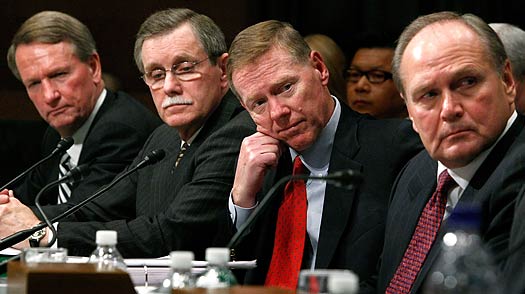
Now that the GM share finally is trading a wee bit above its IPO price, The Treasury is eager to bail from the bailout. The government’s fiance department announced “plans to sell 30 million shares of General Motors Co common stock as part of its ongoing effort to wind down the government’s stake in the bailed-out automaker,” Reuters says.

Car Fight: Chrysler Calls Out Tesla – Who Paid Up First?
Ommm – ummmm
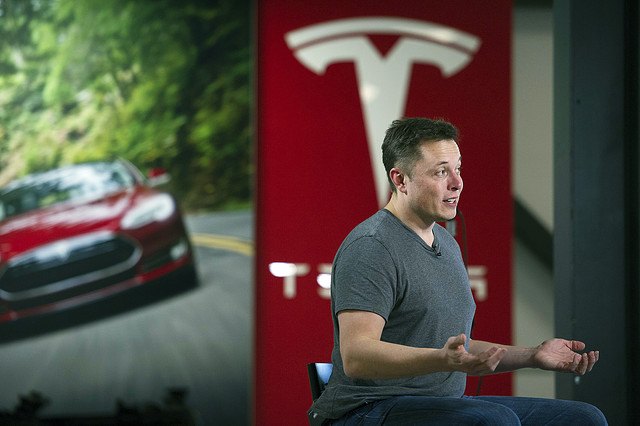
The first thing they drummed into me when I started as a copywriter for Volkswagen: “Never use superlatives. They only get you in trouble.” Now, Elon Musk is in trouble over who was first to fully pay back the government loan.
Treasury To Unload Remaining GM Stake

The U.S. Treasury has begun a sale of its remaining stake in General Motors, with a goal of selling its remaining shares by March 2014. Currently, the government owns more than 300 million shares in the auto maker, equivalent to a 19 percent stake.

Treasury Won't Sell GM Stock, Hopes For Pick-Up
Throwing investment advice of eminent experts such as the LA Times editorial board and former GM CEO Ed Whitacre in the wind, the Treasury will not sell its holdings in GM as recommended, but hold on to the stock. Why? For the same reasons that prompt smaller scale investors to hold on: The Treasury “expects the stock to rise in the future due to a roll-out of several new vehicles,” people familiar with Treasury’s thinking told Reuters.
GM Execs Want Their Jets Back, Want Taxpayers Take A Bath

GM wants the Treasury to sell its GM shares at a huge loss, says the Wall Street Journal. Nothing doing, says the Department of the Treasury. It does not appear to need the cash (it can have it printed if needed) and is holding out for a slightly smaller loss.
Everything Sells At The Right Price… Even Bob Lutz's Advice!
An earlier report, stating that Bob Lutz would be returning to GM as a consultant was true… but so was the news that Treasury opposed GM’s plans to pay its longtime executive, who retired a little over a year ago. Speaking to the press at the New York Auto Show, Maximum Bob confirms that he is on the board of Lotus, and revealed that he is doing “pro-bono” work as a consultant for GM’s new product development boss, Mary Barra. According to Automotive News [sub], the prospect of Lutz returning as a GM consultant ( ala Fritz Henderson) caused such a stir at Treasury, that he decided to work informally at GM, without pay. Given that Lutz’s heavily-hyped products have yet to return GM to steady retail market share growth, perhaps GM is finally paying him what he’s worth?

"Government Motors": The Exit Strategy
With GM’s share price slipping below $30, the cries are going up again around the internet about the government’s stake in the bailed-out automaker. Thus far the Treasury has remained mum on its exit strategy, only indicating that it would emphasize speed rather than maximum return as it charted the course for its sell-off. But now, Reuters reports that “a big chunk” of the government’s 33% remaining stake in GM could be sold “in the summer or fall.” With the government’s shares “locked up” until May 22, that could mean the government is bailing as quickly as possible at a time when GM’s stock is hitting post-bankruptcy lows, and its CEO offers little in the way of explanations beyond blaming the Japanese tsunami and rising fuel prices. The Wall Street Journal figures taxpayers would lose $11b on its “investment” in GM equity if the government sold at today’s prices (the stock must hit $53 for break-even), but reports that political motivations outweigh fiscal considerations. The White House does not want “Government Motors” to be an issue in the next election.
The Invisible Hand Of The United States Treasury

Ever since it became clear that the government would rescue General Motors and Chrysler, the Treasury Department has made it clear that it would stay out of “day to day” decision making at the rescued automakers. Allowing the rescued firms to operate independently was a political calculation based on the desire to keep politics from affecting sales at the two rescued automakers, but according to a Reuters special report, Treasury has not been able to keep its hands completely out of important decisions concerning the future of the two firms. Particularly in terms of setting up GM’s Initial Public Offering, Reuters found that the Treasury made important decisions affecting
its speed and size, the fees paid to the bankers and the potential involvement of offshore investors
Though this has kept the IPO out of election season and all of its potential for political problems, there is some downside to the Treasury’s involvement, particularly because it will not be exiting its equity position in GM until about 18 months after the IPO. As a result, analysts predict problems securing investors in a firm that may still be subject to ongoing government control. Morningstar’s David Whiston tells Reuters
I’m sure that there will be some institutional investors, and even some individual investors, that it scares away
The Auto Bailout Explained

Quote Of The Day: Escape From Government Motors Edition

We want the government out, period. We don’t want to be known as Government Motors.
GM Chairman and CEO Ed Whitacre channels his inner Rick “Bankruptcy is not an option” Wagoner in the New York Times, telling the taxpayers who put him in charge of a bailout-rinsed General Motors to get lost. Sure Ed, we’ll all go NSFW ourselves just as soon as we get our $49.5 billion back. Talk about putting the throat-clearing guttural in chutzpah…
GM Asks IPO Underwriters To Buy Its Cars
Bloomberg reports that GM has already pulled off one of the ballsiest IPO moves ever, by asking banks bidding to underwrite its IPO to use fees to subsidize the purchase of GM vehicles by its employees. According to the report, a GM document sent to bidding banks solicited
ideas as to how we can use the IPO to reposition GM and its vehicles within the investment community including your firm’s willingness to reinvest any portion of any underwriting fees into the purchase of GM vehicles for your employees and/or company use.
Treasury Hires Lazard As GM Moves Towards IPO

The Detroit News reports that the Treasury Department has hired Lazard Frères & Co. as an advisor to GM’s forthcoming IPO sale. And with news of the hiring comes confirmation that GM’s IPO really is coming soon: the investment bank will receive half a million dollars, according to the DetN, but that amount will drop to $250,000 if the IPO isn’t completed within one year. If you’re one of the GM boosters who believes that an IPO will repay all or most of the government’s investment in GM, it’s time to start saving those pennies. You have less than a year now to put your money where your mouth has been.
Treasury: GM "Payback" Claims Not Misleading
In response to Senator Chuck Grassley’s concern that GM’s claim to have paid back taxpayer loans was misleading, the US Treasury is now saying that it has no problem with The General’s statements. According to the Freep, a Treasury letter to Grassley explains that:
GM’s decision to pay off the loan signaled the automaker did not face “extraordinary expenses,” and that Treasury approved the loan payoff.
“The fact that GM made the determination and repaid the remaining $4.7 billion to the U.S. government now is good news for the company, our investment and the American people,” said Herbert Allison, assistant Treasury secretary for financial stability.
Strictly speaking, GM’s claim to have paid back all US Government loans is correct. The only issue is that GM’s ad touting the payback makes no reference to the fact that it still owes the Treasury upwards of $40b. If that misleads folks, well, apparently the Treasury Department isn’t going to do anything about it.
Quote Of The Day: Mission Accomplished Edition
Taxpayers, your partial refund is in. Now quick, make with the pension bailout and EV subsidies. Oh, and be sure to pick up a new Chevy, Cadillac, Buick or GMC as a “thank you” present for this act of patriotic largess.












Recent Comments