

By Edward Niedermeyer on July 14, 2009

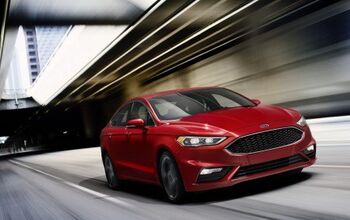
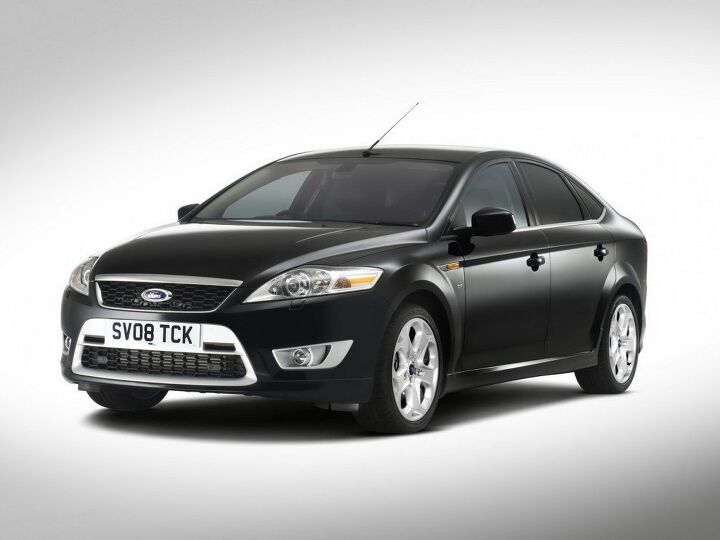
According to the Detroit News, both Ford and GM are looking at unifying their full- and mid-sized car platforms around a single platform in hopes of capturing economies of scale. Ford will move future Taurus and Fusion models to its European (Mondeo) C/D platform, while GM is looking at basing a future Impala on the Malibu’s Epsilon II platform. The Ford Flex/MKT would also likely move to the C/D platform, leaving the Taurus/Current Flex’s D3 platform available for the next generation Explorer.

While some analysts laud the move towards global platforms and lower engineering costs, this plan will still require major work to avoid the old bugbear of brand engineering. Especially at GM, where Epsilon II (and a Holden-developed stretched variant) could underpin as many as six sedans (Caddy XTS, Buick LaCrosse, Buick Lucerne, Buick Regal, Chevy Malibu, Chevy Impala) not counting onward-soldiering Saturns and Saabs. Meanwhile, as Ford and GM blandify their mid/full-size sedans in the name of cost-cutting, Kia is aiming at capturing enthusiasm and economies of scale by offering a Genesis-based RWD Amanti. Motor Trend says a V8 won’t be available on the Amanti, but budget RWD could just be a key differentiation amidst platform-sharing renaissance in Detroit.

59 Comments on “Mid-Sized Madness...”


  • tced2

    How many times have we heard that using a common platform will save money? I have a supercomputer tallying up the total, but the number cannot be printed because it’s increasing all the time.
    This is a fine idea as long as it’s artfully done. State-of-the-art is constantly changing and makers of anything have to constantly update their offerings to make them economically attractive.

  • superbadd75

    Hyundai/Kia is really taking the fight to the rest of the auto industry. Introducing a low(er) price rear-drive sedan in a market that is absent of such a thing is something Ford and GM could have done, but didn’t. I really like what they’re doing, and they’ve finally learned to make a good looking car as well even if it is by borrowing design cues from other vehicles.

  • Douglas Ford
    dwford

    Yeah, the budget RWD worked out great for Pontiac. Pontiac at least had a history of RWD cars and some semblance of a performance image. I am sure all those Kia shoppers will love it.

    BTW, the fact that the Hyundai Genesis is RWD is a major turnoff to many buyers, who expect to be able to get AWD in their luxury sedan.

    Considering that the new Taurus has been slammed for being huge and overweight, I don’t see a problem switching to a lighter and smaller platform, and the ability to combine 3 different platforms into one will save alot of money for Ford.

  • Nick Dasko
    dasko

    This needs a lot of work. Mondeos are too small to be midsized in this market. They tried it here before. Remember the Contour?

  • paris-dakar

    So GM plans on having two Epsilon Platform Chevys?

    Adventures in genius. Why don’t they just rebadge the Aura?

  • menno

    Chrysler Sebring, Mitsubishi Lancer, Mitsubishi Outlander, Dodge Avenger, Dodge Caliber and Dodge Journey all share one platform.

    Other than the originator of the platform (Mitsubishi), which of those vehicles is successful on the market (or worth damn)?

    Point made? I think so.

  • Douglas Ford
    dwford

    @dasko:

    The new Mondeo platform is actually LARGER than our Fusion. Look up the specs. And I believe the Volvo S80 is built on a stretched version on that platform, so it will carry on the recent tradition of the large Ford being built on a Volvo-esque chassis.

    @Paris-dakar: 2 Epsilon Chevys, 2 Epsilon Buicks, an Epsilon Caddy, and on..

    I don’t have a problem with platform sharing between brands, but it defeats the purpose if the cars end up in the same price class competing against each other.

  • Douglas Ford
    dwford

    @Menno:

    and even the Mitsu is only mildly successful.

  • Chris
    carguy

    Will most buyers in this segment care? The majority probably won’t. As long as the end products are good then it is a viable strategy.

  • 86er

    While some analysts laud the move towards global platforms and lower engineering costs, this plan will still require major work to avoid the old bugbear of brand engineering.

    Not to mention it doesn’t create a full sized car.

    The only place downsizing should occur is in curb weight. Suppliers should be working on making their safety equipment lighter, which is one of the main culprits these days. I’m confident they can.

    Indeed, a full size car to me (and most North Americans) means ‘wide’ as much as it does ‘long’. Stretching the Epsilon platform that was designed for European streets doesn’t cut it, in my book.

    And no, this doesn’t mean recycling platforms from the 1970s. Can we can the Panther abuse for one discussion, please?

  • ravenchris

    The march to cheapen products continues…

  • Marlon Hogg
    SupaMan

    In GM’s case to have that many cars (Caddy XTS, Buick LaCrosse, Buick Lucerne, Buick Regal, Chevy Malibu, Chevy Impala) share one platform, I hope they’ll be able to sufficiently differentiate them all. I’m already seeing an overlap between the Cadillac XTS and Buick Lacrosse.

    Ford, I think has a much better plan.

    We’ll see…

  • Autojunkie

    VW does it and they do it well…

  • Sammy B

    If Kia can see fit to offer a manual transmission in the new Amanti, it may just start to steal some sales from the Mazda6 and Altima as the enthusiasts’ choice for a family car. [I realize the new Mazda6 doesn't have a V6+manual option anymore]

    Heck, if they could get a RWD V6 5MT to market at $24,000 I think they’d do pretty well for themselves. At that price you might even see some Civic Si-intenders make the jump.

  • paris-dakar

    I don’t have a problem with platform sharing between brands, but it defeats the purpose if the cars end up in the same price class competing against each other.

    Platform sharing between Brands is one thing, but Platform sharing within a Brand is a bad trend.

    Chevy is going to end up like Ford in the 80s selling a bunch of Fox Platform vehicles. Remember the Fox Fairmont, Fox Mustang, Fox Granada and Fox LTD?

    I still think GM should develop a RWD BOF B-Car replacement. That will at least occupy a unique position in the market. An Episilon Impala won’t even occupy a unique position at the Chevy dealer.

  • Eitan Novotny

    Autojunkie, another company that does it well is Subaru.

    It’s not obvious from the outside, but they have a total of 1 platform and 1 overall engine design. (H6 is a 6cyl version of their H4, H4 comes in DOHC and SOHC flavors, as well as optional Turbo). Overall, their engines, if you look at them, clearly share overall design. Heck, you can pretty much pluck any Subaru engine out of any Subaru, and plug it into another with little headache.

    As for Chassis, The Legacy/Outback, Impreza, Forrester and Tribeca all sit on the same basic design. From an engineering standpoint it’s very efficient.

    The note here is that each car has lots of differences, but since the overall design is shared, you can easily migrate changes from one into another.

    Personally I’ve stripped interior of both Legacy and Impreza. It’s eerie how much they look the same underneath the carpet.

  • Michael Karesh

    Eitan,

    I’m not sure Subaru does it so well. The smaller products off the shared platform are overweight and have uncompetitive fuel economy, while the Tribeca is too small to be competitive.

    Very often platform-sharing costs a lot more in effort and suboptimized product than it saves in costs.

  • Pete Madsen
    fincar1

    True what you said about Subaru…I’ve seen SVX cars (on ebay) that have 5-speed trannies swapped into them. I’d think that would be quite an improvement, done right.

  • njoneer (of GM)

    GM’s problem will be the way they differentiate: by handicapping some of those models.

    The Caddy and Buick can’t BOTH be best-in-class FWD entry-luxury cars. The Buick will be hobbled to protect the Caddy.

    Oh wait, there is another Buick. That one has to be a step down from the first Buick…

  • Emil Martinsek
    RobertSD

    Let’s clear a few things here. The Mondeo is basically the same length, but the wheelbase is nearly 5″ longer and it is about 2″ wider than the Fusion. Interior space is slightly more generous, but not much more.

    But don’t imagine this “sharing” as the Fusion will be 112″ wheelbase and the Taurus will look exactly like it except with a 117″ wheelbase and 9 extra inches of length. Ford will be creating I guess what you could call a “sub” platform. It will use the same basic architecture, be able to share many of the same parts, but it will have a longer wheelbase and may be wider. Ford will make completely different top hats on those two platforms. A similar thing will be carried out for the Edge, Flex and Explorer.

    And it will save money and weight. Increased sharing of parts worldwide, lower development costs. It may even allow Ford to design different top hats – not just different sheetmetal (ala Flex/MKT) to differentiate brands. GM and Ford have the right idea for their bread and butter in the U.S. market. Maybe now they can return to RWD – I’m hearing rumblings about GRWD or another similar program again.

  • Nicholas Weaver
    Nicholas Weaver

    Don’t forget the Avalon as another point that this style CAN work.

  • Eitan Novotny

    Michael Karesh.

    Their small car is heavy, but they fill a niche. They have small AWD cars that handle well, are durable, and are a staple of snow covered areas as a result.

    They’re not going to be a big auto maker, but if you look at sales, they’re still growing, so there is something to be said for what Subaru is doing.

  • Facebook User

    First…superbadd75
    If you are referring to Hyundai as “borrowing” auto designs, that has to be THE most understatement I have heard.
    I remember the first thing I thought when Hyundai began becoming successful again…WOW!, they look great…but something seemed verrrrry familiar!
    Yup, they were stealing the great looks for just about everybody. .
    Although it is done by all to some degree, Hyundai has brought it to near laughable proportions.
    It’s actually stealing.

    Its no wonder they can afford to put their money elsewhere…they don’t have a design department.
    They have a cut and paste shop.

    Next
    dasko
    The contour was really a very nice car.
    And its yet another example of the American Public being fickle!
    Just because you build it, that doesn’t mean they will come.

    Finally, the American Public struggles.
    Its a rather build as I say, not as I buy mentality.
    What are the real “family” sedans out there today?

    Taurus.
    Avalon.
    DTS.
    Buick.

    Even the expensive Euro sports sedans are really smaller inside and not fun for cross-country/large family rides.

    I will miss the large Taurus car.

  • Douglas Ford
    dwford

    @Paulie:

    Then make sure you buy a Taurus now. You only have a few years…

  • Rich Jones
    rjones

    What would be the point of GM offering both an Impala and Malibu based on the same platform? Are they almost identical in dimensions?

  • Facebook User

    I wish Ford would just start importing their Euro Mondeo and Focus and get rid of the lackluster Focus and Fusion appliances we get.

    Then, ditch the “way overpriced and too big” Taurus that no one is going to buy in favor of the proper and higher quality Falcon from Down Under. At that point, Ford would have something worth taking a look at.

  • Runfromcheney

    dasko: They are just using the Mondeo’s platform. They are not bringing the model itself to the US.

  • michael delborrell
    dolorean23

    This needs a lot of work. Mondeos are too small to be midsized in this market. They tried it here before. Remember the Contour?

    Actually I do. I owned a ‘98 SVT Model fully loaded for less than $20K and took her to Germany where I spooled the 200 HP V6 (weight a little over 2800 lbs) to 155 mph and ran her there for nearly 20 minutes. Then settled back for a four hour drive doing 120. Not bad for a Ford.

    Contours are generally considered bad cars for the same reason Corollas are. The four bangers were mainly bought by the aged and the bland whose only concern was mileage, reliability, and price, which the Contour had.

  • h82w8

    Why is the platform sharing meme always big fodder for auto critics? I mean, come on, it’s not a new concept: It’s been done now repeatedly for decades by almost every manufacturer in the world. If it didn’t produce positive financial results (lower costs, higher margins) for manufacturers on the whole over time, and positive overall results in the cars produced, it wouldn’t be the way things are done.

    Criticizing platform and parts sharing is like criticizing, I dunno, blog templates: Templates, like car platforms, simply enable bloggers or web designers to create unique blogs and sites using common tools or underlying architectures. What results is either good or not-so-good, depending on how well the designer executes his or her vision for the site or blog. With cars, it’s engineers and designers attempting to create unique models using a common starting point. What results is what is worthy of praise or criticism, based on how well the engineering/design team are able to execute within their budget. Of course, if the platform is lousy to begin with, then probably nothing that results from it will likely be “good”.

    Thus, platform sharing ipso facto is not the problem. How well a manufacturer executes model differentiation between different models using the same basic platform architecture, is. Example of poor platform sharing: ’80s era GM J-code. Example of generally well-executed platform engineering: Ford/Mazda CD3. There are many others, of course, on both sides of the ledger.

    Platform and parts sharing across manufacturer model lines is what it is, and won’t change any time soon. Nor will the results based on good or bad engineering & design execution using (at least some) commonality in platform and parts.

  • psarhjinian

    Is there really a point to a full-size car? As far as I can tell, they either sell a miserable fraction of their midsize equivalent (Avalon, Maxima, Taurus) or they badly cannibalize the midsizer (Malibu).

    Since mid-size cars are already quite large, and anyone who needs more is probably either intending to buy a crossover/minivan or pushing septagenarian status, why not scrap the fullsize class altogether? Would you really miss the Avalon, Maxima or Taurus if they went away, especially when the Camry, Altima and Fusion are so good. Heck, unless you buy by the pound, would you miss the Impala and Amanti?

    I mean, rear-drive and all sounds nice, but the buyers for a rear-drive nonpremium car are stacked none deep. Mass-market buyers are looking for space, ride, economy and packaging, and rear-drive compromises all of those.

  • Jaywalker

    Back to the X-Body, since that worked so well for GM… Shall we name them “Citation” again?

  • paris-dakar

    Is there really a point to a full-size car? As far as I can tell, they either sell a miserable fraction of their midsize equivalent (Avalon, Maxima, Taurus) or they badly cannibalize the midsizer (Malibu).

    If the Full Size is a RWD BOF, it has a point to fleet customers and people who want to tow smaller things like Bass Boats, Jet Skis and Small Camper Trailers but don’t want to drive a Truck. But a Full Size FWD Unibody isn’t going to be that attractive.

    If I was GM, I’d make a modernized B-Car. It would be Chevy Caprice (Fleet Special, Column Shift), Chevy Impala (Retail, Bucket Seat, Floor Shift), Buick LeSabre (Town Car Competitor). Have Wagon variants available too.

    There’s enough demand for a car like that to justify a dedicated Plant.

  • Scotty

    I thought the Impala outsold the Malibu because it is a larger vehicle inside. Wouldn’t this hurt the Impala’s size or no?

  • 86er

    Is there really a point to a full-size car? As far as I can tell, they either sell a miserable fraction of their midsize equivalent (Avalon, Maxima, Taurus) or they badly cannibalize the midsizer (Malibu).

    I’d go further than Paris-Dakar and say that this is where the opportunity lies to create the real American car that Sajeev was talking about last week.

    Problem is, all the “full size” cars aren’t much wider than their mid-size brethren, not to mention have absolutely no styling cues to differentiate them. So what’s the point indeed?

    It’s easy to say “kill the full-size car” when everyone does such a half-assed job of it and then wonders why buyers are lined up “none-deep”.

  • guyincognito

    While the Fusion is a good car, I would love to see the Mondeo here. I think it looks great and am sure it drives well, based on my experience with the last version. It is plenty big as well. I think it would sell well even without major tweaks for the US market.

    Moving to less platforms is definitely a good thing, IMHO. I remember when Ford had several different midsize platforms going at once, in NA alone. Parts sharing would not only lower cost but also improve quality, reliability, and serviceability.

    Perhaps they should also consider reducing models as well, especially GM. How could they possibly justify selling a Malibu and Impala which are based on the same platform?

  • dcdriver

    Speaking of mid-size vs. full-size, can the Accord be considered a mid-sizer any more? It is now the same length as the previous gen Maxima and is slightly wider too.

  • psarhjinian

    If the Full Size is a RWD BOF, it has a point to fleet customers and people who want to tow smaller things like Bass Boats, Jet Skis and Small Camper Trailers but don’t want to drive a Truck. But a Full Size FWD Unibody isn’t going to be that attractive.

    Are there really that many people who fall into the latter category? I can’t recall the last time I saw a BOF car towing anything, but I see crossovers, minivans and small pickups doing the same all the time. Anyone who wants to tow anything is probably, in North America, statistically more likely to be a truck/crossover/van buyer anyway.

    You’re right about fleets, but outside of that I think the market for full-size cars (BOF, rear-drive, unibody or whatever) doesn’t exist.

  • paris-dakar

    Another market segment for the RWD BOF Sedan – performance types (think the old Impala SS). Drop the Corvette Engines in it and it would make a great premium performance sedan, but its size weight and simply Solid Rear Axle Chassis wouldn’t cross compete with Cadillac.

    With a Leather Interior, a car like that would sell for $40K (and make money doing it, considering it would share its underpinnings with a High Volume vehicle).

    The B-Car Impala SS was a very popular car right up to the day it was cancelled.

  • 86er

    Speaking of mid-size vs. full-size, can the Accord be considered a mid-sizer any more? It is now the same length as the previous gen Maxima and is slightly wider too.

    Honda’s just giving N. Americans what they want, a full size car.

    (In fact, if you purchase an Accord now w/o sunroof, the EPA puts it in the large car class).

  • 86er

    Are there really that many people who fall into the latter category? I can’t recall the last time I saw a BOF car towing anything, but I see crossovers, minivans and small pickups doing the same all the time. Anyone who wants to tow anything is probably, in North America, statistically more likely to be a truck/crossover/van buyer anyway.

    You’re right about fleets, but outside of that I think the market for full-size cars (BOF, rear-drive, unibody or whatever) doesn’t exist.

    There’s a plethora of choices now since the heyday of the full size car, I’ll give you that.

    But my thesis is that the automakers abandoned people who traditionally bought full size cars, not the other way around. They abandoned or neglected their full size platforms, or gave us milquetoast pale imitations like the W Body Impala and D3 Taurus. You could almost say that faced with an automaker that doesn’t care about you, what choice would you have?

    And don’t say that people were turned off by the antiquated platforms, otherwise how to explain the hordes who jumped into crew cab Silverados and Tahoes.

  • psarhjinian

    Problem is, all the “full size” cars aren’t much wider than their mid-size brethren, not to mention have absolutely no styling cues to differentiate them. So what’s the point indeed?

    I don’t think there’s any point to making them wider. There’s not a lot of point to a wide-body, two-row sedan when a normal-width, three-row crossover or minivan does much of the same duties better.

    A modern, unibody minivan or crossover can handle as well as, weigh the same as, provide better safety than, get better mileage than and fit more people and their stuff more comfortably than any full size sedan ever could. Unless you have a very specific set of needs (eg, you’re a fleet buyer, you have issues with the image a crossover or van projects, you intend to modify the vehicle) there’s no reason pick a full-size sedan.

    The full-size sedan, like the full-size BoF van, is really a dinosaur—no, the alligator—of the automotive world. It works very well in it’s very specific niches, but it’s been outcompeted by more modern, more brethren.

    Given what’s happening in the luxury market, I’d say we’re not too far off from full-sizers making a departure there, too. The R-Class may not have succeeded, but it did sow the ground for the Q7, BMW PAS and others.

  • psarhjinian

    I thought the Impala outsold the Malibu because it is a larger vehicle inside. Wouldn’t this hurt the Impala’s size or no?

    The Impala: a) sells to fleets in huge numbers and b) can be had cheaper than the Malibu at the same feature-equivalent point.

    Inside, the Malibu is slightly narrower, but the Impala is much more uncomfortable in every other way. The low, angled, short-cushioned rear seat of the Impala is a killer.

  • 86er

    The full-size sedan, like the full-size BoF van, is really a dinosaur—no, the alligator—of the automotive world.

    You may have given this class of vehicle far greater praise than you intended.

    If full size cars survive for another 65 million years, there’ll be no complaints from this quarter.

    :)

  • 86er

    psarhjinian: The Impala: a) sells to fleets in huge numbers and b) can be had cheaper than the Malibu at the same feature-equivalent point.

    Inside, the Malibu is slightly narrower, but the Impala is much more uncomfortable in every other way. The low, angled, short-cushioned rear seat of the Impala is a killer.

    You’re picking on the low-hanging fruit again. You and I both know that the W-Body is antiquated and isn’t appropriate to compare as you have here.

    Otherwise, nothing of what you said is inaccurate, outside that context.

    A modern, unibody minivan or crossover can handle as well as, weigh the same as, provide better safety than, get better mileage than and fit more people and their stuff more comfortably than any full size sedan ever could. (emphasis mine)

    Surely you jest.

  • dcdriver

    Another thing that kills full-size sedans is the fact that mid-size sedans keep getting bigger— see new Accord and Mazda6. Also it seems the marketing money is spent way more on the mid-sizers– Malibu, Fushion etc. get way more ad time than Impala and Taurus.

  • psarhjinian

    And don’t say that people were turned off by the antiquated platforms, otherwise how to explain the hordes who jumped into crew cab Silverados and Tahoes.

    I think the reason people jumped is that the trucks offered no significant tradeoffs versus the BoF sedans while offering significant advantages in terms of space. That they allowed a higher profit by way of CAFE is just icing on the cake.

    Neither Toyota nor Honda offer a “real” full-size sedan. GM dumped theirs almost a decade ago and Ford reserves them for fleet sales only. Chrysler made about the only attempt, and theirs sells (sold) on the basis of style more than anything else. I think that, were there really a market for this kind of car, it would have been exploited; instead, what market there was simply dried up and now the only people who want these cars are a small, unprofitable minority who, even if they were offered a modern equivalent of the Panther, probably wouldn’t buy it in enough quantities to make it worthwhile.

    I can’t help but think of Saturn and Saab owners who clamoured for new cars “just like the S-Series or 900″ but, in truth, just kept buying used S-Series and 900s.

  • ajla

    To me the biggest advantage to a full size sedan is that the longer wheelbase (115 inches or greater), and not needing a suspension that gives a big payload capacity, allows for a very nice ride. Trucks, midsize cars, compact crossovers, and SUVs just can’t match it.

    Some of the bigger crossovers like the Lamdas and Flex come close, but they usually also handle worse than a full size car and come with a higher center of gravity.

  • paris-dakar

    But my thesis is that the automakers abandoned people who traditionally bought full size cars, not the other way around. They abandoned or neglected their full size platforms, or gave us milquetoast pale imitations like the W Body Impala and D3 Taurus. You could almost say that faced with an automaker that doesn’t care about you, what choice would you have?

    I agree with that. No one has even tried to make a similiar vehicle with up-to-date technology.

    I had a 1992 LeSabre (granted FWD Unibody), it weighed about 3600 lbs and got mid 20s mixed cycle driving with the 210hp 3800 V6. With a modern Hydroformed Frame, GM should easily be able to make a RWD BOF Sedan of similar size at say 4000lbs. With a V6/6L70 Trans, the base model should get mid 20s, 30+ Highway mileage.

    And the RWD Layout is easily adaptable to a High Performance V8, unlike the God-Awful W-Car Impala SS they make now.

  • 86er

    I think the reason people jumped is that the trucks offered no significant tradeoffs versus the BoF sedans while offering significant advantages in terms of space.

    Not to mention that people really wanted to stay in full sized vehicles as long as possible.

    GM dumped theirs almost a decade ago and Ford reserves them for fleet sales only. Chrysler made about the only attempt, and theirs sells (sold) on the basis of style more than anything else.

    Ok, a few points here. GM converted its Arlington factory to, you guessed it, trucks and SUVs in 1995, after GM botched the new sheetmetal and made a few half-hearted attempts to keep it relevant. I’m as surprised as you are that they canned it, I really am.

    Ford, well: vine, withered, etc.

    Chrysler: Sold on style indeed. What a shock that people weren’t into an unreliable vehicle with interior by Fisher Price, and the company hasn’t laid a finger on it since 2004.

    Bottom line, the Detroit 3 left the full size sedan market to chase after the SUV and pickup trend and, like in so many other ways, left the B-Body and Panther platform stagnant while arrogantly milking the profits. It has all the ring to it of a self-fulfilling prophesy, in my view.

    As you said, Honda & Toyota have never had a real full sizer in the game in N. America, but now lo and behold we have ourselves a Honda Accord classified by the EPA as a large car.

    Who was clamouring for this car, indeed.

  • psarhjinian

    Surely you jest.

    About fuel economy? Compare a 3.5L Chrysler 300 or Dodge Charger to a Toyota Sienna. The Sienna gets functionally the same mileage (per both CR and EPA cycle) and is vastly more comfortable. Admittedly, the Sienna is a bit of a ringer.

    We could do the test again, say with the G8 and Traverse. The fuel economy gap is larger, but not hugely so, and the Traverse is once again a better car for most people in every way.

    You’re picking on the low-hanging fruit again. You and I both know that the W-Body is antiquated and isn’t appropriate to compare as you have here.

    That may well be true, but the point was that the Malibu really is very comfortable and that the Impala outsells it on price alone. I question the point of making an Epsilon or Zeta-based Impala that offers barely any more utility for the stretch in size and price, especially when anyone who really needs the room is going to buy a Traverse.

    Fullsize sedans are a dying market.


Back to TopLeave a Reply

You must be logged in to post a comment.

You can also login using Facebook Connect. Connect with Facebook

Subscribe without commenting

Recent Comments


Auto Insurance GPS Navigation
Car Loans Auto Parts
Car Warranty Wheels
Automotive Tires Car Care