
By Paul Niedermeyer on November 3, 2009

CC 7 045 800

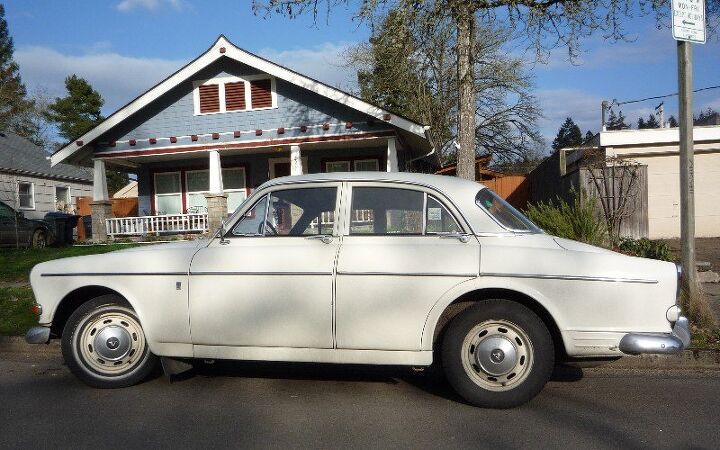
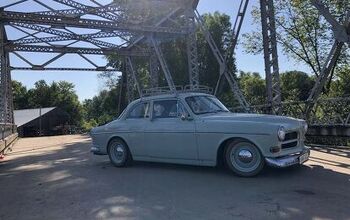
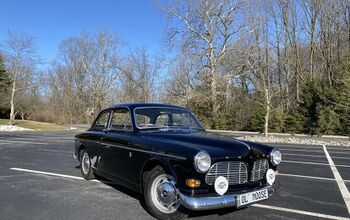
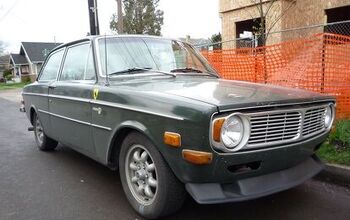
How exactly did the Volvo 122 Amazon achieve its mythological stature? Naming it after the eponymous nation of all-female warriors was a good start. Legendary ruggedness and durability solidified its status. Sporty performance burnished it further. Then there’s the magic belt: one of the twelve labors of Hercules was to secure the girdle of Hippolyta, the queen of the Amazons. Giving up her belt ended up costing Hippolyta her life. But it was a worthy sacrifice, because the Amazon’s first-ever three point seat belt has saved untold others theirs, and established the Volvo safety myth. That may now have run its course, but the Amazon’s status on the automotive Mt. Olympus is secure.

The Volvo 120 series was built from 1956 through 1970. When you think of the stereotypical Volvo driver from that period what comes to mind: college professor, engineer, writer? Well, one of each of those informed my early experiences with the 122, so we’ll start with that before we get all factual and historical. More probably, we’ll just mix it all up.
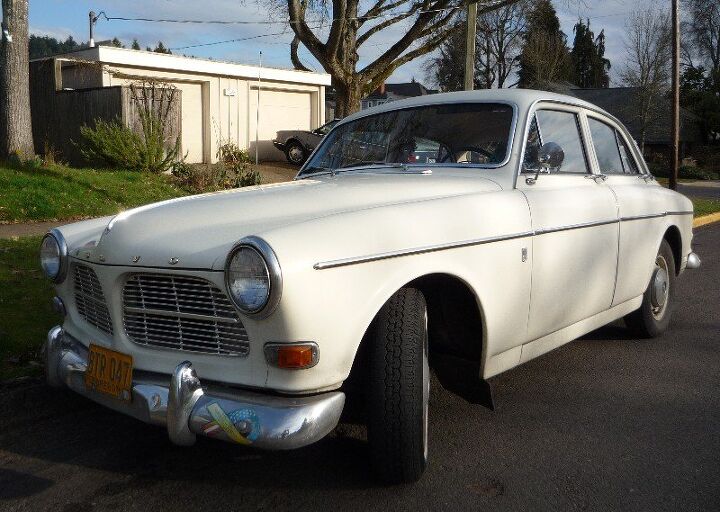
CC 7 049 800A professor uncle in Austria was driving one when I was there visiting in 1969. Now that was less predictable than for an academic counterpart in the US; Volvos were none too common in Europe outside of Scandinavian countries back then. But he tended to drive odd-balls; his previous ride was a Skoda 440, which had a passing resemblance to the Volvo.

He was ready for something faster than the 42 horsepower Skoda, and the 122S fit that bill. With its twin SU carbs and 115 horsepower, it was a brisk machine in its day. He took me for an exhilarating drive through some of Austria’s more spectacular mountain passes. The B18 engine got a good workout, and I got acquainted with Volvo’s built-in torque meter: that long whip of a stick shift which moved sideways in direct proportion to the engine’s torque curve.

With the twin-carb B18 engine, which appeared in 1961, the 122S was the BMW of its time, especially in the US. BMW’s presence here didn’t amount to much until the late sixties, and really started to gel in the seventies. The Amazon’s most direct competitor was probably the Peugeot 404, which rivaled it in ruggedness, but had that famous plush ride and was less overtly sporty. Alfa sedans were for the hard core Italianophiles, and those on good terms with their mechanic. BMW saw a gaping hole in the market for a car that covered all those bases, and never looked back. And Volvo’s sporting rep began its long decline.
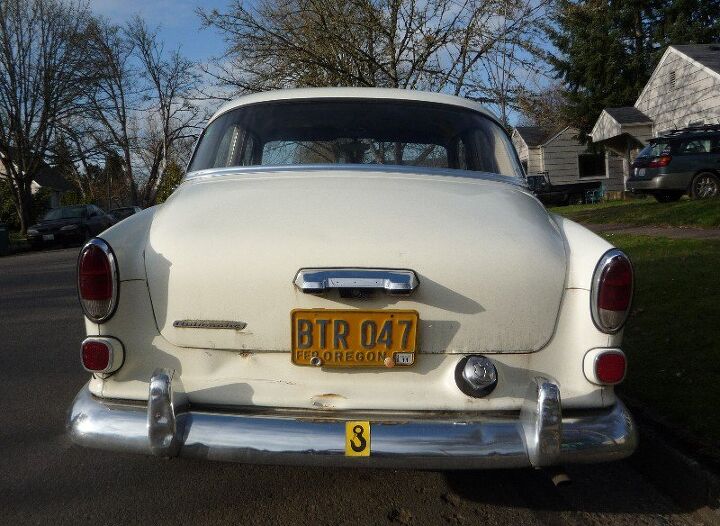
CC 7 048 800Back in Towson, my junior high buddy’s engineer Dad bought a 122S, a white one just like this one. He ordered his with the overdrive, which made sense for our long, flat freeways. Volvo’s B-Series engines were not exactly noted for their smooth and quiet manners, especially in the upper ranges. They were raucous but tough as nails, as has been all-too well proven by the guy (a science teacher, of course) who’s driven over 2.5 million miles in his 1966 P-1800, with only one rebuild. Does he use Marvel Mystery Oil?

Anyway, my friend’s Dad, the engineer, is the one who finally unveiled the mystery of overdrive units to me. For you young-uns, we’re talking about the accessory units that were mounted to the output shaft of manual transmissions. Volvo used the British Laycock de Normanville box, a version of which is still being built and supported by Gear Vendors in the US today. It’s an epicyclic gear set that, when activated and engaged, reduces rpms by a certain percentage on whatever gear it is available on. I seem to remember that the Volvo units worked only on third and fourth.

I’m a big fan of overdrives; my old ’66 Ford F-100 has one, and it turns the three-speed into perfectly spaced five gears, with 1900 rpm at sixty, in top. There’s the thrill of free-wheeling, which also lets me shift gears without the clutch; a good way to impress riders, if they have the guts to get in with me. And I’m freeweeling off topic again.
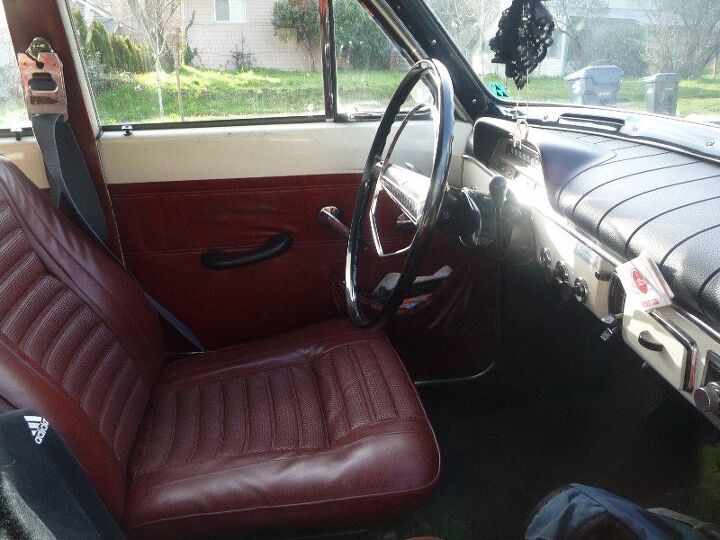
CC 7 047 800Well, our featured car doesn’t have overdrive; it’s got an automatic; yuck! The venerable Borg Warner 35 three-speed did yeoman duty in a raft of European cars in the sixties and seventies. Originally designed for smaller US cars, like the Lark and Rambler, it was efficient enough to put behind the modest powered engines common in Europe at the time. Of course, most European cars equipped with automatics ended up getting imported back to the US anyway. In the sixties, disabled war veterans were probably the main market for automatics in Europe. In the US, women were stereotyped as shift-less drivers, as in this vintage Volvo 122 tv ad.

My third driver association with the Amazon is the writer; Warren Weith, specifically. He had a regular column in Car and Driver, way back in the day. As a kid in that resource-poor era, I literally sucked up every word in car mags, cover to cover. But Warren Weith was a bit of a challenge to my fourteen-year old brain; his articles were thousands of words long, and he wrote in a rambling style that wasn’t exactly kid-friendly: lots of free-associations, references to women and youthful memories (does that remind you of someone?). And there were pointed references to his battered Volvo 122, which had a name, and I believe it was Gustaf. Well that’s a common enough Swedish name, but it turns out it’s also the name of the co-founder of Volvo, Gustaf Larson. Some things have to wait forty years to be revealed.
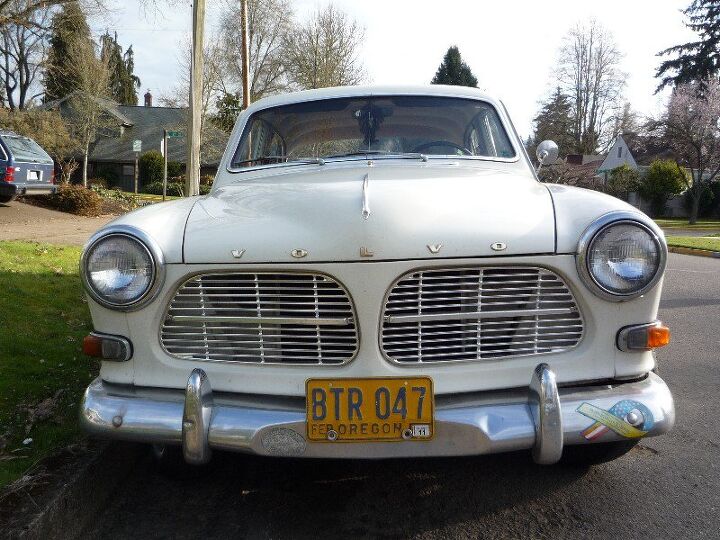
CC 7 046 800It’s a challenge to see any old Volvo genes expressed in today’s IKEA-Fords, soon to be IKEA-Geelys: they were straight-forward, hard-riding, sporty, noisy, and made of the finest Swedish steel forged with Thor’s own hammer. Well, there is that safety angle; in 1958, the 122 was the world’s first production car with three-point seatbelts, the Amazon girdle. But unless you’re a sucker for stale myths, does anyone really think new Volvos are safer than a Honda or Toyota?

34 Comments on “Curbside Classic: 1965 Volvo 122S Amazon...”


  • Robert Dodson

    My first car was a 1961 122s (bought used in 1983 or so). I miss it to this day. Nothing like it. My friend had one too, and I remember us racing along I-95 late one night going about 90, no problem. I think the shifter was about a yard long. A classic.

  • Pete Madsen
    fincar1

    I drove a 1966 station wagon with automatic as a loaner during one of the many times my Rover 2000 was in the shop. I thought it was a stone.

  • Dave
    DweezilSFV

    Maybe not as safe, but a helluva lot better looking.

    Looks like this one has gone decades without running into some idiot from IIHS buying it to do tabloid type stunt crashing with.

  • David Holzman

    I am very skeptical about the ‘66 P1800 with supposedly more than 2.5 million miles. That would be nearly 60,000 a year.

    I also question how much the name, “Amazon” had to do with the 120 series’ success. I loved these cars back in the day, and I knew them only as 120 series.

    But I absolutely love the style, and I totally agree that the nearest competitor was the 404. My recollection is that the 120 series lacked rack and pinion steering, and consequently had a lot of play, but I never drove one, so I don’t know where I got that recollection. Maybe from the 1970 boxy station wagon I drove across the country for someone in ‘74, which had play. Can anyone enlighten me on the 120 series steering? The Peugeot was the first car I ever drove with rack and pinion.

    The 404 was also, IMO, a great piece of styling, though as different from the Volvo as Italy and France are from Sweden.

    Funny, while I would guess that the professor demographic is accurate, I can’t remember knowing anyone who owned one of these, and my parents, both professors, had a large circle of professor friends. There were at least several 142s among their friends later on, however.

  • ktm_525

    Many similar bits to my P1800. The pinnacle of the 122 was the 123 GT. It came with the B20, had the overdrive standard, and sportier suspension.

  • Martin Schwoerer
    Martin Schwoerer

    Yet another great CC, on another great car. My personal memory of the Amazon is a slightly depressing one: a friend had a 122, we switched one afternoon, and while he was very polite about my P1800S, I thought the 122 was a much sweeter drive. It felt more alive, had a better steering set-up, and with no false GT pretensions, it remained a much more modern vehicle.

  • Juan Rosales
    JP

    @David: As a Volvo enthusiast, I can attest to the 2 million mile+ Volvo P1800. I am in semi-regular e-mail contact with Irv Gordon, the owner of the car, and it is currently at 2.7 million miles. He bought the car brand-new in 1966, and used it to commute to his job in Brooklyn, traveling each day from his residence in eastern Long Island – a 125-mile round trip. Irv has said that he loves driving so much, he’ll drive to Philadelphia for a cup of coffee or to Cincinnati for lunch – just for fun. What’s more, the B18 engine has been rebuilt just twice: the first time in 1978, at 680k miles, and last year when it had about 2.55 million. The transmission is also original, with only the front and rear seals, as well as the third-gear synchro, having been changed over the years.

    I myself own a ‘96 Volvo 850 with 87k original miles on it – it’s my summer car so I only drive it five months out of the year. Although it has been a very reliable car, it is more complex than the rear-drive Volvos of yesteryear and likely will not age as well as the older cars. The newer ones I wouldn’t even touch – too electronic for me.

  • VanillaDude

    Watching Volvo and Saab stumble and die off in today’s market hasn’t been pleasant. When the PAG was formed in Ford, it saved Volvo at a time when it needed saving. As a result, Volvo is in a better position to survive than does Saab. As we root for Ford and figure out ways to send it our taxmoney under the table, we are really helping Ford pay off what it put into Volvo but never got in return.

    With Geely looking like it will end up with Volvo, we might see them around for a while longer. If this happens, Volvo will once again be leading the auto industry, not in safety, speed or endurance, but as the first global auto manufacturer owned by the Chinese. When we consider how much the Chinese owns in US debt, we might as well give them GM just as banks used to hand out toasters when you opened an account with them.

  • Richard Beckner
    Bruce from DC

    My father bought the successor car to this one, the 144, in 1970. After having owned domestic up until that time (4 Chevys; 1 Ford), this was his first trip into foreign territory. Like most 4-cylinders of the era (the 4 in the Fiat 124 Spider being the exception in my experience) this engine was most usable under 4,000 rpm and developed little more than additional noise and vibration at engine speeds above that. It adopted well to my father’s short-shifting ways. The car was comfortable for 4 and a competent driver. It was helped by the fact that despite our living in metro Washington, DC, dad never bought a/c in his cars. Dad was so pleased with it, that, over the years, he bought 3 other Volvos (all of which had a/c and an autobox). However, his last Volvo, an 850, has been so problematic that he said goodbye to them and owns a Lexus ES. Having driven both my dad’s car and an autobox version of the same car, I can say that the autobox took quite an edge off the car’s performance, compared to the standard 4-speed. My dad did not have the electric overdrive.

    I will say that the 1966 Chevrolet Bel Air (with the 283 V8) that the Volvo replaced was a more relaxed highway cruiser. But, apart from the engine, it needed a lot of repair and was really too big. (I started college in 1967; so it was just my parents at home.)

  • panzerfaust

    I’d have never guessed that one.

  • Daniel Stern
    Daniel J. Stern

    The Amazon is so fabled and storied and loved (and was produced for such a long time) that I’ll bet you had to force yourself to stop writing and save some of it for a sequel. Even so, we might’ve had a word about the (seemingly) seven-foot-long shift lever angling upward-rearward from the very front of the transmission tunnel. Let the engine mounts get a little soft and worn, and you’d learn quickly to pull your inboard knee well clear of the shifter while cranking the engine: Whack-whack-whack-whack!

    The Volvo overdrives work only in 4th gear, not third.

    The Borg-Warner 35…efficient? Not! It was a crude, nasty, rough, not very efficient, and merely adequate in robustness. Volvo could have done a great deal better than this rather miserable autobox. Perhaps they could’ve bought A904s from Chrysler.

    I’m not sure if the manual transmission was offered with the Saxomat automatic clutch in the U.S. market, but it was definitely offered in some markets.

  • Paul Niedermeyer
    Paul Niedermeyer
    Daniel J. Stern:we might’ve had a word about the (seemingly) seven-foot-long shift lever

    Did you miss this line?:

    I got acquainted with Volvo’s built-in torque meter: that long whip of a stick shift which moved sideways in direct proportion to the engine’s torque curve.

    You are right about a 122 sequel; I’ve shot a wagon that sports a very un-original paint job for a future Part 2.

  • V572625694

    Thanks for reminding me about Warren Weith. I enjoyed his C&D columns more than anything else in the magazine. My other favorite writer was Henry Manney at Road & Track. Once you figured out his style, it was great fun.

    Strange that there’s so little of either one available on the Web.

  • Bruce Armstrong
    wmba

    The poor old 122S actually soldiered on with the B18D engine with 90hp, same as the PV544 in 1965. The P1800, the original British made version of the eventual 1800S, was rated at 115hp, engine type B18B.

    The Amazon name was not used in North America, but the car was called the Volvo Canadian in Canada once they started making it here in Dartmouth, Nova Scotia in 1963.

    Although the 122S had ball joint front suspension and front disc brakes compared to kingpins and drums for the 544, it weighed a good 250 pounds more. Slow. 2500 lbs versus 2250. Neither of them had a bad ride, so I’m a bit mystified at that remark.

    Yes, both these cars had recirculating ball steering, the fancy name I think for worm gear and peg, or was it cam and roller? Can’t remember much about the steering, which probably means it was fine in practice.

    I had a 1965 544, and loved it. By todays’s standards it was slow at 18 seconds in the quarter mile, but at the drags it won junior eliminator week after week. (Not mine, somebody else, who consistently ran 17.60s) You could absolutely hurl that gear lever from one gear to the next. Outside, Volvos’s sounded like a bike, so fast could you shift gears. You just rammed it home.

    Can’t agree that the power dies at 4,000. From there to 5900 where the valves floated, it howled.
    My pal at university and I were in a rally where his 544’s engine ran at 5500 rpm in second for mile after mile in deep mud, as it wouldn’t pull third. That’s tough work. No problem. Plus I still go back to the tight S curve behind Acadia U, where he was able to get the car through the combo at over 50 mph in 1965 with me as passenger hanging on. My 08 Legacy GT is quite unhappy at 70klicks, which is 5 to 8 mph slower, and I do not feel at all like going faster. What progress?

    Best of all, I saw a restored 544 the other week, and after a lot of hand waving, got the owner to stop! Got a little ride in it, and you know what, not too shabby at all. Still had that high driving position sort of glide to the motion. Narrow inside.

    Anyway, those old Volvos were the real thing. Drove a 1967 144S in 1966 and realized my dreams were shattered for getting a decent Volvo when I finished university. Slow and stately. Made for the family man who smoked a pipe and wore slippers ’round the house.

    Paul, thanks for the memories.

  • Paul Young
    peekay

    The great thing about the long shift lever was that it went directly into the top of the transmission, thus eliminating the need for a linkage. I think my ‘71 Alfa 1750 Berlina and ‘74 Alfa 2000 GTV both had that as well. Nice direct shifting.

    The Volvo’s transmission was about the size of a lunchbox as I recall. Compact and efficient.

  • Dean Bergman
    Juniper

    CC is one of my favorite things about TTAC
    However, as a 1965 high school graduate I would have much preferred a Malibu SS 350 HP 327 4spd posi to this tweedy New Englandy thing. Or a GTO or a Skylark or a Fairlane 500 or a ……
    Way too many fun choices over this thing.
    Sorry professor but that’s how it was.
    But it is part of automotive history. Which is where it belongs.

  • Ingvar

    Those were beautiful cars. Actually quite Italianate in its lines. I think that GHIA made more than a little consulting for that particular design. The most beautiful version has to be the early four-doors, with all red rear lights, and the car in two-tone paint with the roof painted in a lighter color. Absolutely stunning.

    What I was thinking of, was the intellectual pedigree of Volvo cars, the quintessential university professor-car. When did that start to happen? The notion came to my mind watching the conspiracy-thriller “All the Presidents’s Men”, starring Robert Redford and Dustin Hoffman as Woodward and Bernstein.

    And they drove around all day interviewing people, and they use an old and by then slightly tarnished mid-60’s dust white or light grey Volvo Amazon. The film was made in 1976, by then the car would have been at least ten years old. So, it’s a statement casting that car in thar particular role.

    Or they were true to form, and used the same brand of cars that Woodward/Bernstein actually drove. Thirty years after the facts, the use of car in that film is also telling, but what does it say? By then, Volvo was obviously the intellectul car per choice, and it was a known fact, and it was in widespread use? You tell me, when did all that happen?

  • Ingvar

    “The Amazon name was not used in North America.”

    Yes, that is true. Something to do with somebody else already owning the copyrights to that name outside Sweden (Or Europe?). To Swedes, they are simply known as Amazons, with the numerical configuration coming afterwards.

  • Ob Bop
    obbop

    Did those things naturally attract mice for some reason?

  • Hairy Pizda
    autonut

    I owned 122S (don’t know was it Amazon or not) while in college in late 70’s. It was a spring break project for me. I could not afford new car (or decent old one), and someone gave Volvo for free(!). The condition was I had to take it out of garage which had no roof and stood about 600 feet away from the ocean. Wheels, breaks and everything was rusted through. Engine wasn’t fired for 3 years. It could not be rocked or rolled it had to be pulled by a tow truck and it left burned rubber marks all the way to my house. My dad did restoration. The rust eating fluids were poured daily and engine was filled with kerosene. After 3 days kerosene was drained and with new battery (from junk yard new type) it fired up. After 5 minutes continuous work fire truck showed up – someone reported fire (engine smoked a little bit). It lasted 2 years with me. I could start moving in the third gear and did not need first and second.

  • Christopher Hope
    Dynamic88

    (((Warren Weith)))

    I’ve always like the Amazon. The styling reminds me of a Rambler, especially from the rear.

  • TAP

    I owned a European? 121 with a 1 bbl downdraft carb. 85hp I think. Talk about slow- but I loved it anyway. Dark gray with large rust holes and ~200K, but still solid. Started in -15F weather where a friend’s new Renault LeCar wouldn’t.
    Also owned a ‘63 P1800, 100hp, w/ o-drive that still worked! Ah, the little purple light. Oil leaks caused most units to burn up eventually. The Lucas wiring stranded me a few times, and frame was rotting below, but that stubby shifter and great brakes still impressed!
    My 1970 142S had great power and felt bulletproof, but wasn’t. Drive 100mi over the tune interval and it would coast to a stop, plus valve job and new cam both in under 50,000 mi!

  • Nicodemus

    No way there’s a 1966 P1800 with that mileage. They stopped building them in 1963.

  • Juan Rosales
    JP

    Actually, that’s incorrect – the P1800 continued all the way into the early 1970s, using the same old design from 1961. 1800 coupe production ended in 1972, and Volvo stopped production of the 1800ES (quasi-station wagon) version in June 1973.

  • Nicholas Ross
    NickR

    I always found these to be a very elegant design that stood up very well to the test of time. I never owned one myself, but was told by someone who had one that the seats were outstanding for long distance drives.

  • Pete Madsen
    fincar1

    I forgot to mention in my original post that Warren Weith was one of my favorite auto writers too. I agree with him that you don’t really know a car until you’ve washed it.

  • Nicodemus

    Nah, from 1963 they stopped making them in England, altered the designed somewhat and started production in Sweden. Henceforth they were called Volvo 1800s.

  • TAP

    Might have been from ‘64 on made in Sweden, and the S had 115hp, up 15 from my ‘63.

  • JohnRyder

    Always reminded me of a Rover P5B…I drove a ‘65 automatic for several years…loved it.

    Wish I still had it.

  • Michael
    LeftieBiker

    We had Volvos in our family since about the time I started grade school in the early Sixties. My father actually drag-raced a ‘65 122S, running in NHRA classes from “P” to “V” stock, on both 1/4 and 1/8th mile tracks. He’d managed to get about 150hp out of the stock configuration, and it was great fun watching him get that L O N G start ahead of American muscle cars, and usually cross the finish line first. He could easily run under the national record in most classes, but doing that would have disqualified him, so he’d sometimes be standing on the brakes *before* he crossed the finish line! Since the B18 loved running hot, he’d often get into ‘burnout’ matches with the competition before getting into starting position, getting them to run hot and misfire as the Volvo stayed cool and raucous. That WAAAAAAAAA it made off the starting line is something I will never forget. The car was called the “Violent Volvo.”

    Later on he took that same engine and bumped it up to about 220hp with Weber carbs, and ran it in a lightened 544 body, getting into the 14 second range in the quarter mile. (The 122S ran in the 15 second range.) We only ran that car a few times, sadly. My father drove both 122’s and P1800s’s, and my first car (which still sits moldering in my garage) was a ‘67 122S that was originally an automatic. I have very fond memories of both that car and a ‘64 P220 wagon I owned for a year or two. That car was pretty damned strong for an 86HP station wagon, and elegant, too. Sometimes I think the wagon was actually the best of the three Amazon body styles.

  • Joseph Adler
    Joseph

    I had a 1968 Pearl White 122S, which I bought in 1975 for $1300 with 91K. I sold it in 1987 with 186K for $1100. Twelve years and 95K miles, with only minor repairs, for $200 — not bad. The body was in perfect shape. I was moving from California to Ohio, and at the time you could still buy leaded gas in Calif. but not Ohio, and I thought that would be a problem, but I later heard it’s not such a big deal. Wish I hadn’t sold it.

  • Nicodemus

    @johnRyder

    No P5Bs until 1967. Yours must have been a plain old p5.

  • JohnRyder

    Nicodemus,

      My Volvo was a ‘65…I thought it looked like a Rover P5B….same graceful roofline. 

  • gasser

    My college roomate drove a ‘66 Volvo 122S that his Dad bought new for him when he took a year abroad in Europe.  Saved his life when he was hit broadside on a highway in England. Car was fixed and shipped to USA. He drove it for years. I remember the room was reasonable and I liked the shift when I drove. The comparison was my ‘61 Mercury Comet with the 85, not the 101 hp, engine and a two speed slushbox.  The Volvo was easy to park in New York City in the ’70s, but the repairs became increasingly expensive as the decade drew to a close and he traded it for a Chryco compact.


Back to TopLeave a Reply

You must be logged in to post a comment.

You can also login using Facebook Connect. Connect with Facebook

Subscribe without commenting

Recent Comments


Auto Insurance GPS Navigation
Car Loans Auto Parts
Car Warranty Wheels
Automotive Tires Car Care