By Edward Niedermeyer on October 27, 2009

Sometimes shooting par is good enough

Though we don’t have a [sub] for Consumer Reports‘ members-only data, their latest reliability survey summary has enough interesting tidbits to warrant a mention. Based on their subscriber base’s 1.4m autos, and using only data available for at least 100 examples of a given model, the survey is one of the better indicators of reliability out there (although when it comes to this topic there is no gospel). If nothing else, it’s hard to argue that CR’s reliability results aren’t influential, so sales are definitely at stake. The results? All Toyota/Lexus/Scion received ratings of “average” or better, an improvement over last year when CR found Camry V6, Tundra V8 4WD, and the Lexus GS AWD to be lacking. Honda/Acura and Subaru also showed extremely well where complete data was available, and Hyundai/Kia models were average or better except for Sedona and Entourage. Hybrids also scored surprisingly well, with nine gas-electrics scoring above average. But CR is making the biggest fuss over Ford, which they say is “on par” with the Japanese firms on all but a few truck-based models.  The rest of the Detroit firms? Not quite so much.

General Motors is a mixed bag. Among the bright spots is the redesigned Chevrolet Malibu; in its first year, the four-cylinder version is better than average and the V6 is average. The Buick Lucerne with a V8 and the Pontiac G6 with a four-cylinder are above average, and the Chevrolet Avalanche has improved to average.

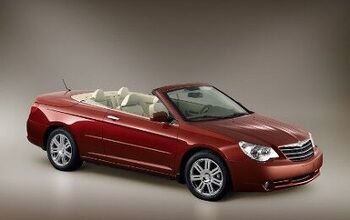
But a quarter of GM models are still well below average in reliability. Some that didn’t fare well are fairly new designs that did well in our testing, such as the Cadillac CTS and the Buick Enclave, GMC Acadia, and Saturn Outlook SUV triplets. Chrysler trails the pack. Almost two-thirds of its products rate below average for reliability. The redesigned 2008 Chrysler Town & Country and Dodge Grand Caravan minivans earned low scores, as did the Chrysler Sebring V6 and Dodge Avenger sedans and the Jeep Liberty SUV. The Sebring Convertible has the worst score: 283 percent worse than average. The only above-average models are the Dodge Caliber hatchback and Jeep Patriot SUV.


168 Comments on “Consumer Reports’ Reliability Results...”


  • rnc
    rnc

    Ford has secured its position as the only Detroit automaker with world-class reliability. About 90 percent (46 of 51) of Ford, Mercury, and Lincoln products were found to have average or better reliability, according to Consumer Reports’ 2009 Annual Car Reliability Survey. The results were announced today at an Automotive Press Association luncheon in Detroit.

    Ford’s sustained production of vehicles that are as dependable-or better than-some of the industry’s best dispels the notion that only Japanese manufacturers make reliable cars. Other than the Toyota Prius, the reliability of the 4-cylinder Fusion and Milan ranks higher than that of any other family sedan. Both of those Ford Motor Company products continue to beat the Honda Accord and Toyota Camry

    Is what they actually said about Ford

  • SherbornSean
    SherbornSean

    I’m waiting for some genius at Forbes to write an article on the correlation of low quality and ownership by the Democrat-controlled US government.

    Karesh needs better PR.

  • Porsche986
    Porsche986

    Congrats to Ford. Now the trick is to keep it going!

  • VanillaDude
    VanillaDude

    If you’ve driven a Ford lately, this isn’t a surprise. Sadly, so much damage has been done to Ford by anti-US auto buyers justifying their Japanese purchases. “Japanese quality” became a mindless mantra for an entire generation of baby boomers now graying behind the wheels of Camrys and Accords across the US.

  • basho (of Ford)
    basho

    I think this news comes as no surprise to auto enthusiasts. Hopefully Ford dealers get some unexpected traffic from people that are surprised by the news. I think it’s going to be extremely hard to pull customers away from Toyota or Honda because they have no reason to leave. But there is plenty of market share out there that is not Toyota/Honda and I think Ford could see a lot of conquest in that remaining portion of the market (as could Hyundai).

  • Michael Karesh

    SherbornSean: you volunteering?

    No one I’ve tried has made headway against the media’s belief that CR and JD Power provide all of the car reliability information that anyone needs. They are not interested in reading any critiques, or providing any themselves.

    For those who aren’t familiar with the (still uncorrected) flaws in CR’s approach:

    http://www.truedelta.com/pieces/shortcomings.php

    http://www.truedelta.com/pieces/cr_survey.php

    http://www.truedelta.com/pieces/newdots.php

    http://www.truedelta.com/pieces/anomalies.php

    We have at least one new anomaly. This year CR is reporting that the AWD Lambdas are considerably more reliable than the FWD Lambdas. How can a vehicle with additional parts be more reliable?

  • Michael Karesh

    Oh, and the connection between low quality and government ownership (a process begun by Republicans) is clear. Low quality ==> company goes bankrupt ==> government bailout.

  • zorakcd
    zorakcd

    As they say at GM and Chrysler; It’s good enough for government work!

  • buzz phillips
    buzz phillips

    Now, if they could only get their resale
    value up (like Honda and Toyota), just say’n!

  • jmo
    jmo

    Sadly, so much damage has been done to Ford by anti-US auto buyers justifying their Japanese purchases

    I think the damage was done by US auto makers building crappy, under engineered, unsafe, unreliable, inefficient cars.

    They may have cleaned up their act but why should I trust them? If I’m happy with my camcord why risk a change?

  • grog
    grog

    You guys don’t subscribe to CR? Sheesh. Contact me and I can login and get whatever data you’d like, assuming they have more stuff on the website that’s not available to the non-subscribing public.

    Here’s a question: how many of these world class Fords are being made at UAW plants? Seriously, this is not a drive-by flame attempt but rather an effort to point out that such data might show that the UAW isn’t the “productivity-sapping union” it’s otherwise portrayed as on this web site. I mean if the UAW can contribute to making world-class Fords it begs the question why aren’t GM and Chrysler doing the same thing. If these world-class Fords are being built/assembled in non-UAW plants, that too would provide some interesting hard metrics in which to judge the effectiveness of a unionized labor force.

    My recent experience with an 09 Ford Focus SES (totally tricked out) wasn’t great. Twas a rental (drove it for a week, highway and city) with 12K miles on it, leather interior, 5 speed manual, high-end sound system, whatever 4 cyl comes with that model. Gutless vehicle, ponderous handling, one plastic form behind the back seat window on the outside flew off on the interstate and the driver’s side sun visor fell out of fit’s socket. When compared side-by-side with my new Mazda 3, there was no comparison, the Mazda won hands down.

    Apparently that Focus wasn’t counted in CR’s survey.

  • salhany
    salhany

    I’m just shocked enough people bought Sebrings to report on their reliability to CR. CR gave them the lowest score by far in their sedans category just based on the road test, never mind reliability.

    CR’s been saying for several years that Ford’s reliability is quite good. The Fusion/Milan/MKZ cars in particular have been rated highly, in their FWD guises at least.

  • dean
    dean

    In the time it took me to log in, jmo beat me to the punch.

  • geeber
    geeber

    VanillaDude: Sadly, so much damage has been done to Ford by anti-US auto buyers justifying their Japanese purchases.

    The damage was done by Ford itself, after years of installing crappy 3.8 V-6s and faulty transmissions in Windstars, Tauruses and Sables, and then ignoring the passenger car market to concentrate on trucks and SUVs.

    And I write that as a fan of Ford who wants to see the company succeed.

    VanillaDude: “Japanese quality” became a mindless mantra for an entire generation of baby boomers now graying behind the wheels of Camrys and Accords across the US.

    Mindless mantra? More like an established fact, backed up by independent surveys.

    Our 2005 Focus SE sedan, with 97,000 miles has been reliable and offers surprisingly good ride and handling (Ford now needs to work on the interior quality and overall refinement).

    But our 2003 Accord EX with 123,000 miles on the odometer feels newer, rides quieter and has an overall more “solid” feel than my mother-in-law’s 2005 Malibu with 50,000 miles on the odometer.

  • KixStart
    KixStart

    Karesh: “This year CR is reporting that the AWD Lambdas are considerably more reliable than the FWD Lambdas. How can a vehicle with additional parts be more reliable?”

    What if all the AWD vehicless are built in a batch with unusual supervision or other attention? Or on a different line? Or they’re all built on Wednesdays? Or there’s a FWD part that’s particularly trouble prone which is not a part of the AWD vehicle?

  • jmo
    jmo

    How can a vehicle with additional parts be more reliable?

    Why is the Prius so reliable? Seems like number of parts as a reliablity indicator is a pretty weak measure when it comes to real life autos.

  • wsn
    wsn

    # Michael Karesh :
    October 27th, 2009 at 3:00 pm

    How can a vehicle with additional parts be more reliable?

    Of course it can. The Prius is ranked No.1.

    As for FWD and AWD, if everything is done right, the FWD should be more reliable. But chances are there would be multiple design and manufacturing flaws. So, it’s entirely possible that the AWD is more reliable than the FWD version.

  • Michael Karesh

    KixStart: there are often unexplainable anomalies like this in their data. The reason, as far as I can tell, is that the survey is so badly worded that even their large sample sizes cannot compensate for the poor quality of the data that results.

    The problems that affect the Lambdas are generally not powertrain-related. Unless they’re counting transmission reflashes as “serious problems.” But those affect both FWD and AWD.

  • salhany
    salhany

    I’m surprised they had enough data to say the Jag XF has poor reliability. It’s not a shock as problems have been reported elsewhere, but how many did Jaguar really sell? And how many Jag owners report to CR?

  • Michael Karesh

    wsn:

    By “additional parts” I meant all of the same parts as the first vehicle, plus a few others (AWD hardware in this case).

    The problem is in the data, not the vehicles themselves.

  • KixStart
    KixStart

    VanillaDude: ““Japanese quality” became a mindless mantra for an entire generation of baby boomers now graying behind the wheels of Camrys and Accords across the US.”

    I’m going gray, true enough. But my children are also driving Toyotas, based on my experience, and they’re happy with them, too. I remember my Dad’s experience with cars… the GMs were better than the Fords, so I used to buy GMs. I didn’t switch for reliability, I switched for other reasons.

    But I’m staying for the reliability.

    And, can we get past “Japanese” or “Asian” cars vs “American” cars? Now that it’s looking like Ford is really a top-quality automaker, it should be clear to everybody that it’s the manufacturer, not the country. It’s not the country of origin, it’s whether or not the company building the cars puts a priority on getting it right, first time and every time.

    If a company believes that customer satisfaction is a profit driver, they’ll act accordingly.

    If a company believes that they can buy share with low prices, leverage massive fleet sales and cost-cut their way to happiness, they’ll act accordingly.

  • jmo
    jmo

    By “additional parts” I meant all of the same parts as the first vehicle, plus a few others (AWD hardware in this case).

    Any number of reasons. It could be that the vehicle has an issue with heat or humidity. If AWD is more likely to be sold where it’s cold for part of the year, then the AWD cars that are sold in New Hampsire would end up more reliable than those sold in Phoenix or South Florida.

  • Michael Karesh

    I tried to ask them (over on their blog) how long owners had had their highly ranked Insights when responding to the survey.

    That question didn’t make it through their screening process.

  • Mr Carpenter
    Mr Carpenter

    I’m spending tens of thousands of dollars, when I am buying a new car.

    Why would I settle for “average” in anything?

    Especially reliability when I live in a climate severe enough in which one can die if you are stuck and broken down?

    Is anyone at GM or Chrysler liable to think that one through? Or the other sub-par automakers?

  • Mr Carpenter
    Mr Carpenter

    When I buy a new car, I am spending tens of thousands of dollars.

    Why would I settle for average, especially in reliability?

    I live in a climate in which some of the year, you can die if the car leaves you stranded.

    Is anyone at GM or Chrysler or other sub-par car makers thinking this through?

    (Sorry for the repost but it didn’t come through the first time – unknown as to why)

  • psarhjinian
    psarhjinian

    If a company believes that customer satisfaction is a profit driver, they’ll act accordingly.

    Ford made quite a to-do about improving quality and warranty claims four or so years ago. These are the dividends. Good for them, they finally clued in.

    It’s also nice to see people realizing that quality really is a holistic trait of vehicle design, rather than a function of origin, engineering theory or owner treatment. People have, for years, been trying to explain away the failings or trumpeting (if not exaggerating) their “wins”. Now that we have a domestic automaker that has put money into quality, it’s time to stop the “Made on Sunday/Buick owners baby their cars/CR is biased/Americans don’t understand how to care for a European car” excuse train that the others have been riding.

  • George B
    George B

    I’m considering a 4 cylinder Ford Fusion as an economy car. Good fuel economy with room for 4 adults without being supersized. In my opinion, the Fusion is less ugly than the other cars in its market segment.

    # jmo :
    October 27th, 2009 at 3:08 pm

    Sadly, so much damage has been done to Ford by anti-US auto buyers justifying their Japanese purchases

    I think the damage was done by US auto makers building crappy, under engineered, unsafe, unreliable, inefficient cars.

    They may have cleaned up their act but why should I trust them? If I’m happy with my camcord why risk a change?

    I’ve owned both Ford/Mazda and Honda cars. I wouldn’t call the Ford/Mazda car crappy, but it suffered from premature failure of low bidder OEM parts. I’m willing to buy another Ford/Mazda car, but I would need to see a low initial price or a really long warantee to cover expected repair costs. The incentive to risk a Fusion over a Camary or Accord is better styling in a midsize package vs. ugly cars wrong sized to carry 4.5 adults.

  • mountainman
    mountainman

    TrueDelta is the way to go for Reliability. Period.

    Now, from owning numerous cars over the years, I can also come to my own conclusions:

    84 Firebird – not reliable
    89 Z24 – not reliable
    93 Sentra SE-R – very reliable
    94 Shadow – not reliable
    97 Ford Escort – very reliable
    01 Silhouette – POS
    03 Sedona – somewhat reliable
    06 Fusion – not at all reliable and a POS to boot
    09 Impreza – very reliable

    Six domestics, and only 1 was reliable.

    Never again. Ever.

  • pch101
    Pch101

    I mean if the UAW can contribute to making world-class Fords it begs the question why aren’t GM and Chrysler doing the same thing.

    The UAW was likewise building Corollas, which generally show up in reliability surveys as excellent or above average.

    Blaming the workers has been a copout. Assembly quality is the result of production processes, which come from management. A well-managed assembly line is designed to have processes that can produce excellent products with mediocre workers; anybody with modest training should be able to contribute to a good result.

    An assembly line that relies upon craftsmanship and heroic individual workers is not truly an assembly line. Building a car is not like carving a table out of wood or painting a work of art. If an assembly line is truly that dependent upon worker quality, then its creator should be fired and the system reinvented, as the whole idea of an assembly line is to ensure that someone having a bad day can’t screw things up.

    Toyota reinvented the production process, and the quality skyrocketed because of their innovations. If Ford is figuring out how to use aspects of JIT and kaizen to produce better vehicles, then more power to them. Results beat whining every day of the week.

  • carve
    carve

    I heard this before in the late 90’s. I bought a 98 Countour and found it to be a POS.

    The problem with the domestics are…
    1) They took their customers for granted and made decades worth of garbage
    2) When they realized it, they set their benchmarks on what the Japanese were currently making. They’d often not even hit those benchmarks, but even when they did the Japanese would already have something a generation or two better than what the Big3 were benchmarking.

    They’re never going to win all those lost customers back by being “just as good as”. They must be better. They must set the standard and let the Japanese play catch-up.

    That said, Ford does seem to be approaching this level. I’m still going to wait and see though. You know the old saying…Fool me once, shame on you, full me twice….can’t get fooled again.

  • TomH
    TomH

    As a US investor in two auto companies, it pains me that my tax dollars are propping up the bottom half of the CR list, and NONE of my investments made the top half.

    Best to worst brand list:

    1. Scion

    2. Honda

    3. Toyota

    4. Infiniti

    5. Acura

    6. Mitsubishi

    7. Lexus

    8. Hyundai

    9. Porsche

    10. Mercury

    11. Saab

    12.Subaru

    13. Suzuki

    14. Kia

    15. Mazda

    16. Ford

    — Middle —

    17. Nissan

    18. Volvo

    19. Buick

    20. Lincoln

    21. Volkswagen

    22. Pontiac

    23. Mercedes-Benz

    24. Audi

    25. Chevrolet

    26. BMW

    27. Mini

    28. GMC

    29. Saturn

    30. Jeep

    31. Dodge

    32. Cadillac

    33. Chrysler

  • PartsUnknown
    PartsUnknown

    You know the old saying…Fool me once, shame on you, full me twice….can’t get fooled again.

    That is hilarious. Great reference.

  • Dynamic88
    Dynamic88

    If you’ve driven a Ford lately, this isn’t a surprise. Sadly, so much damage has been done to Ford by anti-US auto buyers justifying their Japanese purchases. “Japanese quality” became a mindless mantra for an entire generation of baby boomers now graying behind the wheels of Camrys and Accords across the US.

    It wasn’t mindless. It was based on real world observation and experience with cars.

    I drive a Ford daily (98 Ranger) and I’m not all that impressed, though not completely disappointed either. To be fair, they’ve probably improved since ‘98, but then, to be fair, Honda and Toyota have probably not been standing still waiting for Ford to catch up.

  • David Holzman

    KixStart: And, can we get past “Japanese” or “Asian” cars vs “American” cars? Now that it’s looking like Ford is really a top-quality automaker, it should be clear to everybody that it’s the manufacturer, not the country. It’s not the country of origin, it’s whether or not the company building the cars puts a priority on getting it right, first time and every time.

    I second this. There are some very mediocre Japanese cars. I don’t hear anyone bragging about their Mitsubishi.

    I have relied on CR for all three of my car purchases. Unfortunately, their favorable assessment of Saturn (in the ‘92 annual auto issue, I think) was premature, as–credit to them–they warned it might be.

  • David Holzman

    Pch101 +10

  • John Horner
    John Horner

    @Michael Karesh

    Hmmm, I do have a CR subscription so I just looked up the GMC Acadia. The ‘07 model scored much worse than average for the AWD version and simply worse than average for the FWD. For the ‘08, both FWD and AWD scored worse than average.

    The ‘08 Buick Enclave scored average for the FWD version and worse than average for the AWD version.

    I’m not seeing the AWD scoring better than FWD anomaly referred to in an earlier comment.

  • jkross22
    jkross22

    What happened to Buick? I kept hearing from the defenders of GM how great and reliable and dependable Buicks had become. Or maybe that was just for the first 90 days/JD Power award.

    Oh well.

  • Steven02
    Steven02

    @David Holzman
    I second this. There are some very mediocre Japanese cars. I don’t hear anyone bragging about their Mitsubishi.

    Mitsubishi is 6th on the list, ahead of Lexus.

    But, I also find it interesting how much of a different result CR can come out with when compared to other services.

    For 2009, JD Power had Buick and Jag tied for #1. Lexus was 3rd. Caddy was 9th. How can one explain these differences? Scion, number 1 here, was 31 on JD Power. Not that I agree one is more accurate than another, but both are respected and putting out very different results.

    The last comment I have is about the Lambdas and the Enclave only getting AWD as average. They say the Traverse was average. It has the same power train as the Enclave for both AWD and FWD. How does that work again?

  • Juniper
    Juniper

    And except for Porsche the Europeans are all crap too. So either Cayanne or Camry it is.
    No Jag or LR? Are their volumes that low?

  • Bimmer
    Bimmer

    From TomH list Mercury is number 10 and Ford is 16. How could it be? It’s same vehicles put together by the same workers at the same factories! It just does not make any sense.

  • cdotson
    cdotson

    Pch101 +1

    Glad to see someone finally tout the importance of more than just the goons who screw it together. Just because they screw it together doesn’t mean they’re they only ones who can screw it up.

    I’m far from a UAW defender but as an engineer I have to realize there’s a lot more to a quality product than capable assembly labor.

  • CamaroKid
    CamaroKid

    CR statistical sampling and the results they publish are “suspect” at best.

    A Lucerne with a V8 (NorthStar LOL) has better then average reliability… NorthStars? Really? the engine that is known for headbolt that dissolve at 100,000 miles, burn a quart of oil every 1000 miles and blow up transmissions around 80,000 miles? That is better then average?

    The problem with a sample size of 100 is that the law of small numbers kick in and you have no idea what is going on and you just make up results…

    Lets say that in a sample of 100 you get 1 engine failure. Is that bad? Now lets say you get 2. Is that twice as bad? See the problem? Sure if you have a sample of 100 and 50 people have a transmission failure that it terrible… but you are looking for such SMALL statistical anomalies that all of the “data” is lost in sampling “noise”.

    On every CR “reliability” report there are two “different” models that are built in the same factory, by the same workers, on the same chassis, with the same power trains and one scores significantly better then the other…

    Sorry these reports are mostly “jack”

  • skygreenleopard
    skygreenleopard

    David Holzman:

    I second this. There are some very mediocre Japanese cars. I don’t hear anyone bragging about their Mitsubishi.

    While that’s a valid point, let’s strike a deal. You can make fun of Mitsubishi and Suzuki all you want (#6 and #13 on the list). They’re admittedly mediocre cars.

    I get to make fun of people who bought Buicks, Lincolns, Pontiacs, Chevies, GMCs, Saturns, Jeeps, Dodges, Cadillacs, and Chryslers (#19-#33).

    They I’ll resell my Integra for several thousand more than a same-year Taurus and laugh all the way to the bank.

  • Verbal
    Verbal

    Bimmer: “From TomH list Mercury is number 10 and Ford is 16. How could it be? It’s same vehicles put together by the same workers at the same factories! It just does not make any sense.”

    The Ford lineup includes more trucks. Every Mercury has a Ford twin, but not every Ford has a Mercury twin.

  • Loser
    Loser

    Bimmer :
    October 27th, 2009 at 5:09 pm

    From TomH list Mercury is number 10 and Ford is 16. How could it be? It’s same vehicles put together by the same workers at the same factories! It just does not make any sense.

    Probably the same reason Buick is on top for GM, the old folks that buy these can’t hear the squeaks and rattles.

  • ajla
    ajla

    @Steven02:

    Keep in mind that the JD Power 2009 Dependability rantings dealt with 3-year old vehicles while the Consumer Reports survey (I believe) deals with the first full year of ownership.

    So what you see with the 2009 JD power ratings is actually how well 2006MY vehicles stood up.

    Then there’s differences in sample, survey questions, etc. between the two organizations.

    Like the intro says, there isn’t any one “auto reliability gospel” out there.

  • Juniper
    Juniper

    skygreenleopard
    Why do you choose not to make fun of those driving European brands?
    Ah, Free pass for Otto!

  • alex_rashev
    alex_rashev

    wsn,

    In regards to Prius reliability – it actually has LESS parts. A lot less. Your average 4-speed automatic transmission has a lot more intricate little parts and wear’n'tear items than two electric motors with controllers, a planetary gearset, and a battery. And don’t get me started on V6 engines, belt-driven accessories, 5/6/7-speed automatic gearboxes, and so on. Prius might not be the most handsome car, but the drivetrain is brilliantly simple, and thus inherently reliable.

  • pch101
    Pch101

    A Lucerne with a V8 (NorthStar LOL) has better then average reliability… NorthStars? Really? the engine that is known for headbolt that dissolve at 100,000 miles, burn a quart of oil every 1000 miles and blow up transmissions around 80,000 miles?

    My running theory is that this may be a function of the Buick demographic.

    Buick buyers are elderly – the average age is about 65. Older drivers drive quite a bit less than do younger drivers. Whereas the average American drives about 12,000-14,000 miles per year, depending upon the source of the study, the average elderly person drives about 3,000-6,000 miles per year, again depending upon the study.

    So an average elderly person buying a Lucerne will put perhaps 18,000-36,000 miles on it after six years (a timeframe included in Consumer Reports studies), and about half those amounts in three years (the timeframe for JD Power’s Vehicle Dependability Survey).

    You’re not going to see a lot of 100,000 mile failures among many members of the elderly driving pool; few of the cars will get used that much during the years that they end up in surveys. The Enclave has more problems because it has substantially younger buyers than do the other Buicks. If Buick is successful in getting a middle aged crowd to buy them, then expect the reliability to decline as higher mileage cars end up in the surveys.

  • skygreenleopard
    skygreenleopard

    ^ Good point. Seeing Bimmer so low is disappointing. I likely won’t be in the market for one for a while, though, but I also think they have a couple things going for them:
    1) the BMW Ultimate Service Plan, or whatever they call it, seems pretty comprehensive, though I don’t know the details of it.
    2) If you’re buying an X5, you’re already not getting a value buy, so I don’t know if these shoppers care as much about JD Power.

    It is disappointing I’ll never see a German car approach the top, though.


Back to TopLeave a Reply

You must be logged in to post a comment.

You can also login using Facebook Connect. Connect with Facebook

Subscribe without commenting

Recent Comments


Auto Insurance GPS Navigation
Car Loans Auto Parts
Car Warranty Wheels
Automotive Tires Car Care