Ford GT Orders Begin at a Cool Mid-$400,000; Hold Your Horses, Russia
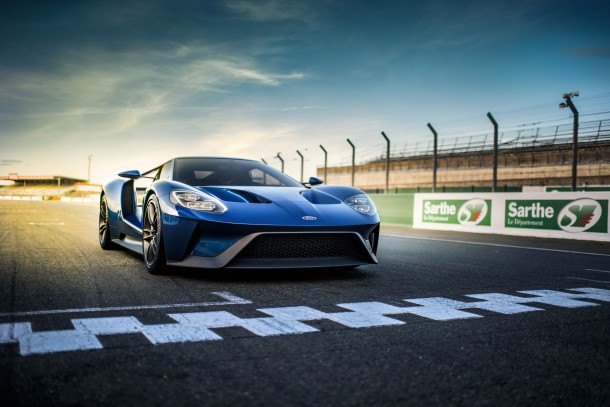
If there’s about $450,000 burning a hole in your pocket, Ford wants you to get in line for the new GT.
The application process for the 2017 and 2018 model years of the carbon fiber supercar kicked off today, and along with it, a very selective customer screening process.
Ford will sell a limited number of GTs each year, produced by Canadian firm Multimatic, so it could be a long wait if you don’t make the cut this time around. Ford anticipates first deliveries will begin late this year, with applications ending on May 12. Oh, and Russia? You can’t order a Ford GT, unless you have a friend buy it for you in an eligible country — like, say, China.

Eyes Without a Face: Restyled Tesla Model S Revealed

Grilles are so 20th century.
As we speculated last week, Tesla has put a new face on its Model S, doing away with the faux grille designed to trick people into thinking there was something combusting under the hood.
The new front end is a corporate amalgam of the both the recently unveiled Model 3 sedan and Model X SUV. Tesla apparently thinks that society has progressed enough to accept the disappearance of an air-sucking mouth at the front of a car.
Relax, Your Car Will Soon Be Safe From Revenge-Driven Extortionist Hackers

Apparently, it’s Technology Tuesday here at TTAC, so we can bring you news of a device that will kick your deeply held fears to the curb.
Vehicle hacking has been an issue ever since a Jeep Cherokee had its steering, transmission and brakes commandeered last summer, and an Israeli firm is now offering protection against keyboard warriors, according to CNBC (via Business Insider).
'Can I Have Your License, Registration and Phone, Please'

As the state of New York debates new distracted driving legislation, an Israeli firm is putting the finishing touches on a “textalyzer” device that could rat out drivers for using their phone before a crash.
Israeli mobile forensics firm Cellebrite developed the data-scanning device, according to Ars Technica, which could become the newest — and most controversial — law enforcement tool since the Taser.
Cellebrite, which sounds like a medication for over-sexed honors students, specializes in data extraction and decoding, and boasts of its 15,000-plus military and law enforcement customers on its website. The firm really knows its stuff — it’s generally believed that they helped the FBI hack into the iPhone at the heart of the San Bernardino/Apple controversy.
Toyota Embraces Big Data (Science), Spins Off a Company

Your vehicle’s technology is enslaving you, and Toyota wants to help you break free.
Today, Toyota has become the latest automaker to create a subsidiary tasked with generating new technology and innovation for its parent company.
Called Toyota Connected Inc., the venture is a collaboration with Microsoft that will serve as a data science and mobile technology hob for the world’s largest automaker. The plan is to use Microsoft’s Azure cloud technology to “humanize” the driving experience and make vehicles’ high-tech abilities less intrusive and more useful.
Don't Worry, Dyson's Got This Electric Car Thing in the Bag

The maker of all things that blow is apparently sucking up some government cash to build an electric car.
Britain’s The Guardian is reporting that Dyson is receiving a public subsidy from the British government to develop an EV, a project that will no doubt draw from the company’s depth of knowledge regarding small electric motors.
No More Regrets: Tesla Will Now Upgrade Your Ludicrous-less P90D For an Insane Price
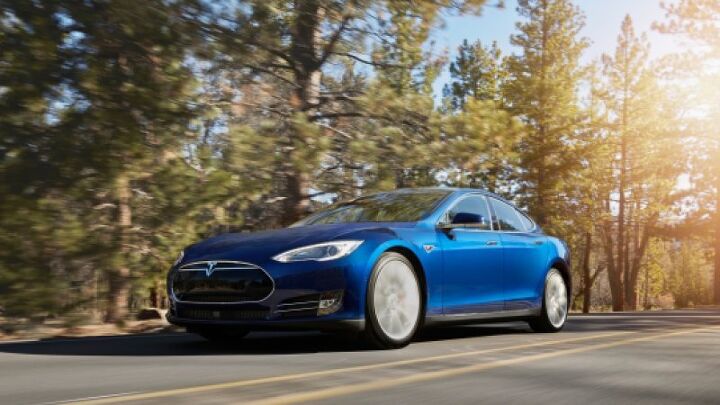
For Tesla Model S P90D owners who have concluded they won’t soil their firm, supportive seats if given the chance to go faster, well, they’re in luck.
Tesla Motors is offering to bring “Ludicrous” mode to owners of the top-end Model S as an aftermarket upgrade, assuming their wallet can match their need to blow everything else out of the water.
The Future is Coming, So Say Goodbye to Your Knobs
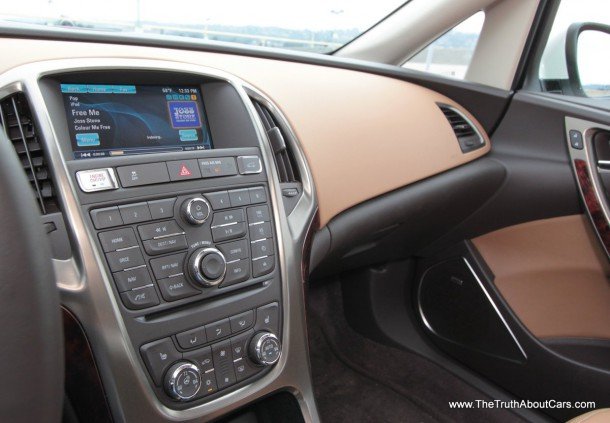
If you like your dashboard to function like a 1970s stereo, then you’re an outlier in a society that increasingly desires a Minority Report-style driving experience, according to Automotive News.
A five-year forecast by industry analyst IHS Automotive predicts a steep increase in manufacturer demand for high-tech vehicle controls, meaning more touch screens, gesture controls and voice-recognition technology.
Nonprofit to Americans: Make This Abandoned Property Great Again

An abandoned Michigan manufacturing facility that once cranked out bombers, guns, cars and transmissions could soon be advancing our driverless future.
A nonprofit organization has been created to oversee the transition of the former General Motors Willow Run manufacturing plant property near Ypsilanti, Michigan, into a national self-driving and connected vehicle testing site, reports Crain’s Detroit Business.
The sprawling property is mostly a flat expanse of tarmac, the perfect site for recreating a laundry list of city driving conditions that could confuse an autonomous vehicle’s brain: highway merging, ramps, bridges, elevation changes, high-speed maneuvering, complex intersections and even tunnels.
BMW's Game Plan: Connectivity, Autonomous Technology and a Whole Lot of Plug-ins

BMW Group is laying out its game plan for the future, and it includes a lot of new electric vehicles.
Beyond the marketing buzzwords, there’s much similarity between BMW’s plan, released yesterday, and those of so many other automakers: building high-tech convenience and connectivity into their vehicles, diversifying their electric offerings, developing autonomous driving technology, and making the customer feel extra special.
The immediate effect on BMW’s rolling stock will be an expanded “i” range of all-electric or plug-in hybrid models, starting with a convertible version of the i8 and a longer-ranged version of the i3 by the end of this year.
Your Future No Longer Includes Rear-Ending That Other Car

As we reported yesterday, a group of top automakers has agreed to offer automatic emergency braking (AEB) on almost all of their models by 2022.
The National Highway Transportation Safety Administration (NHTSA) confirmed the voluntary agreement today, meaning virtually all light-duty cars and trucks sold in North America will adopt the safety feature by Sept. 1, 2022.
The group is made up of Audi, BMW, FCA US LLC, Ford, General Motors, Honda, Hyundai, Jaguar Land Rover, Kia, Maserati, Mazda, Mercedes-Benz, Mitsubishi Motors, Nissan, Porsche, Subaru, Tesla Motors Inc., Toyota, Volkswagen and Volvo Car USA.
A Group of Automakers is Pledging Automatic Braking For Everyone

In six years, almost every new car sold in the U.S. will come with automatic emergency braking systems, making the relatively new safety feature as prolific as airbags or anti-lock brakes.
A group of 10 major automakers plans to announce tomorrow that they will make automatic braking standard on all of their cars by September, 2022, Reuters reports.
Members of the group, which includes Ford, General Motors, Fiat Chrysler Automobiles, Honda, Toyota and Volkswagen, have been in talks with the National Highway Traffic Safety Administration (NHTSA) and Insurance Institute for Highway Safety (IIHS) for several months as they hashed out a plan.
GM to Lyft Applicants: Baby, You Can Drive My Car
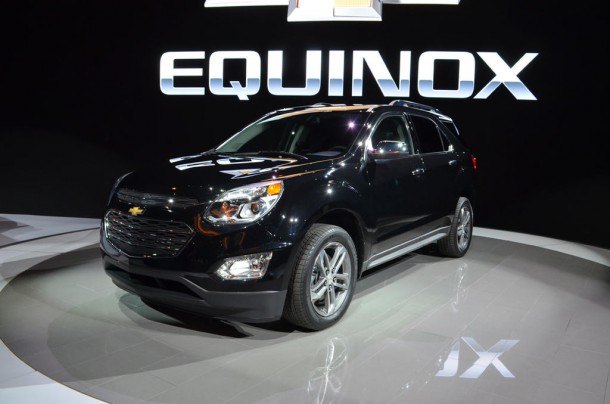
Old car? Can’t get a driving job? Not a problem.
If you’re looking to drive for the ride-sharing service Lyft in Chicago, General Motors wants to get you into a new Chevrolet Equinox.
Under its Express Drive program, Lyft drivers whose own cars don’t meet the company’s standards can finance an Equinox at a declining rate — starting at a maximum of $99/week — with insurance and maintenance included.
GKN Wants Compact Car Makers to Demand More From Their Rear Axles
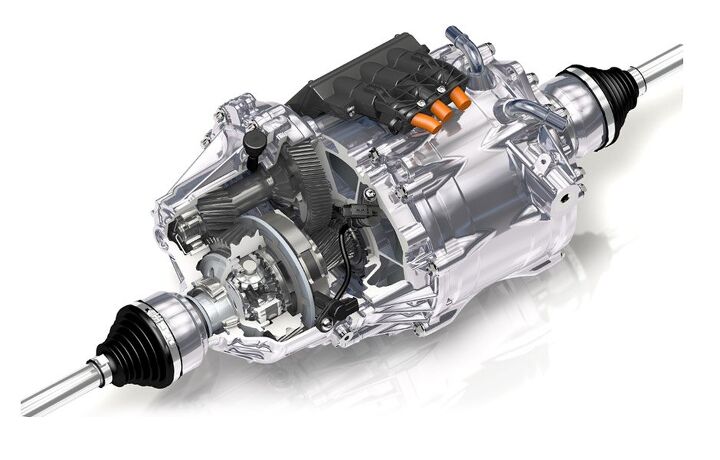
Front-wheel drive, four-cylinder cars have defined the automotive C-segment for decades, but maybe these automakers aren’t dreaming big enough.
That’s the message being sent by global technology supplier GKN Automotive, which really, really wants automakers to buy a lower-cost version of its eAxle for use in affordable compacts. GKN says the unit would allow the segment to more easily offer electric all-wheel drive and plug-in capability.
Developed by the GKN Driveline division, a high-end version of the eAxle exists in the BMW i8, Porsche 918 and Volvo XC90 T8 plug-in.
Ford Creates a Spin-off of Its Most Popular Show

Ford Motor Company has decided it wants to do more than just sell cars and trucks.
On March 11, the automaker announced the creation of a new business subsidiary in the hopes of becoming a leader in the field of mobility services.
Ford Smart Mobility LLC will be headed by former Steelcase CEO Jim Hackett, who will leave Ford’s board of directors in order to take on the new position.
Ford joins a growing list of automotive rivals looking to diversify their operations by investing in the emerging field, the most prominent aspect of which is ride-sharing and ride-hailing services.
BMW Looks to Future, Hopes Predictions Don't Instantly Become Dated
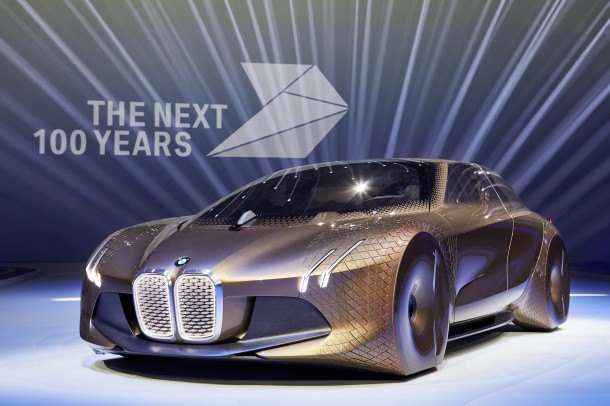
It’s BMW Group’s centenary — and except for some problematic stuff in the late 1930s and early ’40s, it’s been a great 100 years.
Rather than gaze wistfully at the past, BMW is spending its birthday looking into the future and imagining what marvelous things might lie ahead. Naturally, one of those things will be a BMW, and, lo and behold, here’s a futuristic concept!
The BMW Vision Next 100 concept was unveiled in Munich on March 7 and was designed with an autonomous future in mind, one where individuality remains a selling point with buyers.
TTAC News Round-up: Tesla Range Rumors Fly, Lada Needs a Miracle, and Nissan Dreams Big

Is Tesla planning a Model S update that squeaks past 300 miles of range?
That, a savior is needed at Lada’s parent company, Nissan wants your future car to be everything, Ford goes all in down under, and pedestrians and cars are meeting frequently … after the break!
TTAC News Round-up: Volkswagen Sees a Savior, Goodyear Dreams of Spheres, and Toyota Shakes It Up
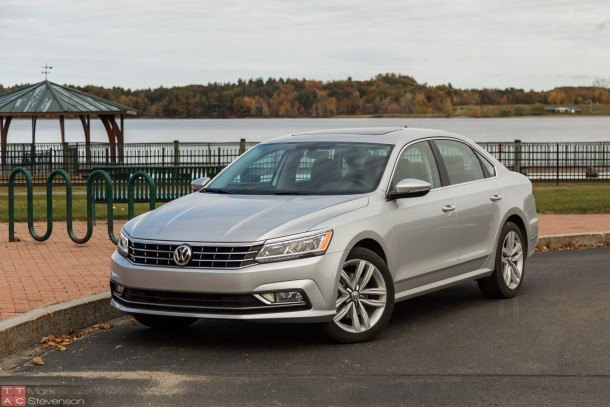
An American man will soon enjoy the task of making people love his controversial company again.
That, Goodyear’s been watching I, Robot, Toyota shatters its corporate structure, sentiment grows for better braking, and the feds say the airbag recall has gone far enough … after the break!
Ford Uses Continuously Controlled Damping to Take The Shock (and Damage) Out of Potholes
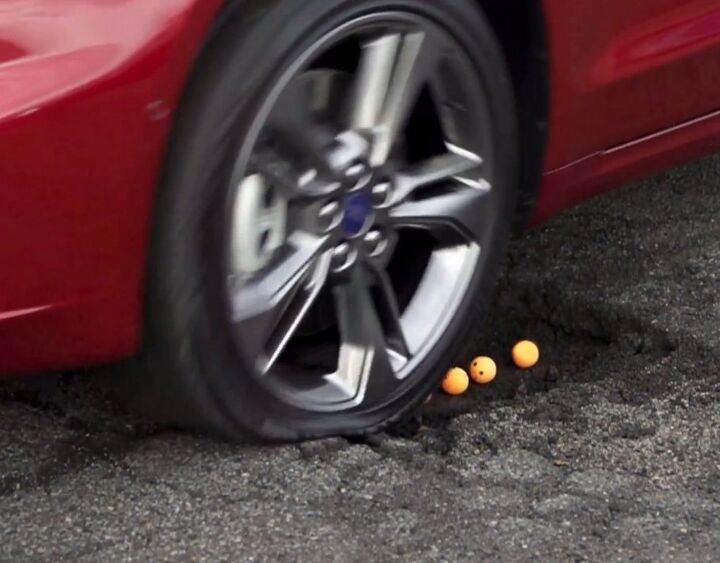
America’s infrastructure is decaying. Add that to the fact that we seem to prefer to fix roads rather than build them to last in the first place, and the result is that U.S. drivers are likely going to come across a pothole or two in their typical travels. The new Ford Fusion will feature a pothole mitigation system that will make that path a little smoother, allowing the car to literally skip over the road hazards.
It’s not just a matter of comfort; potholes cause a lot of damage. Per the Detroit News, the American Automobile Association released a study on Wednesday that said that damage to vehicles caused by potholes costs American drivers about $3 billion every year, and the average repair cost is about $300. TRIP says that potholes cause urban drivers each over $500 in damage on average each year.

Daimler CEO: Google, Apple Further Along With Car Projects
Daimler CEO Dieter Zetsche said a recent trip to Silicon Valley revealed that tech companies such as Google and Apple were making significant progress on autonomous cars, German newspaper Welt am Sonntag reported ( via Reuters).
“Our impression was that these companies can do more and know more than we had previously assumed. At the same time they have more respect for our achievements than we thought,” Zetsche said, according to the report.
Zetsche said he and other managers from the automaker met with tech companies in Silicon Valley, but didn’t disclose what those companies were.

Nissan-Renault Say They'll Have 10 Self-driving Cars by 2020
Nissan-Renault announced Thursday that it would have 10 cars on sale worldwide with autonomous features ready by the end of the decade.
Considering the photo provided by the automaker is of a Nissan Leaf, we can begin there.
One.
TTAC News Round-up: Elio's Already on Thin Ice; Magna and Getrag Seal Their Deal, No Normal Buyer
Regulators may rain on Elio’s parade even before they got started.
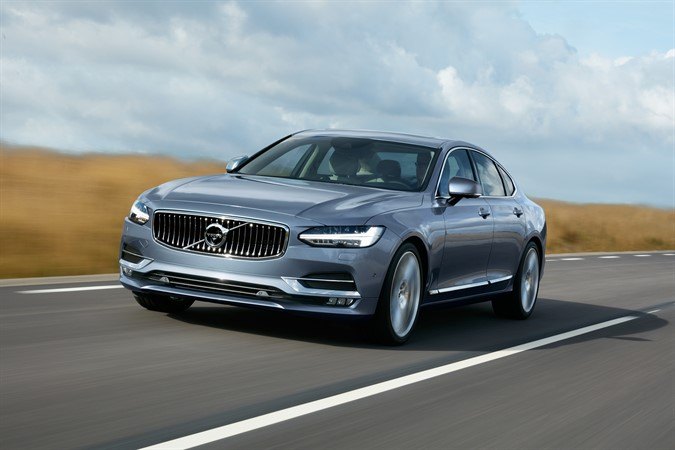
That, Volvo takes a serious stab at full-size luxury conventional wisdom, the big get bigger and Ford’s hybrids only go so far … after the break!
TTAC News Round-up: CES Is an Auto Show Now, Volkswagen Apologizes (Again), and Do You Want to Be an Automotive Journalist?

Started in New York City in 1967 as an offshoot of the Chicago Music Show, the Consumer Electronics Show has grown to capture the interest and intrigue of automakers. Las Vegas now has two auto shows.
That, Volkswagen’s unending stream of German-accented apologies, why Ford might not be hitching itself to Google and how you can become an automotive journalist* … after the break!

Volkswagen's BUDD-e is Still the Microbus They'll Never Build

UPDATE: Volkswagen says the range is 233 miles on the EPA cycle, 373 miles on the New European Driving Cycle.
Volkswagen unleashed its futuristic Microbus concept car in Las Vegas on Tuesday, complete with expressive face, connectedness to the “Internet of Things,” and gesture control everywhere, but only its bare bones are rooted in any real future for the automaker.
The 2016 Microbus, which is “dubbed BUDD-e,” is the latest and perhaps most significant iteration of the Microbus because of its timing. This week, the U.S. Justice Department announced it filed a $40 billion lawsuit against the automaker for cheating emissions tests.
In Las Vegas, Volkswagen showed off its modular electric powertrain architecture underpinning the Microbus that’ll almost certainly make it to production in one, or several cars — just probably not this one.
So Wait, We're All Working for General Motors Now?
Existing cameras on General Motors cars could help the automaker draw detailed maps for future self-driving cars, the automaker announced Tuesday.
GM said the technology, which it’s developing with Mobileye and will be called “Road Experience Management,” would use existing cameras and OnStar systems to upload “crowd-sourced” maps to the automaker to support future autonomous driving.
“GM is committed to bringing semi-autonomous and fully autonomous vehicles to our customers, and this technology will be a critical enabler to getting us there,” Mark Reuss, GM executive vice president, said in a statement. “We are planning to explore the integration of REM into existing GM program launches sometime later this year.”
But I don’t even like bagging my own groceries.
Faraday Future FFZERO1 Concept Revealed

Faraday Future revealed its FFZERO1 Concept in Las Vegas on Monday night. It is a striking artifact that continues to keep the company’s product plans mysterious. This “car of concepts,” as Head of Design Richard Kim called it, is an extreme expression containing select elements that foreshadow the company’s production vehicles.
We now know that Faraday Future (they like to be called FF) can design a theoretical 200+ mph, 1,000 horsepower, single-seat hypercar. Even in a world full of extreme cars, this one looks futuristic. But this is not an attempt to compete with Bugatti, Koenigsegg, or Ascari. It’s an extreme test-bed, right down to the drag reducing, heat-dissipating pair of see-through “aero-tunnels” channeling air directly through the vehicle.

About That Google, Ford Partnership …
Ford CEO Mark Fields just wrapped up his Consumer Electronics Show keynote speech Tuesday morning and mentioned the word “Google” exactly zero times. Nada. Zip. Zilch.
So, um, where does that leave the current planned partnership between the global automaker and Google to build self-driving cars and let them roam free at a 1,000-acre North Carolina ranch?
Not dead, maybe — just not fully baked, apparently.
TTAC News Round-up: Ford's Self-driving Herd Gets Bigger, Takata's All Alone, VW Sends The Cavalry

It certainly sounds like Ford is close to selling a self-driving Fusion real soon.
That, Matthias Müller finally comes to the U.S. to ask “You mad, bro?” Nissan has no love for Takata, and business is hot south of the border … after the break!
General Motors Makes $500M Bet on Lyft
General Motors announced Monday that it would invest $500 million in ride-sharing service Lyft to help boost the automaker’s business in car-sharing companies and perhaps rental cars.
The automaker announced that the investment — roughly half of Lyft’s latest round of fundraising — would buy the automaker seat on the ride-sharing company’s board of directors. Lyft, which is based in San Francisco, is valued around $4.5 billion, which is significantly less than the $62 billion valuation for rival Uber, according to the New York Times.
GM said the companies would partner on rentals for the car-sharing company, connectivity and autonomous technology.
TTAC News Round-up: Chevy Hot to Sell You a Sedan, Volvo's V90 Peek and Cheap Gas
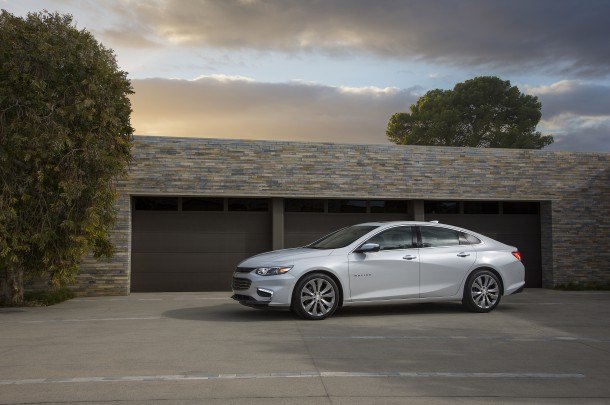
“What do I gotta do to get you to drive out of here in a brand-new 2016 Chevrolet Malibu today?”
That, Ford and Google are moving to the country, Hyundai halts in China and Volvo’s wagon spied in some guy’s garage … after the break!
Report: By 2020, One-third of New Cars Will Have CD Players; Why?
According to automotive experts, the in-dash CD player’s days may be numbered in new cars. Also, water is wet, and orange juice made from oranges.
The Telegraph reports that roughly one-third of new cars sold in the UK by the end of the decade will have a CD player, with many of those physical media players being optional extras.
About 3 out of 4 new cars come with some sort of USB connectivity as standard, according to the newspaper, which means there are many people who are opting for a USB connector AND CD player in their car today. Wait, why?
This Is How Volkswagen's Diesel Emissions Cheat Works, According to ECU Hacker (Video)
Volkswagen’s emissions cheating program closely follows a set of parameters that are very similar to those defined by the New European Driving Cycle (NEDC), an engineer said this week.
The cheat exists in the ECU’s “main mode,” said Felix Domke, and triggers a normal dosage of urea and other exhaust controls to bring NOx emissions to within acceptable levels.
Domke presented his findings of an unpacked Volkswagen ECU to the 32nd Chaos Communication Congress in Germany.
His findings are mostly in line with what the automaker has already admitted: its 11 million cars worldwide cheated emissions tests by using two different modes for operation, and that its cars could pollute up to 40 times the legal limit of nitrogen oxides when running normally.
But Domke, who said he owns a Volkswagen Sharan equipped with a 2-liter diesel engine, said his own observations showed a severe change in the ECU’s behavior when it exceeded the bounds of what it considered was an emissions test — more than what’s been reported so far.
BMW Goes Full 'Minority Report' At CES 2016
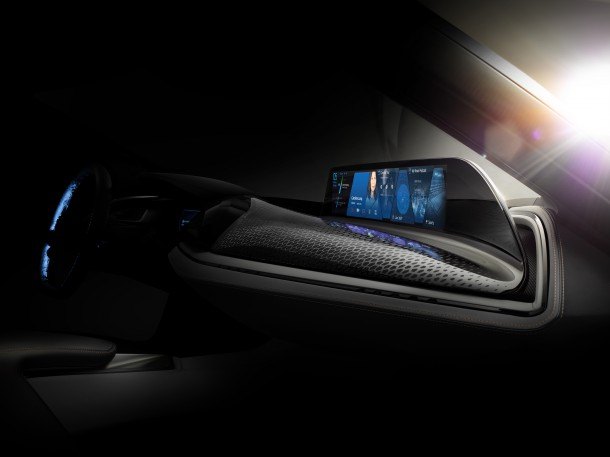
BMW’s latest and greatest infotainment system doesn’t need knobs, man. The automaker announced Monday that it would show off its concept for infotainment next month, dubbed “AirTouch.”
The system, which improves upon the one-finger wagging, waving and gesticulating already in its new 7-Series sedan, would use sensors between the dash and rearview mirror to interpret what your five fingers were looking for.
Was that a phone call that you wanted to make? Did you want the BMW to switch to radio? Activate navigation to direct you home? Oh, you were just waving at that guy. Gotcha.
Ford, Google Plan Autonomous Driving Venture Together
The fine, fine reporters at Yahoo Autos have learned that Ford and Google will announce next month a joint project to build self-driving cars.
According to the report, Google and Ford would spin off a separate company for the project, and Google would still shop around its technology to other automakers.
Both Ford and Google wouldn’t comment on Yahoo’s report, which said three sources familiar with the plans divulged the relationship ahead of their announcement at the Consumer Electronics Show in Las Vegas next month.
Corvette 'E-Ray' Trademark Has a Powertrain Patent Too
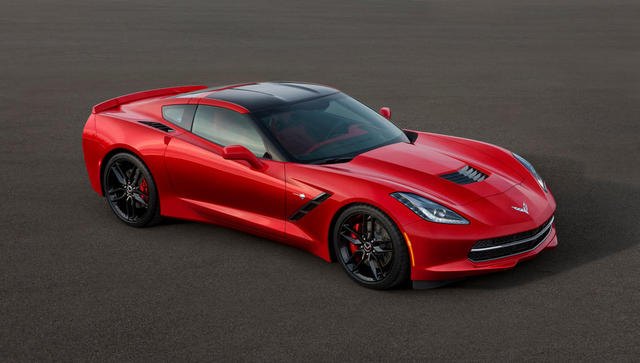
The fine, fine folks over at Car & Driver spotted a trademark filing made by General Motors for “Corvette E-Ray,” which probably means they’re going to ruin the Corvette soon.
The trademark filing was made on Dec. 16, according to the U.S. Patent and Trademark Office, about three weeks after General Motors applied for a patent for a “Hybrid Powertrain and Modular Rear Drive Unit.”
Wait, what … so you’re saying hybrid, mid-engine brown manual Corvette could be real? Kill my mind.
Ford CEO Mark Fields: Hybrid F-150 Will Be Here By 2020
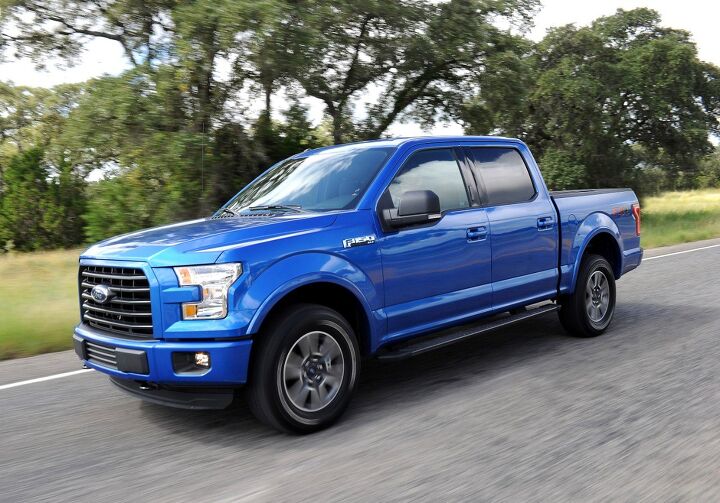
Ford will have a rear-wheel drive, hybrid F-150 truck by the end of the decade, Ford CEO Mark Fields told NPR on Tuesday.
“Well, we do have plans to have a rear-wheel drive hybrid truck but the end of the decade. So yes, we’re working on electrified F-series, and it’s really around a conventional hybrid,” Fields said during an interview.
The automaker announced earlier this month that it would invest $4.5 billion in electrification and will unveil a refreshed hybrid Fusion at the North American International Auto Show next month as part of that plan. The hybridized, full-size pickup will arrive by 2020, although the automaker doesn’t plan on total market domination for the truck — at least right now.
LEAKED: Volkswagen Might Show This Full TFT Display, Infotainment System at CES (Video)

Volkswagen announced Friday it would show off “developments in electromobility as well as the next generation of connectivity” at the Consumer Electronics Show next month in Las Vegas.
“For instance, Volkswagen will give quite a clear glimpse of the latest developments in in-car infotainment that are on the verge of being launched onto the market. This will see innovations such as the Golf R Touch concept car finding their way into Volkswagen’s broad product portfolio,” the automaker said in a statement.
That’s probably possibly what we’re looking at here in a B-roll video made by the automaker obtained by TTAC through less-than-official channels.
Hyundai May Make Its Own Computer Chips for Autonomous Cars Because No One Wants to Be a Coachbuilder
Hyundai is considering making its own computer chips for autonomous cars, which the company expects will be readily available by 2030, according to Bloomberg.
The South Korean automaker, which is already preparing its cars with semi-autonomous technology, says the technology could be vital to car making in the future. Hyundai buys its autonomous driving-related technology from a supplier, but the director of the automaker’s automotive control system development group didn’t specify the company from which Hyundai buys the technology hardware.
Hyundai’s announcement could be competition for Silicon Valley giants such as Google and Apple that are developing autonomous driving technologies to be licenced (Google) or possibly their own cars (Apple). Hyundai developing its own chips could be a way to keep the automaker from becoming merely a sheet metal provider to autonomous car technology makers.
General Motors Filed a Patent Application for a Navigation System That Knows When You Hate It
General Motors this month filed a patent application for a navigation system that can gauge how effective it is in frustrating guiding drivers based on their eye movements and how well those drivers follow directions.
The patent application filed Dec. 3 details a navigation system that watches “visual focus, the driver vocalizations and the driver emotions, along with vehicle system parameters from a data bus … to evaluate driver satisfaction with navigation guidance and determine driver behavior.”
“You missed our last turn, Aaron.”
I know, OnStar. We’re going off course.
“I don’t like how that sounds, Aaron.”
Take me to the nearest hole in the desert, OnStar.
Chipmakers Think In-car Tech Will Be The Next IPhone
Maxed out of selling you a new phone every 15 minutes, chipmakers such as Nvidia and Intel are looking to break into the automotive business as the next new lucrative frontier for technology, Reuters reported.
Established automotive suppliers such as Infineon, Renesas and NXP may be figurative feet in the doors for other tech makers to exploit a growing car boom and tech cycle.
“A decade ago, autos was not sexy. Now it is,” Reinhard Ploss, chief executive of Infineon said, according to Reuters.
BMW, Audi, Mercedes Finish Purchase of Nokia's Mapmaking Division; Cartography Now Acceptable As College Major
No one will laugh at you for majoring in cartography anymore. Well, maybe not everyone. — Aaron
Daimler AG, Audi and BMW announced Friday that the trio had completed its purchase of Nokia’s mapmaking business, HERE, which the trio announced they were seeking to purchase in August.
The companies didn’t specify details about the transaction, and said they would announce more about their purchase on Monday. In August, the companies announced they were purchasing the mapmaking business, which provides cloud-based maps and data for more than 200 countries, to further develop “swarm technology” that could allow cars to communicate with each other.
Driverless Cars Are Coming, But Will Cities Be Ready?
Probably not.
According to a study by the National League of Cities, only 6 percent of future city plans consider the potential impact autonomous vehicles will have in the next few years, including driverless car lanes and scaling back parking as ride-share services become more popular.
The study collected transportation plans of the 50 biggest U.S. cities, as well as the most-populous cities in every state. In all, 69 city plans were amassed and studied for future traffic and road plans.
Despite automakers rushing to put autonomous cars on the road by 2020, the study suggests that many cities won’t be able to adequately accommodate those cars, nor will they adapt fast enough to changing transportation modes that may challenge conventional public transportation and infrastructure wisdom.
Oh Good, Thieves' Tool of Choice for Opening Your Car Is on Sale for Black Friday Too
Good news! That “ mysterious device” that extends the reach of keyless entry systems so meth heads — um — ICP fans — er — idiots can rummage through your car and borrow your wallet, purse or golf clubs without bringing them back is now on sale!
For 15-percent off for the holiday weekend only, you can have your own Chinese-made codes that totally won’t be used for going through your neighbor’s Prius and stealing his iPod.
The code scanner uses “brute force” or “nerd magic” to pick up key codes and open car doors. The device sells for around $100 on many easily found sites, but for savvy shoppers looking to spend their saved dough on cheap cough syrup, it’s 15-percent off for you!
Tesla's 'Base' Model X Starts At $81,200 Before Incentives
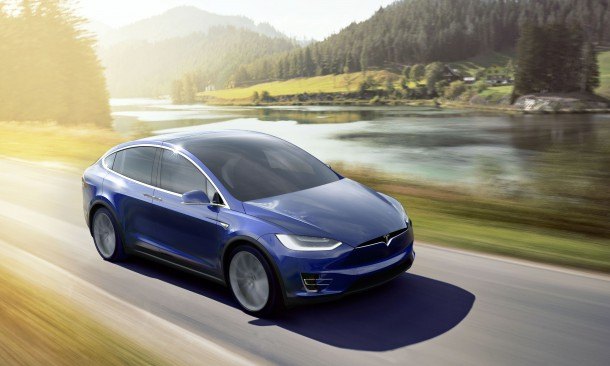
After Tesla is done delivering Founders and Signature editions of its Model X SUV, the company will offer a 70D model later next year with a 220 mile range for $80,000 plus $1,200 for shipping. A 90D, with a range of 257 miles and quicker sprint up to 60 mph, will be offered as well, but the company hasn’t disclosed how much that will cost.
Automotive News reported that the automaker updated its online configurator for potential customers to configure their base cars. A 70D Model X with every option checked tops out around $100,000.
The public Model X page only lists the 90D as deliverable next year, which Automotive News speculated could mean that the company may make the 70D available later in the year or 2017.
Tesla may need to sell 500,000 cars by 2020 to meet projected goals by shareholders.
LA 2015: Volvo's Concept Car Doesn't Need Wheels, Paint, Car
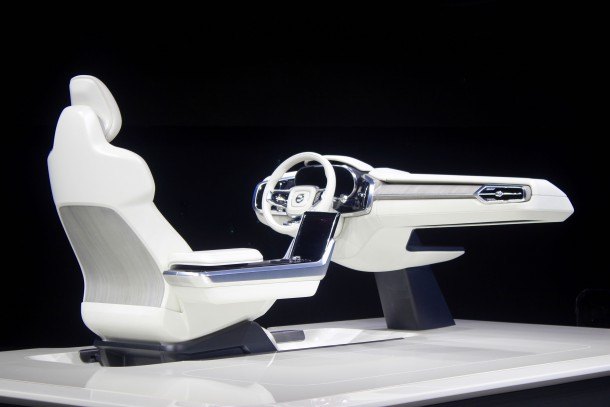
Volvo’s newest concept car is so advanced it doesn’t need sheet metal, wheels, doors, headlights or even an engine, man.
The Volvo Concept 26, unveiled Wednesday at the Los Angeles Auto Show, is the company’s vision for autonomous driving — which, at least publicly, it’s beating many of the big boys to the punch. The vision apparently includes a center-mounted tablet and an automatic 26-inch screen that emerges from the friggin’ dash.
Ford's Autonomous Fusion Drives Around Artificial Michigan City All Alone (Video)
It’s not quite “Vanilla Sky,” but Ford is testing its autonomous vehicle tech at the University of Michigan’s Mcity, a 32-acre fake city with weirdly placed fire hydrants and fake hipster bookstores, and no one around.
The automaker announced Friday that its Fusion Hybrid was managing the testing grounds’ lanes, turns, roads, intersections, lights, without one artificial bumper bent or curbed wheel — allegedly.
Google's Autonomous Car Is A Slow-moving Scofflaw
On Thursday, Google’s autonomous car development team reported that Mountain View, California police pulled over the robot car for traveling too slowly. No ticket was issued.
According to the team’s Google Plus page, officers pulled over the car because they “want to know more about the project.” According to Mountain View police, the officer wanted reminded the car’s human passengers that impeding traffic is against the law. Tomato, potato.
Toyota Launches AI Efforts With $1 Billion Investment

Toyota will open a new artificial and robotics R&D company to be called Toyota Research Institute, Inc. (TRI) with an initial investment of $1 billion to open two locations in the United States, the automaker announced Friday.
TRI, which will make its headquarters in Palo Alto, California and establish another office in Cambridge, Massachusetts near MIT, will be led by Dr. Gill Pratt, a former academic in the field of engineering and program manager at DARPA.
“The investment is in addition to the $50 million investment over the next five years with MIT and Stanford to establish joint fundamental artificial intelligence research centers at each university,” said the automaker in a release.
British Researchers Make Lighter, Cheaper, Longer Lithium-oxygen Batteries
Researchers at the University of Cambridge say they’ve created a lighter, cheaper, longer lithium-oxygen battery that could eventually rival gasoline engines in electric vehicles in terms of range and weight, Automotive News reported.
The scientists announced that they had created a working prototype of an “ultimate battery” that could be up to 10 times more energy-dense than lithium-ion batteries. They said the battery, to date, could be recharged more than 2,000 times.
The lithium-oxygen batteries could eventually replace lithium-ion batteries in electric vehicles and offer a range similar to gasoline engines, but researchers say that could be more than a decade away.
Tokyo Motor Show 2015: Nissan's IDS Concept Will Show You The Best Cornering Lines, Then Drive Them For You (Video)
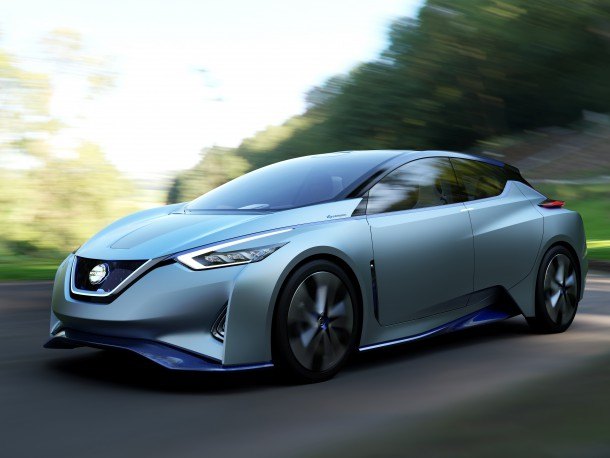
Nissan unveiled its next Leaf IDS Concept, a semi-autonomous EV complete with a glimpse of Nissan’s coming “Intelligent Drive” features that may be equipped on some of its cars by the end of the decade.
The IDS Concept boasts an autonomous piloted driving mode for conversationalists (the seats rotate inward to invite dialogue!) a movable dash with “Minority Report” pre-cog abilities (probably) and a submarine-style style steering wheel.
But those aren’t the best concept-ish features.
Autonomous War Games: The Only Way To Win is Not To Drive
Researchers at the Massachusetts Institute of Technology said Thursday that in the future, self-driving cars may be forced into the moral quandary between saving its driver or saving the public in massive, horrific crashes.
We already know that.
What researchers are now looking at is whether people would be interested in buying cars that would knowingly sacrifice their drivers in order to serve the greater good.
(In our best Richard Dawson voice) “Survey says … “
Study: Distracted Drivers Stay Distracted, Even After They've Sent Super Clever Text
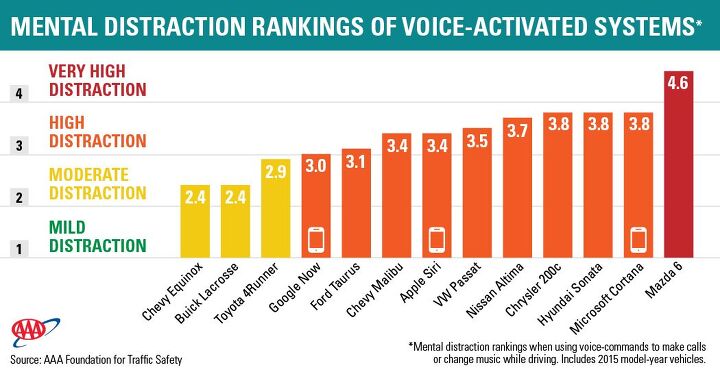
Drivers may take nearly 30 seconds to regain their focus back on the road after using a car’s infotainment or hands-free smartphone systems, researchers announced Wednesday.
The two studies, which were conducted by the University of Utah ( Go Utes!) for the AAA Foundation for Traffic Safety, concluded that even modern assist programs could dangerously distract drivers for up to 27 seconds after they’re done using them. Researchers noted that vehicles traveled more than 300 yards for 27 seconds at 25 mph.
Is Stanford's Self-drifting Delorean The Back to the Future of Autonomous Driving? (Video)

I think we can all take a moment to appreciate the fine, fine work that Stanford researchers have put into making a 1981 Delorean do its own donuts in a parking lot on “Back to the Future” day Wednesday. Bravo.
But the car, dubbed MARTY (Multiple Actuator Research Test bed for Yaw control), is more than just epic clickbait for a made-up, 1980s-movie holiday. The car is display for autonomous vehicle control that can go beyond a car’s “safety limits” to exploit physics.
Or, you know, the way you disable stability control to do the same donuts in a nearby parking lot.
Here's The Renault Twizy in the US, Hassle-free. No, Really.
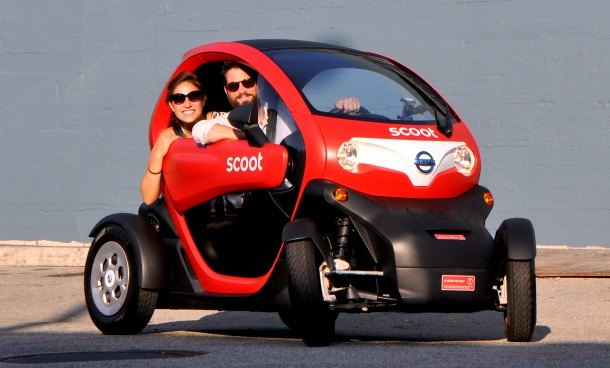
Nissan is sending 10 Renault Twizys Nissan New Mobility Concept vehicles to San Francisco as part its citywide ride sharing service Scoot.
The small, all-electric Renault Twizy Scoot Quad will seat two people, have a range of roughly 40 miles and a top speed of 25 mph. The cars will cost $8 per ride or $80 per day to rent.
According to Nissan, the cars are being sent to the ride-sharing service to study transportation in urban areas — and to see if they can sell them anywhere else, probably.
Down Periscope! Drunk Driving Mixes With The Newest Social Media

Don’t look now, but “Periscope” is officially a thing.
The social-media platform allows people to broadcast live from their phones whenever they like, thus bringing the average 23-year-old American woman just that much closer to her dream of becoming a fourth-rate reality television “star” at the expense of all other potential accomplishments.
I can see Periscope being of some use in the upcoming “American Spring” populist uprising, except for the fact that Twitter and Facebook and the like have long since decided to lick the boots of our corporate Ingsoc in whatever fashion is most deferentially pleasing to Mr. Obama, Mrs. Merkel, and Xi Jinping. So when the balloon goes up and you see me and Zack de la Rocha rolling a Viper ACR loaded with grenade launchers down the street, the Twitter “fail whale” will be all you can get, because anything else would be uncivilized.
The automotive world has used Periscope for a few new-vehicle reveals and a series of vignettes in which my friend Adam uses Turtle Wax™ to get some shine on his Isuzu Impulse. But it wasn’t until Whitney Beall of Lakeland … you guessed it … Florida, started Periscoping her drunk-driving adventure that the true potential of this newest navel-gazing “app” was well and truly revealed.

Toyota Banks on Hydrogen - Not EV - For Future Power

Toyota officials insisted Wednesday that its hydrogen-powered cars, such as the Mirai, will comprise up to 30,000 sales by 2020, and will help the automaker eventually reduce emissions from cars it produces by 90 percent by 2050.
The Associated Press ( via Detroit News) reported that the automaker said it would work with investors and governments to deliver on its promise of producing only a small number of gasoline-powered cars for small countries in 35 years.
“You may think 35 years is a long time. But for an automaker to envision all combustion engines as gone is pretty extraordinary,” Senior Managing Officer Kiyotaka Ise said, according to the AP.
Columnist: Car Buffs Who Don't Like Tesla Are 'Making Shit Up'
A self-professed reformed BMW enthusiast says backlash against Tesla comes from car owners “stuck in the past” who consider grease under their fingernails as a “manliness” status symbol among “nostalgic car weenies.” Basically, military-grade trolling.
Mike Barnard, a writer at Slate.com, says that the time is coming for internal combustion engine fans to give up the ghost and get with Tesla because:
People who don’t like hybrid race cars and production supercars are saying that they don’t like better all-around performance—they just really only love things with cylinders and pistons, make of that what you will.
Mitsubishi Showing Outlander Sport-sized Electric Crossover in Tokyo
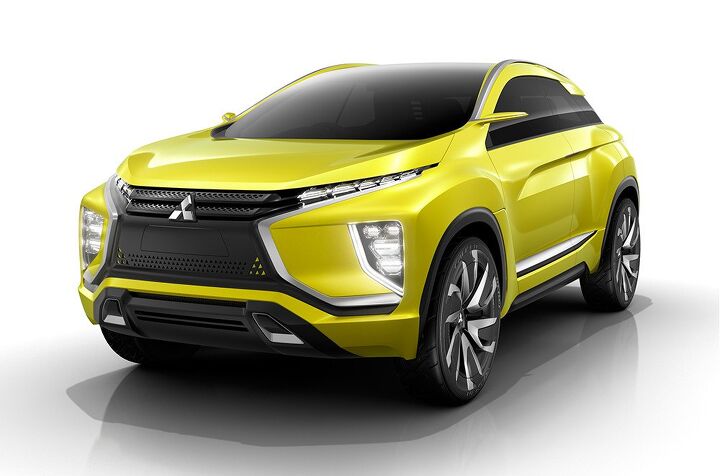
Mitsubishi will show off a crossover-sized electric vehicle at the Tokyo Motor Show this month that will preview what the automaker has planned for electric vehicles and, likely, elements of the next generation of its Outlander Sport.
The eX electric crossover is roughly the same size as the Outlander Sport currently on sale — the concept crossover is 167 inches long, compared to the Outlander Sport’s 169 inches.
According to the automaker, the EV has two electric motors with a combined output of 184 horsepower and a range of roughly 250 miles.
Tesla's Biggest Cheerleader Thinks Model X May Be Overpriced

Morgan Stanley analyst Adam Jonas issued a lower target for Tesla on Wednesday, saying the automaker’s SUV price tag is too hefty for the carmaker to meet its production volume goal for 2016.
Jonas wrote that the $130,000 SUV is just too pricey (via Business Insider):
Even allowing the Model X (average transaction price) to decline over time through the introduction of lower-spec models leaves what we believe to be a higher-priced vehicle than we expected that may struggle to meet the volume expectations of the market and our forecasts.
If you remember correctly, Jonas was the analyst that called for Tesla’s stock to effectively double because he had a good idea for the automaker, which he said was the world’s most important.
Did Nissan Cover Up the Next Cube in a Bunch of Tech?

Nissan announced Monday that it would show in Tokyo a concept car that would be electric, charge devices and make all the kids search for it on TheInternet.web when they get home from school.
The Teatro for Dayz appears to be a Cube-ish subcompact, powered by electrons for some humans that Nissan’s marketing team are calling “share natives.” Nissan didn’t detail the car’s specifications, other than some pie-in-the-sky functions such as web cameras, LED displays on the outside and illuminated displays for something.
Interestingly, the car sports a steering wheel, pedals and won’t be autonomous, which suggests that some of the car could be rooted in reality. The EV boasts a “short range,” according to the automaker, and could actually be something that makes it on to the roads some day — hopefully without that name.




Recent Comments