

Category: GM Death Watch

By Robert Farago on March 15, 2009

I’ve been been having a “difference of opinion” with my step-daughter’s fifth-grade teachers. For some reason, they’ve decided to give Sasha homework deadlines and let her sort out her own schedule. Unfortunately, no one taught her self-directed, off-site time management. Not surprisingly, except for the deadline itself, Sasha’s “planner” was empty: she had no idea how long assignments would take. She couldn’t prioritize her work or organize her home life. Mind you, she had goals: finish her homework, get good grades, make it to middle school. But she didn’t have a workable plan. Remind you of anyone?

Last week, GM announced increased production for the second financial quarter. The company’s spinmeisters claimed the jump relates to models that are selling well—as opposed to the tens of thousands of vehicles choking dealer lots or waiting to choke dealer lots. In truth, in today’s moribund new car market, nothing GM builds is selling well enough to justify a 45 percent production increase. So what, pray tell, is GM’s strategy?

Who knows? GM’s “viability plan” is like Sasha’s planner: big empty spaces leading up to large, laudable goals. GM knows it has to cut labor costs, swap debt for equity and cull and/or refocus brands. It knows it has to build cars that people will buy at a price that earns the company a profit. It knows it has to return to profitability to pay back its loans. But it doesn’t have a coherent, measurable plan for how to get there from here.

Any such plan would have to ape Sasha’s new homework system, with little tick boxes for every assigned task in every subject every day of the week. If GM wants us to believe the plug-in electric/gas hybrid Chevy Volt is The One, they must give us the way-points on the road to Damascus. How much, when, leading to what profit?

RenCen would never go for it, for one simple reason: the new system would introduce accountability. It’s a concept that’s entirely antithetical to GM’s modus operandi.

And so, true to form, GM is headless chickening out. The company is running around in random patterns, trying to achieve . . . something. Anything. They’re canceling and restarting development programs. Negotiating union concessions that aren’t. Building and not building and then building vehicles. Killing but not killing brands. Asking for a $2 billion advance on its next bailout bonanza, and then withdrawing the request. Pleading for Euro-bailout bucks while talking about spin-offs.

I half expect GM CEO Rick Wagoner to slap a Yellow Zowie on his head, lean into the cameras and say, “Somebody STOP me!”

But, no. Quite the opposite. The Presidential Task Force on Autos (PTFOA) seems hell-bent on enabling GM’s cultural predisposition to throw NSFW against the wall, run back to avoid the splatter, and then see what sticks. Otherwise, the PTFOA would have joined German and Swedish ministers and demanded that GM revise their turnaround plan, instead of journeying to Motown for Volt joy rides.

In today’s Boston Globe, scribe Jake Bennett uses GM’s fabled “29″ pin—an inter-executive admonition to GM suits to recapture 29 percent of U.S. market share—to make the same point: goals without careful implementation and constant, rigorous monitoring are an excellent way to completely screw up everything. Ipso bloody facto. Last time I looked, the management style practiced by Rick Wagoner’s mob had led the American automaker straight onto federal welfare.

Still, it’s worth pausing to contemplate the possibility that CEO Jack Smith’s commitment to restoring General Motors’ US market share to 29 percent (already down from over 39 percent) helped drive the automaker towards high volume, low profit fleet sales; anyone-with-a-pulse financing, ill-advised hook-ups with foreign automakers and all the other Wagoner-led fiatscos. Perhaps GM’s road to hell had a little sign on the median reminding the Powers That Be that “the ends justify the means” (right next to “Kiss Ass and Cover. The Millions You Earn Will be Your Own.”).

I’d like to know when those “29″ pins fell out of fashion at RenCen. When did they give up on that company-wide goal? Did the pins hit the bin when GM’s market share fell below 25 percent? Twenty-two? Twenty? At some point in GM’s decline and fall, did someone high up in the organization actually say “Take off that stupid pin Larry”? Or was it more of a group think deal, where Rick left his “29″ pin in the dresser drawer and his boys got the message? Did anyone think to replace the pins with . . . something? Something specific?

I’d like to see an actual “29″ pin (jpeg to robertfarago@thetruthaboutcars.com). Was it made of bronze or lead? Has it tarnished during the last nine years? Was the number inlayed? Where was it made, the US or China? As I try to teach Sasha, if you don’t respect your work, why should anyone else?

By Robert Farago on March 6, 2009

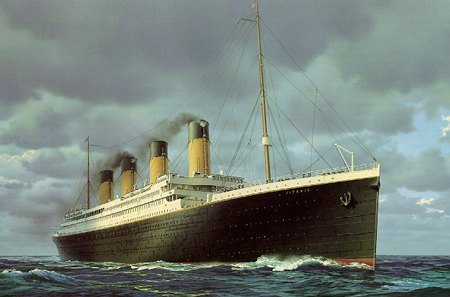
Despite General Motors’ epic slide into Chapter 11, or perhaps because of it, its defenders are busy re-writing history. It’s the Poseidon Adventure redux: a huge, well-run ship overwhelmed by a sudden, terrible force of nature. Except this ship will eventually right itself. In truth, GM really is the Titanic: a badly built vessel helmed by men blinded by short-term greed and long-term hubris headed for Davey Jones’ locker. Make no mistake: GM CEO Rick Wagoner had the chance to return GM to dry dock, repair the company’s flaws, and make it across turbulent seas. But then Wagoner is a GM lifer—his cowardice is both genetic and institutional. What’s the mainstream media’s excuse?

This is the day after GM’s auditors told the world that the automaker may not be a “going concern.” It’s also the day the MSM has finally come to grips with GM’s utter ruination at the hands of its tacitly incompetent management. Or not.

For example, Daniel Howes’ column in the Detroit News is the same as it ever was. Although Howes chastises “the skeptics, the deniers and the deluded” for not facing the truth about GM, and his tone has switched from enthusiastic cheerleader to horrified bystander, he still believes that GM has a future– under Uncle Sam’s taxpayer supported wing.

“[The auditors' report] also should remind the White House just how perilous a GM failure could be for their friends in labor, voters in the industrial Midwest and a fragile national economy.”

As John McEnroe used to say (before CBS signed his paychecks), you CANNOT be serious. Mr. Howes has been carrying the can/pouring the Kool-Aid/providing aid and succor/kissing the ass of these GM C11 deniers for years. This morning’s minimum opus proves he still doesn’t get it: GM is toast.

It’s bizarre. An MSM industry insider reckons the auditors’ report declaring GM kaput will help his hometown heroes confront the reality of GM’s bottom line—so they can avoid the reality of GM’s bottom line. Get out of denial to jump back in. At the taxpayer’s expense. Without anything remotely resembling a coherent and believable “return to viability” plan.

It may arrive as a piercing glimpse into the obvious, but even after GM’s “we’re NSFWed” SEC filing, the agenda-driven MSM continues to view GM’s death throes through the prism of their pre-existing prejudice.

NPR’s The Takeaway interviewed me this morning about the “automotive bubble.” Host John Hockenberry seemed more concerned with the Obama Administration’s electric car future than the fact that “big bad” GM (as opposed to naughty truck-building Toyota) is going away.

Sad but true: MSM’s failure to “move the needle” in its understanding and presentation of the scope, scale and immutability of GM’s perils has enabled the company’s outrageous call on the public purse. In fact, it’s increasingly clear that both GM and the MSM see down as the new up. The worse the news, the greater the justification for the feds to hang another multi-billion dollar bag on Motown’s IV pole.

Just this morning, GM admitted that its request for an additional $30B federal “loan”—on top of the $13.4B already pissed away—won’t be enough to dig it out of its hole. You heard right. Please sir, may I have some more? (As spoken by Frank L. “Bobo” Marrapese Jr.) There’s no way GM could have gone public with this admission without a mostly complacent MSM. In a world with a properly informed and skeptical media, GM’s begging bowl would have been smashed to pieces.

I repeat: where is the media reporting on this fresh, unsustainable assault on taxpayer largesse? In the Detroit Free Press’ case, they’re chewing the fat with GM’s CFO. The Freep reports that Ray Young claims to be “monitoring the situation closely.” Not to worry; Young had “planned for a weak first quarter.” Huh. Does that mean GM intentionally low-balled their initial suckle request?

CNNMoney isn’t bothered. The simply parrot GM’s PR spinmeister’s Fastlane Blog defense of the company’s long term future. The New York Times also isn’t interested in ripping GM a new one. “The [SEC] announcement does not mean bankruptcy is imminent. But it underscores how difficult it will be for GM to successfully complete the restructuring plan that it filed with the Treasury Department last month.”

Hang on . . . didn’t Young just say GM can’t complete their restructuring plan as written?

Meanwhile, the Wall Street Journal continues its descent into the journalistic abyss. Once again, they’re basing a story on “a person close the matter.” This time he’s saying GM’s open to a government-sponsored C11. Yeah right.

When GM finally files for C11, the MSM will continue the spin. They won’t even blink when GM asks for tens of billions for debtor-in-possession financing. The tough questions—which should have been asked five years ago—will once again go unasked.

Too big to fail? As far as the media’s concerned, the answer’s yes. Even when it’s no.

By Robert Farago on March 4, 2009

Moral relativism is inherently childish, as demonstrated by my eleven-year-old. “You don’t make Lola take her plate into the kitchen.” Any assertion that her sister’s age removes her from the obligation meets with a derisive snort. In fact, Sasha reckons she’s a victim of a cruel, capricious system. “It’s not fair!” she cries, storming off—until I threaten to yank her poker chip pay. Then, grudgingly, she does what needs doing. All of which reminds me of GM’s PR “narrative.” As their sales dip by half, they cry “Everyone’s sales numbers are a disaster! You can’t blame US for this mess.” And then they walk off and we clean up (i.e., pay for) their mess.

GM’s bondholders and union leaders “get it.” They know that GM lives in a world where actions don’t have consequences. No matter what The General does or doesn’t do, no matter what they build or don’t build, kindly Uncle Sam will keeping throwing them chips.

And who do you think scoops up those plastic pieces at the so-called bargaining table? Why the bondholders and union leaders, of course. When it comes to securing “their” stake, General Motors and its camp followers have learned that whining speaks louder than action.

“These are obviously unsustainable levels which are causing almost every major auto manufacturer across the world to look for government aid,” GM’s chief sales analyst Michael DiGiovanni said during a post-February sales numbers conference call.

See! Nobody else has to file bankruptcy! You want us to go C11? I hate you! I wish you were never born!

Plug your ears for a second and think about that. General Motors has just publicly admitted that they’re no longer a viable business. And no wonder.

When GM first suckled from the federal teat, their loan request was based on grabbing their “usual” share of an estimated seasonally adjusted annual sales rate (SAAR) of 11m vehicles. February’s SAAR clocked in at 9.8m. Oh, did you mean retail sales? That’s 7.5m. Nissan’s CEO figures SAAR will drop to 8.5m.

Bottom line: GM is too big to survive in such a small market, never mind the weakness of their products.

You could make a case that the precipitous sales drop was due to the unforeseeable collapse of the credit market. You could argue there was “no way” GM could have predicted these terrible times (although I won’t be joining you in that belief). But clearly, indisputably, GM should have known the way the winds were blowing back in December.

So how come GMNA’s Best and Brightest’s “worst case scenario” wasn’t even close to reality? Either GM management was woefully ignorant of their own business, or they were lying to Congress to minimize their [initial] call on the public purse.

After ten years charting this company’s course, watching as the crew plowed it straight into a killer iceberg (that a faltering economy has now revealed in all its terrible glory), I’d have to say GM’s misinformation was based on willful ignorance. And cowardice.

These are tough times. Times that try a man’s soul. What GM needs, what we all need, is true grit.

True grit refers to the character of a person who can look at their perilous situation without flinching, then devise a realistic plan to deal with it. Sometimes, the odds are insurmountable; even the best possible plan is doomed to failure. And then a person with real character does what has to be done; whatever they can do. No matter what the personal cost.

It’s no coincidence that The Alamo is one of John Wayne’s best-loved movies. It’s no coincidence that GM is bankrupt, without anything like a coherent plan to file for C11, reinvent itself and save what can be saved.

And here’s the missing puzzle piece: the aforementioned willingness to make a personal sacrifice.

Last year, at The New York Auto Show, I asked GM Car Czar Bob Lutz if his pension was bankruptcy-proof. I was really asking if he was personally committed to saving GM. Lutz’ derisive prevarication, followed by his recent retirement, answers that question once and for all.

In fact, GM’s management team are like a bunch of eleven-year-olds, willing to do most anything, blame anyone, to avoid accountability for the mess they’ve created. By the same token, they refuse to take responsibility for cleaning it up.

Unfortunately, it’s is no longer their problem. It’s ours. BUT, contrary to growing sentiment, it’s not our job to let management walk; take control and clean the god damn table ourselves.

GM is not our child. We can’t afford to feed it and take care of our own family. Nor should we let GM’s parents avoid responsibility for their own progeny. We’ve served them a hot meal. We’ve done more than our fair share. It’s time to show GM the door. Anything less is simply enabling and encouraging bad behavior.

By Robert Farago on February 25, 2009

It’s not a question of if GM will file for C11. GM blew past “if” a long time ago. By the turn of the century, the artist formerly known as the world’s largest automaker was doomed. Still, if they had greeted Y2K by mortgaging everything (à la Ford) and used the cash to buy out dealers and kill brands and ditch models and pay off the UAW and . . . nah. By the time The General re-launched their refreshed GMT900 SUVs in May 2005, the gig was up. By that point, GM should have been in C11. In this alternate universe, GM might have had enough cash—their cash not our cash—to make it out of bankruptcy. Now, I’m not optimistic. But one thing’s for sure: this Death Watch series is, like GM, on its last legs.

The filing’s timing has nothing to do with finances: profit and loss, cash flow, capital investment, depreciation, amortization, tax schedules, that sort of thing. The moment GM cashed its first government check, its fate ceased to be a matter of commercial reality. The corporation that was once the world’s largest company, the world’s most profitable company, had instantly and irrevocably reduced itself to nothing more (or less) than a political football.

The fact that Uncle Sam’s $13.4 billion federal loan didn’t even stretch to March 31st, never mind through the end of 2009 as promised by GM CEO Rick Wagoner, is neither here nor there. GM is now, for all intents and purposes, an off-shoot of the US government. And that means GM’s on government time.

Hence the reason why GM isn’t in receivership, despite failing to satisfy the loan’s conditions (UAW concessions, a massive debt-for-equity swap amongst existing bondholders and a credible viability plan). Never mind. We’ve got a presidential task force. Meanwhile, how about a bridge loan to take GM from their current bridge loan to . . . another bridge loan.

No surprise there. You can’t very well create a new layer of federal bureaucracy without giving it a chance to do something. Witnesses must be called, lawyers consulted, inter-departmental advisors indulged, papers perused, confabs held, policy statements written, copies circulated for approval, etc. And that’s after the appointees are appointed, assistants hired, stationary commissioned, website created, budgets drafted, alliances formed, careers fortified, etc.

If the Presidential Task Force on Automobiles simply cried “basta!” and called the loan, they’d have nothing to do. A federal bankruptcy judge or judges would take over. What would be the point of that?

In fact, doing the right thing would be the exact wrong thing, politically. First, it would make the Obama adminstration seem impulsive. They just got started! Second, it would make the Obama administration seem weak. It would be a throw-in-the-towel tacit admission that the economy is in even worse shape than they won’t admit it is, and there’s not a damn thing they can do about it. Third, a C11 filing would require even MORE money from Uncle Sam than GM is currently requesting.

I’m not talking about a GM C11’s impact on the economy. Nor am I referring to the Bloomberg report pegging the legal costs of GM’s bankruptcy at a cool billion dollars. Truth be told, if the federal government is going to bankroll The General’s bankruptcy—and how could it NOT provide debtor-in-possession (DIP) financing given that there’s this presidential task force occupying precious DC real estate—the real cost of ressurrecting GM will finally emerge.

Remember: no matter how well Uncle Sam puts Humpty Dumpty back together again, the feds will have to keep GM going until the economic recovery. A year? Two years? I’m thinking $100 billion. Easy.

A USA Today poll released today reveals that 75 percent of Americans are now against loaning Detroit automakers more tax money. Just two months ago, 61 percent of the public were pro-bailout. Consider the magnitude of that swing and imagine how John Q. Public will feel if the true cost of keeping GM in the game were suddenly revealed.

How and when will that number swing back towards federal intervention for Detroit? It can’t and never. Uh-oh. Rock, GM. Obama, hard place.

Politically, there is but one answer: continue the bailout buffet diet of little (in some bizarre sense of that word) and often. In other words, “loan” GM just enough operating cash to remain in their current, zombie state. At least for now. At least until March 31st.

By then, the American public may move beyond not wanting to support GM to not giving a damn. The feds can then slip and drip: let General Motors slip into C11 without much public outcry, and then continue the drip feed under DIP.

Here’s the real bottom line: with or without DIP, GM will continue to be tied to the feds with an umbilical cord made of piano wire. The worst is yet to come.

By Robert Farago on February 17, 2009

I once attended a seminar on alien abduction hypnotherapy. When we got to the Q&A bit, I was flabbergasted by the audience’s enquiries. “What do you do if the alien has been in contact with a departed spirit who knew the victim, and used their influence to prevent hypnosis?” “I’d hypnotize the spirit first,” the therapist responded, without batting an eye. Suddenly, I felt very, very alone. Surely, I wasn’t the only person amongst hundreds who thought the whole thing was a patently ridiculous scam. I got that same queasy feeling today, watching my so-called colleagues questioning GM CEO Rick Wagoner about the company’s viability plan. Surely someone would point out that the whole thing is nothing but a patently ridiculous scam. Sigh. Right, let’s get to it then . . .

The 2009-2014 Restructuring Plan—as GM would prefer it called—is 117 pages long. With the help of TTAC’s crack spreadsheet busters, I could engage in a critical analysis of the automaker’s sales projections, cash flow estimates, cost savings, capital spending allocations, debt reduction plans, etc. But that would be like discussing alien breeding habits, and the meaning and use of anal probes. Yes, they did go there. But let’s not.

We’re all rational human beings. We know what GM has to do to stay in business or, let’s go wild, make enough money to pay back the $34b “investment” dragooned from taxpayers by D.C. debt addicts. GM has to take in more money than they spend.

In other words (if other words be necessary), GM has to build something profitable and then sell a shitload of it/them. Those of us with even a passing knowledge of the industry’s recent history and GM’s place within it know that’s just not going to happen. The company’s been outmaneuvered on every front: model, brand, company. Sales, brand share, overall market share. Game, set, match.

Suffice it to say, if the artist once known as the world’s largest automaker knew how to build profitable products, it wouldn’t be begging for one more hit on the federal crack pipe. Ipso facto.

So what makes GM think that this time, it’ll be different?

“Take a look at the products we can do,” Wagoner asserted at the end of the post-$34b PR bomb drop press conference. We haven’t done it a lot, but we can do it, because we kinda did it, a bit, here and there.

For some reason, Wagoner didn’t mention any specific products. Not the Chevrolet Malibu. Cadillac CTS. Pontiac . . . uh . . . . Saying that, I think he mentioned the electric/gas plug-in hybrid Chevrolet Volt at some point, but no one’s buying that. Literally.

OK. Turn to page 63, Appendix D: “Future Product Launches.” Holy shit! “This page has been left intentionally blank.” Surely, they’re not—I mean, they wouldn’t—dedicate themselves to improving what they have instead of chasing The Next Big Thing? After all, on page 16, GM promises to reduce the total number of brands from nine to five, and cut nameplates from 51 to 36.

You weren’t fooled for a second, were you?

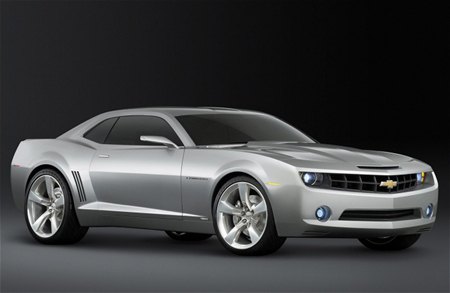
Starting on page 64, we get one picture per page of GM’s latest crop of turnaround machines: the aforementioned Chevy Volt, Cadillac CTS Coupe (didn’t they cancel that?), Cadillac CTS Sportwagen (har har), Chevrolet Cruze (didn’t they . . . oh, right, import), Chevrolet Camaro (’nuff said, already), Chevrolet Equinox, new Buick LaCrosse (yes they already make one) and new Cadillac SRX.

Estimated production? Break even point? Profit per vehicle? Nope. But the document lists the most fuel efficient powertrain that will be available—if not the highway miles it will deliver.

Now, page 72. Appendix E gives us bullet points re: GM’s all-important rejigged brand strategy. HUMMER, Saturn and Saab are obvious by their absence. Once that pesky troika of red ink spewers is strategic reviewed out of existence, GM will have four core brands in three sales channels.

You lost me. Let’s try that again. Chevrolet, Buick, GMC and Cadillac will be sold at Chevrolet, Buick-Pontiac-GMC, and Cadillac dealers.

You noticed that did you? Pontiac is now a “niche” brand; it’s only kinda core. More importantly, GM is finally identifying each brand’s market position. Chevrolet = Expressive value. Buick = Sophisticated Quality, Luxury and Craftsmanship. Pontiac = Youthful and Sporty. GMC = Engineering Excellence with Capability and Functionality. Cadillac = Performance Luxury with Aspirational Appeal.

So, how’s that going? I only ask because it’s not. The chances of it suddenly working out for the cash-strapped automaker are about as high as they were before RIck Wagoner guided GM from a death spiral into a nose first landing. Which reminds me . . .

I collared the alien abduction specialist after the seminar. An artist’s impression of a crashed extra-terrestrial spacecraft filled the screen behind him. “What if there aren’t aliens?” I asked the hypnotist, hypothetically. “What if you aren’t really standing there?” he replied. Within seconds, I wasn’t. Unfortunately, when it comes to GM, US taxpayers don’t have that option.

By Robert Farago on February 14, 2009

A mainstream carmaker has no business building niche products. Literally. For one thing, they’re hardly ever profitable. For another, even when they are, their profits are relatively insignificant. And most importantly, “halo cars” are four-wheeled glass and steel versions of Dumbo’s magic feather. They lead manufacturers to mistake cause with effect: if we build this, we must be good. In fact, any automaker that focuses its creative, financial and corporate resources on a halo car risks forgetting how to do what it did to get those resources in the first place—and an eventual plummet towards the circus floor. The Chevrolet Corvette may be only one of GM’s magic feathers, but it’s the most famous and, therefore, visible. GM should kill it, STAT.

Next week, GM’s heads head back to the bailout buffet. They’ll try to convince your elected representatives to provide another heaping helping of taxpayer bucks (a.k.a. federal loans). Both the company and its camp followers [sic] will, once again, concentrate on the numbers: union wages and benefits, bondholder debt-for-equity swaps, VEBA payments, the old SAAR, the projected SAAR, the car SAAR, who’s SAARy now, etc. And why not? As a Harvard MBA, General Motors lifer and former CFO, GM CEO Rick Wagoner never met a balance sheet he couldn’t dress-up for a party—even if it’s a freaker’s ball.

Which brings us back to the ‘Vette: the freaker’s ball pace car. The Chevrolet Corvette is a singular machine, a modern throwback that offers more bang for the buck than Marietta’s Bullet Stop. An enthusiast who buys one is beyond reproach, in the same sense that a homeowner who restores a Victorian pile deserves nothing by kudos. And? The Corvette is a brand anomaly; it’s as much a Chevy as a Cayenne is a Porsche, only less so. Again, the Corvette is awesome machine in and of itself. But out and outside of itself, it makes no sense.

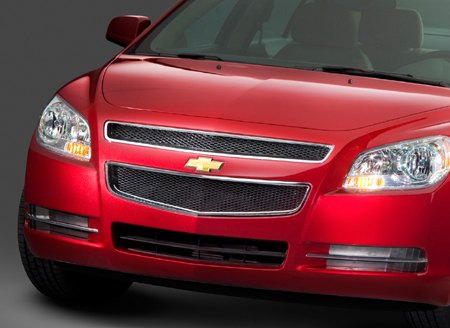
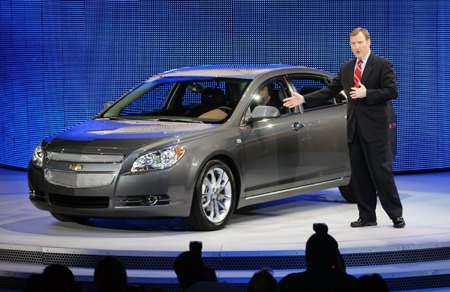
Do Chevrolet products need a personality? Of course not. The Malibu is the proper template. It’s a car. Good mileage, reasonable price, adequate comfort, reliable (fingers crossed), not ugly. Value. While pistonheads worship at the temple of Bowling Green, Chevy buyers are busy bowling. They’re working class people who can’t afford a sports car, never mind one that costs $50K+. The new ‘Bu and old Impala are their best case scenario.

The only possible defense for this great landing at the wrong airport: symbolic value. “America’s sports car” and all that. Which is why Wagoner should announce its termination.

“Ladies and gentlemen, as you know, General Motor’s future hangs by a thread. The decisions we make today mean life or death for this great American enterprise. We take our responsibility seriously. GM can not—will not—shy away from the unpleasant parts of this monumental task.

“We have therefore decided to re-examine our entire brand and product portfolio, to decide which brands and vehicles can help us survive, and which vehicles and brands we must abandon to ensure our survival.

“It is with great regret that I must announce that General Motors will no longer build the Chevrolet Corvette.

“We here at General Motors are proud of the fine men and women who have designed and built this vehicle for generations of appreciative enthusiasts. But General Motors must leave no stone unturned in our pursuit of profitability. We must address our problems and shortcomings with unflinching honesty, and do whatever it takes to correct them.

“As part of this process, we are refocusing the Chevrolet brand. Chevy will now offer a limited range of entry-level automobiles. Each one of the brand’s three models will provide class-leading quality, comfort, fuel economy and value.

“The Corvette is a world class sports car. But it does not fit our mission-critical effort to restore Chevrolet, and thus GM, to profitability. We take our obligation to repay the generosity of the American taxpayer seriously. If we must sacrifice the Chevrolet Corvette to satisfy our obligations, we will do it.

“At some point in the near future, as soon as we can, the Corvette will rejoin GM’s fleet as a Cadillac. It will be a different car, with the same goal: to give enthusiasts the world’s best and most thrilling sports car, bar none. An all-American product.

“For those of you disappointed by this news, I’d like to point out that we are redoubling our efforts to deliver the plug-in Chevrolet Volt, a hybrid vehicle that will reinvent the way Americans drive. It’s a new kind of product that will help us refocus Chevy on what made the brand America’s most popular car brand.

“I thank you for your time and understanding. Rest assured that as painful as this is, the Corvette’s sacrifice will be GM’s gain.”

By Edward Niedermeyer on February 10, 2009

As the maximum era draws to an end at GM, there’s no shortage of praise for the Bob Lutz-led product turnaround. Cars like the CTS, Lambda CUVs and the Chevy Malibu are said to represent a new day in quality and design for the General. And without a doubt, they are all consistently better cars than GM has made for years. But for all their accolades and fawning reviews, these vehicles actually represent a relatively small fraction of GM’s offerings. Though marketing executives wail from the Renaissance Center that consumers aren’t understanding the alleged sea change in GM products, there are still more GM vehicles you can ignore (to borrow GM’s marketing phrase) than you can’t. Automotive atavisms occupy GM’s entire lineup, but the contrast between Chevrolet’s D-segment offerings, the Malibu and Impala tells the whole story. And it isn’t pretty.

It’s no coincidence that the Malibu is, above all others, the poster child for a GM turnaround. Its clean styling and high-quality interior give it an edge in the first impressions game that GM hasn’t enjoyed in decades. More importantly, it brings an impression of actual effort to the crucial mid-sized segment, a category that was long ago ceded to the CamCord legions by such W-bodied luminaries as, well, the Lumina.

But the W-body and its parts bin of horrors lives on. Though the “Malibu Classic” has gone to the great rental lot in the sky, the Impala remains a rolling reminder of a time when the term “GM midsized” meant cheap, bland and unreliable. GM’s current fleet queen boasts a shake, rattle and roll interior, with all the aesthetic delights of a cheap pocket calculator. And let’s not even discuss the old-school wallow that the Impala calls handling. Place the Impala and the Malibu side-by-side and the contrast in impressions couldn’t be greater.

And yet, the Impala sells far better than the perception gap-changing ‘bu. In fact, the Impala is by far GM’s best selling car, with 265,840 sales last year. That’s more than the entire Pontiac car lineup, and nearly the volume of Saturn, Buick and Cadillac cars put together. The Malibu is well behind with 178,253 units sold last year, despite relentless hype and giant ad budgets.

Of course, none of this should come as much surprise to the experienced GM watcher. It is, after all, a long-standing GM tradition to offer long-outdated models as a cheap fleet sale booster. But not only is GM supposedly trying to cut back on fleet sales, unlike the Classic before it the Impala actually sells at retail too. Oh yeah, and GM has been propping up Malibu sales with fleet deals as well.

So while publicly denouncing fleet sales, GM is keeping its fleet queen in the public eye by keeping the roomier Impala’s retail price relatively close to its marquee Malibu. So when shoppers arrive at a Chevrolet dealership to look at the mid-sized offerings, both sides of General Motors are there to see: the sleek (but snug) Malibu or the roomy but dismally old-school Impala. And if you work with the best fleet percentages we have for 2008 (about 50 percent of Impala sales and about 33 percent of Malibu sales went to fleets), it turns out that more people are buying Impalas, even at retail.

This raises a number of interesting questions about the value of GM’s supposed product-led turnaround. If the Impala sells better than the Malibu at retail, despite its aged underpinnings and staid looks, was Bob Lutz’s enormous paycheck and frequent outbursts worth the investment? Class-competitive styling, interiors and platforms cost a considerable amount of money, and based on the numbers it seems that loyal GM customers aren’t particularly swayed by them. For all its accolades, the Malibu looks to be not only less popular than its fleet-flooding cousin but less profitable too.

And so we arrive at the real question: why do GM customers seem to prefer the aged and uncompetitive Impala to its acclaimed Malibu? In his hilarious address to the White House Press Club, Stephen Colbert quipped that President Bush’s 30 percent approval rating meant that though the metaphorical glass is only two-thirds empty, the last third is usually backwash. And the implication that Bush’s constituency represents all the ugly stereotypes of American culture also applies to GM’s midsized predicament. After decades of foisting uncompetitive cars on the American public, choosy shoppers no longer even consider GM a source for high quality vehicles, a fact proven by KBB’s 2008 “most researched” list.

And as long as Impalas and Malibus share lot space, GM’s cries of “perception gap” will continue, as the brand image is confused by two such divergent approaches to the midsized segment. The Malibu is fighting an uphill battle to convince now-loyal Toyota and Honda customers that the bowtie brand can offer quality, and sales momentum isn’t helping. And with GM pricing a fleet version of the Malibu considerably cheaper than the Impala, it’s also only a matter of time before that model loses its luster to the fleet residuals curse. And since its sales and profitability are already worse, the damage has already been done.

By Robert Farago on February 9, 2009

Bob Lutz was not the worst thing to happen to General Motors. He was the second worst thing after CEO Rick Wagoner. Lutz’ legacy will not be the critically acclaimed vehicles attached to his name: the Cadillac CTS, Buick Enclave, Chevrolet Malibu or Pontiac G8. It will be the fact that GM’s vice chairman of global product development annihilated whatever remained of GM’s brand-related equity. Bob Lutz ran General Motors into the ground.

Lutz’ career at GM proves the old adage that if you are not part of the solution, you are part of the problem. Oh hell, Lutz was the problem. Within weeks of Lutz’ elevation to Car Czar, TTAC sounded the alarm. In one of his earliest interviews, a reporter asked Lutz about Volkswagen’s prospects. Astoundingly, GM’s Car Czar couldn’t name more than three of VW’s brands.

While you might expect the identity of the German automakers’ divisions to catch out a pistonhead at a pub quiz, Lutz was the newly-appointed head of development for the world’s largest automaker. If Bob Lutz didn’t have mental access to this type of competitive information, how could he possibly craft a coherent strategy for GM?

Lutz apologists flew to his defense. This quickly became a habitual practice. In subsequent years, the automotive media focused its attention on Lutz’ mal mots: his allegedly recidivist views on the auto industry’s place within society. The so-called “crock of shit” problem was actually thinly-disguised admiration.

The press painted Lutz as the straight-talking, cigar-chomping representative of an earlier time, a time when V8 engines—and GM—ruled the earth. And they loved him for it. What the media missed: how often Lutz’ opinions about the car business were ill-informed, misguided and just plain wrong.

This is the hugely compensated automotive executive that today called the Pontiac GTO “my proudest accomplishment.” After all, “That’s the car that got us convinced that we could use the global product development scheme. Up until then, no one had tried anything like that.”

Maximum Bob is, once again, flat out wrong; the “world car” idea is as old the auto industry itself. Worse: the Australian-built GTO was an abject failure. The GTO lost GM tens of millions of dollars, squandered precious development resources and drove yet another Lutz-shaped nail into Pontiac’s coffin.

You could, however, make the case that the GTO was the quintessential Lutz-mobile: a romantic expression of his personal taste that fell flat on its face. A product that Lutz quickly abandoned in search of . . . the next big thing. Wash. Rinse. Repeat. For models within brands AND the brands themselves.

Lutz never developed anything remotely resembling a coherent, focused and determined product development strategy. Automotive Attention Deficiency Disorder characterized Lutz’ tenure. Everywhere you looked, GM under Lutz was a company typified by frenetic indecisiveness. The rear wheel-drive Zeta platform program was on-again, off-again no less than seven times.

In 2005, Lutz described Buick and Pontiac as damaged brands. The media thought it a “come to Jesus moment,” withdrawn to serve GM’s PC PR needs. But it was Lutz himself who had damaged the brands. And it was Lutz who continued to kick the brands when they were down. Lutz was guilty of sins of commission (a staggering stream of badge engineered mediocrity) and omission (a singular failure to define a profitable brand remit for ANY of GM’s divisions).

Lutz’ epic incompetence was matched only by his swagger and bravado. His enablers ate it up, adding to Maximum Bob’s egomaniacal ignorance. The fact that the media perpetuated Maximum Bob’s nickname without irony—a moniker I invented in a moment of disgust—shows you the kind of bubble that protected and extended Lutz’s befuddled sphere of influence.

Although, saying that, one wonders how much power Bob Lutz actually held within the loony labyrinth of backstabbing RenCen bureaucrats that is General Motors. Did Lutz argue for the Chevy Traverse or just let it happen? Did the Powers That Be appease Lutz with his pet projects (e.g., the Pontiac Solstice) so they could do whatever they wanted to maintain the dysfunctional status quo upon which they depended?

There is no question in my mind that Bob Lutz’ resignation was motivated by personal greed. Let’s not forget Lutz’ reply to the [first] suggestion that he take a haircut to show his devotion to the team: “I already gave at the office.” By stepping aside now, the man who scoffed at the question “Is your pension bankruptcy proof?” is making damn well sure it is.

Like so many failed American executives, Lutz will not personally suffer for having ruined the livelihoods of tens of thousands of his underlings. He will sleep well, eat well, travel luxuriously and, worst of all, continue to receive the respect of his peers. He doesn’t deserve any of it, as history will one day decide.

By Edward Niedermeyer on January 29, 2009

Motorauthority reports that the long-rumored Buick C-segment sedan will probably be built at Opel’s Rüsselsheim plant. The new, entry-level Buick will utilize production capacity freed by plans to produce the Delta II-based Saab 9-3 at Saab’s Trollhättan plant. Since the American Astra experiment has gone so badly, GM needs a higher-margin Delta II vehicle to justify expensive tooling efforts at Rüsselsheim. Hence the plan for a Buick compact for the U.S. market. It’s a deeply misguided project, yet another sign of GM’s chronic, ongoing, multi-national mismanagement of its models, brands and [dwindling] resources. What is it with these people?

With the future of Saturn and Saab up in the air, with the HUMMER brand on death row, GM is trying to chart a course to “viability” based on constantly-changing assumptions. One of those: Buick should be a “core brand.” God knows where GM got that idea. Buick is one of the two rotting limbs on the corpse currently known as the Buick, Pontiac and GMC (BPG) “channel.” Buick hasn’t had a hit product since… wait… I’m thinking. 

The Lambda-based Buick Enclave was supposed to be one of GM’s Next Big Things. The CUV never found its stride. A year ago, TTAC’s Frank Williams wrote Buick sales suck. As you can imagine, they went downhill from there. At the time, Williams wondered if GM was trying to starve Buick to death. Perhaps they were. And changed their mind. Several times. Anyone familiar with GM’s on-again, off-again, we don’t know yet (a.k.a. “strategic review”) product plans knows that indecision and paralysis is GM’s leitmotif

GM’s new plan: between now and 2012, Buick will offer Americans a thin diet of me-too rebrand jobs: the new LaCrosse, this Delta II whatever and a Lambda CUV (Enclave). Needless to say, these examples of cost-cutting platform-sharing badge engineering will continue to debase whatever appeal the Buick brand once held for its loyal customer base. Or anyone else.

And yet, Buick somehow remains one of GM’s four “core brands.” 

There’s only one remotely plausible explanation: Buick’s success in China has convinced RenCen that the brand has a future. Of course, Buick doesn’t mean anything in particular in China. So why should it mean anything stateside? That would explain the plan to build a compact Buick for the U.S. market. The funny thing is it just might work. By now, nobody anywhere expects a Buick to be anything more than an up-optioned Chevy.

Even if we accept the fantastic possibility that when better Buicks are built someone will buy them, the real problem is building them in Germany. 

First, there’s an issue of cost. Thanks to higher labor costs, building in the Eurozone is an expensive business. And then there’s the fact that GM doesn’t sell Buicks in Europe. The cost of shipping vehicles to the US (China?) will hurt both profitability and sales. And don’t forget about the currency issue. If the Pontiac G8 and Saturn Astra experiences taught GM anything, there’s no way this idea will work.  

Then there’s the branding opportunity cost. Understandably enough, Opel’s bosses feel that branding GM’s best products as weaker marques hurts GM as a whole. “Only under the Opel brand can Opel products profit from their heritage, as it lends the ‘German Engineering’ appeal,” Opel boss Klaus Franz tells Handelsblatt.

Indeed, GM has sunk considerable amounts of cash into Opel in hopes of bringing the brand upmarket. It appears to be working. So why hide this success behind a brand that (outside of China) represents a tarted-up Chevy?

Why bother? In the U.S. and elsewhere, Opels could be sold as Opels, replacing GM’s confused mid-market branding “strategy.” With Chevy (Korean budget), Opel (German engineered, efficient, tech-y mid-level) and Cadillac (American luxury) GM can cut its portfolio to three complimentary global brands.

Pontiac, Saab, Saturn and Buick have to go. The fact that each of these four brand fiefdoms are fighting for Opel underpinnings for their products says everything. At this point, what does GM have to gain by holding onto the past with these useless antibrands? Opel can (and does) do everything these four brands do, only with a glint of European luster. 

Introducing the Opel brand in the US would have its risks. But at least it’s a fresh start. Selling its superior products under its real name helps GM considerably more than hiding them under the sheetmetal of a dead brand walking.

This strategy is similar to the approach that Ford is taking by bringing the Euro-spec Fiesta, Focus, C-Max and Kuga stateside. Ford’s job just happens to be easier, thanks to being called “Ford” in Europe. Like Ford’s plan, an Opel revamp of GM’s mid-market vehicles would have to involve local production to avoid Astra/G8 redux. And it wouldn’t be easy with the General’s current cash position. But at least it would be a “viable” strategy.

By Ken Elias on January 17, 2009

Last Thursday in Detroit, General Motors presented its rescue case to the Society of Automotive Analysts, a group of Wall Street securities analysts. [pdf here] The story was chock full of “not good.” In fact, the company presented enough information to make the case that bankruptcy is inevitable. But I’m still waiting for a single report from Wall Street telling everyone what we’ve known at TTAC for at least three years. GM is bankrupt and putting another dime of government money into this car wreck is merely good money after bad. 

It’s too bad GM presented nothing more than damning evidence of why the company has to file bankruptcy. Not that management didn’t try the old positive spin manipulation of bad news – they did. But you won’t see any analyst reports coming out telling the truth that there is no where to go but to the Bankruptcy Court in Manhattan. So we’ll do it for you.

For starters, GM lowered its forecast for new car sales in the US auto market overall. As recently as December 2, when GM last presented to Congress its non-starter rescue plan, the company anticipated that 2009 car sales would come in at 12 million units.  (2008 saw 13.2 million units sold.) Now, the company sees the market at 10.5 million units, a haircut of 1.5 million units or another 300,000 units less for GM from its previous lowered forecast.

Assuming GM’s correct, and assigning a 20% market share to GM for 2009 (reduced fleet sales, negative consumer confidence, more incentives from the Toyondissan camp, etc.), GM will sell 2,100,000 units in 2009. That’s nearly 900,000 fewer units than last year or a reduction of 30%.

Add to that the desperate attempts by everyone else – and especially those manufacturers with stronger capital structures – to move units in a terrible market. The incentive money will be huge. Despite production cut backs, four day work weeks, and extended plant holidays, it’s simply too costly to just shut down for an extended period beyond a few weeks for any auto manufacturer.

The high fixed-cost nature of vehicle assembly, marketing, and white-collar staffing demands that the products keep moving out the door just to minimize losses. The Japanese will give away cars with thousands of dollars on the hood to keep the metal moving. The Europeans will provide money through the back door – so-called “trunk money” – to keep iron from stacking up at the ports. And yet GM’s management thinks it can improve the gross contribution during this period. Sure.

Revenues at GM will decline with fewer cars sold and shrinking gross contributions per unit due to incentives needed to match or exceed the competition. At an average revenue to GM of $25,000 per vehicle (my estimate before incentives which are paid after retail delivery), 900,000 fewer units sold in 2009 means a revenue loss of – ready now – $22.5 billion from the top line. And with the company already bleeding cash at the rate of $20 billion per year in 2008, is there any chance of cutting costs fast enough to become cash flow positive?

The killer chart proving my point came from Rick Henderson, the Chief Operating Officer. When the crap really started hitting the fan at GM back in 2005, management outlined its goal to reduce “structural costs” to 25% of revenue. (In 2005, GM’s structural costs were 36% of revenue.) Target date for 25% – something like 2009 if I remember correctly.

Liars may figure, but figures don’t lie. GM has never gotten close to achieving this target percent. In 2007, structural costs accounted for 29.5% of revenues, the best performance since 2005. But in 2008, they rose to 33.9% as revenues shrunk faster than costs could be cut. Anyone care to guess what will happen in 2009? GM’s simply chasing the rabbit down the hole.

But let’s heap on more bad news. GM Europe, like GMNA, will bleed cash badly in 2009. The sales projections for Western Europe are dismal. Maybe Andrea Merkel will lend GME some dough? Spain’s a write-off. And England looks like it will be a gloomy London gray for the year for car sales. GM’s key overseas unit will need cash too. 

And here’s the worse news. By next month, after the last round of government bail out loans, GM will have a staggering debt load of $76 billion (including the present value of its VEBA liability). But let’s suspend reality and assume that the unsecured public bond holders and the UAW agree to the mandated debt-to-equity conversion.

Guess what? GM will still have $43 billion in debt – practically the same amount it had in 2007 ($39 billion exclusive of the VEBA liability). On a smaller revenue base in 2009.  

And there you have it. GM itself has made the case for bankruptcy. There’s simply no point at giving this company more money to try and restructure. It just doesn’t make sense. Now let’s see when Wall Street tells the government that’s the case. Heck, we’ve done it for them.

Recent Comments


Auto Insurance GPS Navigation
Car Loans Auto Parts
Car Warranty Wheels
Automotive Tires Car Care