


Federal Appeals Court Upholds Forced Home Entry Over DUI
The US Supreme Court ruled 27 years ago that police could not forcibly enter someone’s home over suspected drunk driving. The Fourth District US Court of Appeals in an unpublished decision is looking to change the precedent. A three-judge appellate panel considered the case of Alan J. Cilman who had filed a false arrest lawsuit after Officer M.A. Reeves busted down his door, without a warrant, on October 3, 2004.
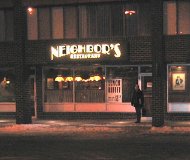
Earlier that day, Cilman had left Neighbors Restaurant where he watched a football game and had dinner and drinks. Reeves claimed Cilman drove out of the Neighbors parking lot at a “high rate of speed.” Reeves followed, noting that Cilman had run a stop sign, failed to signal and accelerated quickly in turns. Accounts differ over whether Reeves turned on his police lights before Cilman made it to the driveway of his home, which was not far away. Reeves got out of his cruiser as Cilman was walking briskly to the door. Reeves told Cilman to stop, but he did not say the man was under arrest. Cilman told the officer to get off his property as he went inside and locked the door.
Reeves waited for backup, then kicked in Cilman’s door and arrested him for being drunk in public and evasion without force — not driving under the influence of alcohol (DUI). Prosecutors later dropped those charges. The US District Court for the Eastern District of Virginia agreed that kicking in Cilman’s door without a warrant was a violation of the Fourth Amendment, but a jury awarded Cilman $0 in damages as compensation. Officer Reeves appealed the judge’s finding that he had violated the Constitution, because under state law he would be forced to resign if found guilty of a second constitutional violation.
In the 1984 US Supreme Court case Welsh v. Wisconsin, the high court ruled that “police may not make a warrantless entry into a home to make an arrest for DUI.” The US Court of Appeals panel ruled this precedent did not apply because Virginia imposes a higher fine and longer jail sentence than Wisconsin for DUI.
“No controlling Supreme Court or Fourth Circuit precedent speaks to a person’s right to be free from a warrantless entry into his home in circumstances like those in the case at hand,” the appellate judges ruled in a per curiam decision.
Cilman charged that Vienna’s police exhibited a pattern of Fourth Amendment violations, but the appellate panel dismissed this by calling the reports “isolated, unprecedented incidents.” The judges reversed every judgment in Cilman’s favor and ordered the case dismissed in its entirety.
A copy of the ruling is available in a 50k PDF file at the source link below.
Source:
Cilman v. Reeves (US Court of Appeals, Fourth Circuit, 11/4/2011)
[Courtesy: Thenewspaper.com]

More by The Newspaper



























Comments
Join the conversation
Thus illustrating the Founders' biggest mistake- failure to put any real controls (checks and balances to you and I) upon the judiciary system. As Benjimin Franklin said- we have given you a republic- IF you can keep it. We did not.
"Officer Reeves appealed the judge’s finding that he had violated the Constitution, because under state law he would be forced to resign if found guilty of a second constitutional violation." Unpublished it should stay. I'd like to see it appealed though.